Front End Steering Rebuild Kits
Package kits bundle the wearing front end parts in one order, usually for less than buying them one by one.
This interactive diagram shows the front suspension, steering and rear suspension of the 2013 Ford Fusion. Hover over or tap any part to see what it does, the signs that it is worn, and the replacement parts we carry that fit your Fusion, down to the side and position.
We carry parts for it Not stocked yet Hover or tap any part.
The 2013 to 2020 Fusion uses MacPherson struts at the front, each bolted to the top of the knuckle by a two bolt clamp, with the coil spring on the strut and an L shaped lower arm with the ball joint built in. The steering rack sits behind the front axle and the front sway bar has long links up to the struts. The rear is a multi-link design on its own subframe: a wide spring arm behind the axle carries the coil spring, a short link stands between that arm and the knuckle, a straight lower arm sits ahead of the axle and a bent upper arm on top. The rear shocks are separate from the springs, and the rear sway bar runs behind the axle. All wheel drive models add a rear drive unit and two rear halfshafts and use their own rear upper arms; the diagram shows the front wheel drive car.
We carry replacement parts for 25 of the 39 components on this diagram, 60 parts in all. See every part for the 2013 Ford Fusion.
Package kits bundle the wearing front end parts in one order, usually for less than buying them one by one.
Front struts and rear shocks for the whole car in one order.
A strut with its spring, mount and boot already assembled, so no spring compressor is needed.
The strut is the shock absorber and the upper locating part of the front corner in one. A two bolt clevis at its foot clamps the top of the knuckle, the coil spring sits on it, and its top bolts into the strut tower.
Signs of wear: Bouncing after bumps, nose dive under braking, fluid on the tube, or a knock from the top of the strut over rough roads.
Tip: Struts are sold bare or as a complete assembly with the spring and mount already fitted. The strut numbers we carry fit cars without 19 inch wheels.
The front coil spring sits on a seat on the strut tube and pushes up against the top mount. It carries the weight of the front of the car.
Signs of wear: A front corner sitting lower than the other, a broken coil end, or a clunk when turning the wheel at a stop.
Tip: Replace springs in pairs so both sides sit at the same height.
The strut mount is the rubber and bearing block at the top of the strut. Three bolts hold it to the strut tower, and its bearing lets the strut turn with the steering.
Signs of wear: Clunks or creaks from the top of the strut when steering at low speed, or a steering wheel that does not return to center.
Tip: The mount is often replaced along with the strut, since the strut has to come out either way.
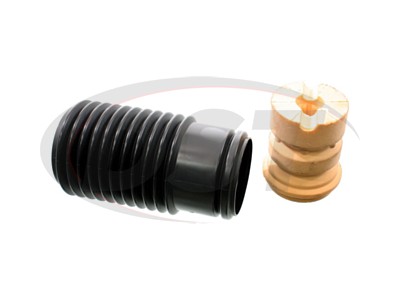
A rubber bellows covers the strut rod to keep grit off its seal, and the bump stop inside it cushions the strut at full compression. The spring hides it in the assembled view; the exploded view shows it.
Signs of wear: A torn or missing boot, a rusty or scored strut rod, or a hard bang over big bumps.
Tip: Fit a new boot and bump stop whenever the strut is replaced.
See all Front Shock Bellows Boot Kit parts for the 2013 Ford Fusion
Two 16 mm bolts pass through the clevis at the foot of the strut and the top of the knuckle. Camber bolt kits replace them with an offset cam bolt that lets the shop set front camber.
Signs of wear: Uneven wear on the inner or outer edge of the front tires that an ordinary alignment cannot correct, often after a lowering kit or a curb strike.
Tip: Fit cam bolts one side at a time and have the alignment set right after.
See all Front End Alignment Kit parts for the 2013 Ford Fusion
An L shaped arm with the ball joint built into its outer end. A short front leg pivots on a bushing at the cradle's side leg, and a long rear leg ends in a vertical bushing held in a bracket that bolts up under the rear corner of the cradle.
Signs of wear: Clunks over bumps, steering that wanders under braking, cracked or torn bushings, or play in the ball joint.
Tip: Left and right arms are different parts. The ball joint is not sold on its own, so a worn joint means a new arm, which comes with both bushings fitted.
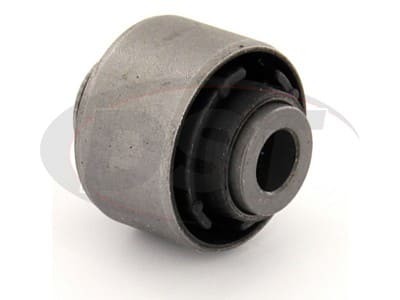
Each lower arm has two bushings: a front one in the front leg, on a bolt that runs front to back, and a large vertical one at the end of the rear leg, inside its bracket.
Signs of wear: Clunks when braking or pulling away, a vague steering feel, or rubber that is cracked or pushed out of its housing.
Tip: Front and rear bushings are different parts.
See all Front Control Arm Bushings parts for the 2013 Ford Fusion
The knuckle carries the hub bearing and the brake caliper. Its top is clamped in the strut's clevis, the ball joint stud sits in a pinch boss at its bottom, and its rear arm takes the outer tie rod end.
Signs of wear: Knuckles rarely wear out. A bent knuckle after a curb strike shows as a pull or a crooked steering wheel that an alignment will not fix.
The front sway bar runs across the rear of the front cradle. Long links join its ends to the struts, so it twists when one side moves more than the other and keeps the car flatter in turns.
Signs of wear: Body roll in turns that feels worse than it used to, usually from worn links or bushings rather than the bar.
Tip: Check the bar diameter before ordering bushings.
Two rubber bushings in steel clamps hold the front bar to the cradle.
Signs of wear: Squeaks or knocks from the front over speed bumps, or a bar that moves in its clamps.
Tip: Bushings fit one bar diameter only.
A long link with a ball stud at each end. The top bolts to a tab on the strut tube and the bottom to the end of the sway bar.
Signs of wear: A rattle or knock from the front over small bumps, or a link that moves by hand.
Tip: The same link fits both sides. Replace them in pairs.

See all Front Sway Bar Endlinks parts for the 2013 Ford Fusion
An electric power assisted rack and pinion sits behind the front axle on the cradle. Rubber boots at each end keep dirt out of the rack and its inner tie rod joints.
Signs of wear: A clunk through the steering wheel over bumps, a torn boot, or a power steering warning on the dash.
Tip: A torn boot can be replaced on its own, but check the inner tie rod under it while it is off.
The inner tie rod screws onto the end of the rack inside the boot. Its ball joint lets the rod move with the suspension.
Signs of wear: Play in the steering, a clunk when turning, or uneven front tire wear.
Tip: The same inner tie rod fits both sides.

See all Front Inner Tie Rod End parts for the 2013 Ford Fusion
The outer tie rod end threads onto the inner rod. Its stud points up through the steering arm at the rear of the knuckle, where a nut holds it.
Signs of wear: Loose steering, a clunk over bumps, a torn boot, or tire wear on one edge.
Tip: Left and right outer ends are different parts. Count the turns when removing the old one, then have the toe set.

See all Front Outer Tie Rod End parts for the 2013 Ford Fusion
The front axles drive the front wheels from the transaxle. A constant velocity joint at each end in a rubber boot lets the axle work while the wheels steer and move up and down. The passenger side axle starts at an intermediate shaft behind the engine.
Signs of wear: A clicking noise when turning, a vibration under power, or grease thrown from a torn boot.
Tip: Left and right axles are different parts.
See all CV Joint Parts - Front parts for the 2013 Ford Fusion
On all wheel drive cars a rear drive unit sits in the middle of the rear subframe. A driveshaft from the front power transfer unit turns it, and it drives the rear halfshafts.
Not on every vehicle: Fitted only to all wheel drive Fusions, which also have their own rear upper arms and rear hubs. The diagram shows the front wheel drive car.
Signs of wear: A whine or a clunk from the rear under power, or fluid leaking from the unit.
On all wheel drive cars a halfshaft with a constant velocity joint at each end runs from the rear drive unit to each rear hub.
Not on every vehicle: Fitted only to all wheel drive Fusions, which also have their own rear upper arms and rear hubs. The diagram shows the front wheel drive car.
Signs of wear: A clicking or vibration from the rear under power, or a torn boot.
The rear knuckle carries the hub. The upper arm bolts to its top, the lower forward arm to its front, the spring arm's big bushing to its bottom, and the arm-to-knuckle link beside it.
Signs of wear: Knuckles rarely wear out; worn bushings in the arms around it are far more common.
A wide cast arm behind the axle. Its inner end pivots on a bushing at the subframe, the rear coil spring sits in a round pocket in its middle, a large bushing at its outer end bolts to the bottom of the knuckle, and a short link stands near its outer edge.
Signs of wear: A clunk from the rear over bumps, a rear corner sitting low, or uneven rear tire wear.
Tip: Left and right arms are different parts.
The large rubber bushing where the outer end of the spring arm meets the bottom of the knuckle. One bolt through it holds the two together.
Signs of wear: A knock from the rear over bumps or when braking, or rubber that is split or pushed out of its eye.
Tip: A press and the right adapters are needed to change it.
See all Rear Control Arm Bushings parts for the 2013 Ford Fusion
The rear coil spring sits in the spring arm's pocket on a rubber isolator and pushes up into a seat in the body. The shock is separate.
Signs of wear: A rear corner sitting low, a broken coil end, or a clunk over bumps.
Tip: Replace springs in pairs.
A short straight link with a bushing at each end. It stands up from the outer edge of the spring arm to the knuckle and stops the knuckle from rocking on the spring arm's big bushing.
Signs of wear: A clunk from the rear over sharp bumps, or worn and cracked bushings at either end.
Tip: Cars built before February 17, 2014 use a different link.
A straight arm ahead of the axle, from a bushing on the subframe to a bushing at the front of the knuckle. It sets the rear toe.
Signs of wear: Rear tires wearing on their inner edges, a vague feel from the rear, or a clunk over bumps.
Tip: The same arm fits both sides.
The two bushings in the ends of the lower forward arm: one at the subframe, one at the knuckle. They are different parts.
Signs of wear: Rear tires that will not hold their alignment, or rubber that is split.
See all Rear Control Arm Bushings parts for the 2013 Ford Fusion
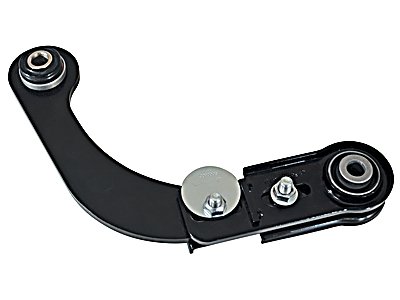
A bent arm on top of the rear suspension, from the subframe to the top of the knuckle. It sets the rear camber.
Signs of wear: Rear tires wearing on their inner edges, often after the car has been lowered.
Tip: Front wheel drive and all wheel drive cars use different upper arms. Adjustable arms are sold to correct rear camber.
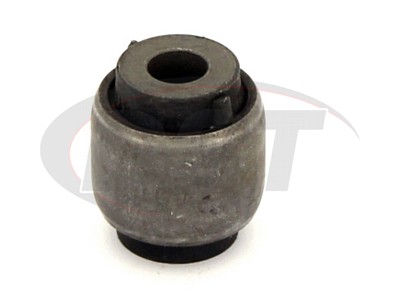
The bushings in the two ends of the upper arm.
Signs of wear: A clunk from the rear, or cracked rubber at the arm ends.
Tip: The two ends take different bushings.
See all Rear Control Arm Bushings parts for the 2013 Ford Fusion
An adjusting kit for setting the rear camber.
Signs of wear: Rear tire wear on one edge that a normal alignment cannot correct.
See all Rear End Alignment Kit parts for the 2013 Ford Fusion
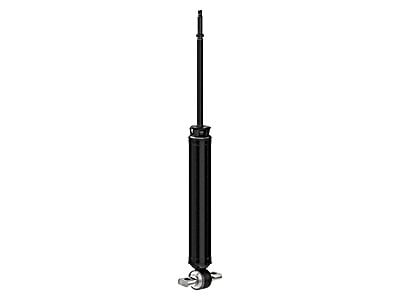
The rear shock stands over the hub, outboard of the coil spring. Its foot bolts to the spring arm with a cross pin and its top stem goes up through a mount in the body.
Signs of wear: Bouncing after bumps, a rear end that floats at speed, or fluid on the body.
Tip: Replace shocks in pairs.
The rear sway bar runs across behind the axle on the subframe's rear cross member. Its ends bend forward to short links on the spring arms.
Signs of wear: Body roll that feels worse than it used to, or a knock from the rear.
Two rubber bushings in clamps hold the rear bar to the subframe.
Signs of wear: Squeaks or knocks from the rear over bumps.
Tip: Bushings fit one bar diameter only.
A short link with a ball stud at each end, from the end of the rear bar down to a bracket on the spring arm.
Signs of wear: A rattle from the rear over small bumps.
See all Rear Sway Bar Endlinks parts for the 2013 Ford Fusion
The front hub is a sealed bearing unit that bolts to the knuckle face with four bolts. The wheel bolts to its flange and the CV axle splines into it.
Signs of wear: A hum or growl that changes with speed or when turning, play when the wheel is rocked, or an ABS warning.
Tip: Most cars use one hub number; the 2.7 litre Sport has its own.
See all Front Wheel Bearing and Hub Assembly parts for the 2013 Ford Fusion
A vented front rotor clamped between the hub and the wheel: 300 mm on most cars, with other sizes on the Energi and the Sport.
Signs of wear: Pulsing in the pedal, grooves you can feel, or a rotor worn below its minimum thickness.
Tip: Check the rotor size on the old part before ordering.
A single piston floating caliper on a bracket bolted to the front of the knuckle.
Signs of wear: A pull under braking, a sticking or dragging brake, or fluid at the piston.
Two pads in the caliper, one each side of the rotor.
Signs of wear: Squealing, grinding, or a long pedal.
Tip: Single piston and dual piston (2.7 litre Sport) calipers take different pads.
The rear hub is a sealed bearing unit bolted to the rear knuckle. On all wheel drive cars the halfshaft splines into it.
Signs of wear: A hum from the rear that changes with speed, or play when the wheel is rocked.
Tip: Front wheel drive and all wheel drive cars use different rear hubs.
See all Rear Wheel Bearing and Hub Assembly parts for the 2013 Ford Fusion
A solid rear rotor clamped between the hub and the wheel: 302 mm on most cars, 316 mm on the Energi.
Signs of wear: Pulsing, grooves, or rust that the pads cannot clean off.
Tip: Check the rotor size before ordering.
A single piston rear caliper with the electric parking brake motor on its back.
Signs of wear: A dragging rear brake, a parking brake warning, or fluid at the piston.
Tip: The parking brake has to be put in service mode before the piston can be retracted.
Two pads in the rear caliper.
Signs of wear: Squealing, grinding, or a parking brake that no longer holds well.
Front lower control arms and their bushings, front and rear sway bar links, and the rear lower arm bushings are the parts most often replaced, followed by tie rod ends and the rear upper arms.
No. The front uses struts, so the strut itself locates the top of the knuckle. There is one lower control arm per side, with the ball joint built into it. The rear does have an upper arm on each side.
The front arms, struts and links are shared. All wheel drive models add a driveshaft, a rear drive unit and rear halfshafts, and use their own rear upper arms and rear hubs. Check the drive type on each part before ordering.
The strut and complete strut numbers we carry fit cars without 19 inch wheels. Models on 19 inch wheels use different struts, so check the wheel size before ordering.
The 2013 Fusion uses some earlier rear parts than the car in the diagram. The rear hub depends on the drive: Moog 512498 is listed for all wheel drive cars, and front wheel drive cars use a different hub, so check the drive before ordering. The diagram draws the later front wheel drive rear hub (from 01/18/2014). The short rear link between the spring arm and the knuckle is Moog RK643190 on the 2013 car, the same shape as the later link. The rear spring arm and rear sway bar bushing numbers listed for later Fusions (Moog RK643655, RK643656 and K202133) are not listed for 2013, so check fitment before ordering.
Yes, after replacing tie rods, struts, control arms or rear links. Front toe is set at the tie rods, and front camber can be adjusted with cam bolts at the strut. Adjustable rear upper arms are sold to correct rear camber.
Numbered diagrams to print or save for the shop. The numbers match the numbered parts on the interactive diagram.