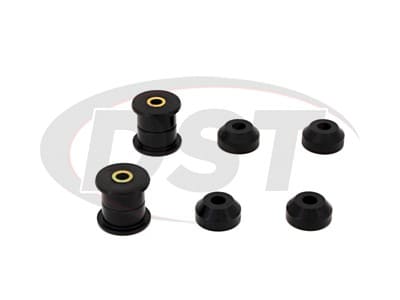
Complete Front Coil Over Assemblies
A front damper with its spring, mount and boot already assembled, so no spring compressor is needed.
This interactive diagram shows the front suspension, steering, driveline and rear suspension of the 2000 Honda CR-V 2WD (front wheel drive). Hover over or tap any part to see what it does, the signs that it is worn, and the replacement parts we carry that fit, down to the side.
We carry parts for it Not stocked yet Hover or tap any part.
The first CR-V uses double wishbones at both ends. Up front, a stamped L shaped lower arm and an upper A arm hold a tall knuckle, and the coil over damper stands on a fork that straddles the axle. At the rear, a trailing arm carries the knuckle, with a long lower arm under the coil over damper, a short upper arm and a compensator arm, plus drum brakes. The 2WD has no propeller shaft, rear differential or rear drive shafts.
We carry replacement parts for 34 of the 49 components on this diagram, 148 parts in all. See every part for the 2000 Honda CR-V 2WD.
A front damper with its spring, mount and boot already assembled, so no spring compressor is needed.
A rear damper with its spring and mount already assembled.
Front and rear dampers for the whole vehicle in one order.
The wearing front end parts in one order.
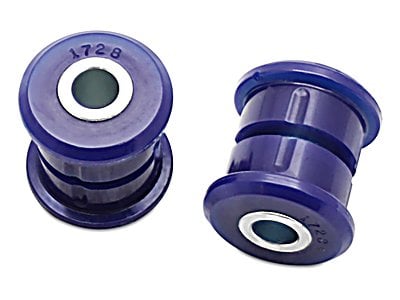
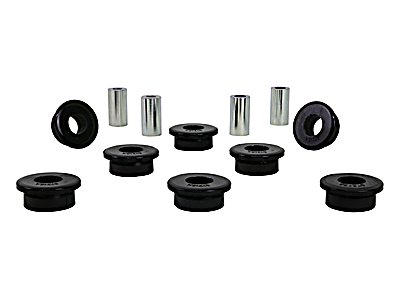
One kit with the suspension bushings for the vehicle, the front end or the rear end.
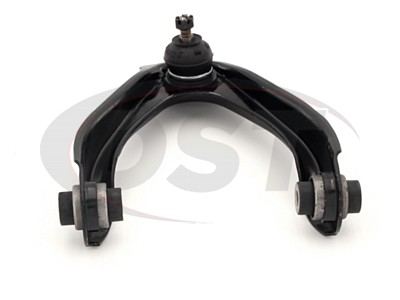
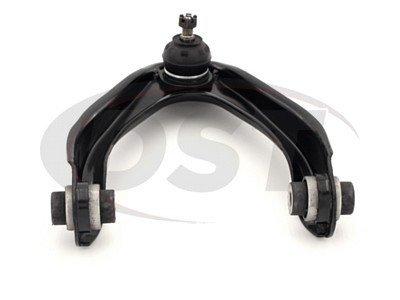
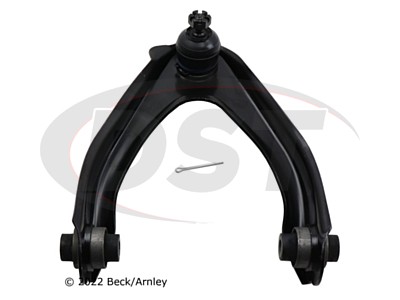
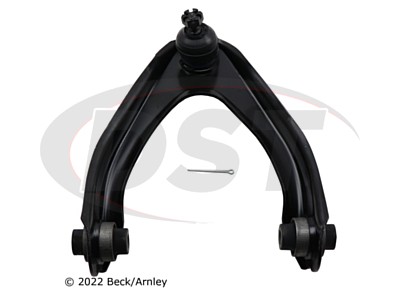
A stamped A shaped arm high in the wheel well. Its two bushings bolt to the inner wheel house and its ball joint sits on top of the tall knuckle upright. The coil over damper passes up between its legs.
Signs of wear: Clunks over bumps, uneven inner tire wear, or a torn ball joint boot.
Tip: Left and right arms are different parts, and most come with the ball joint and bushings fitted.
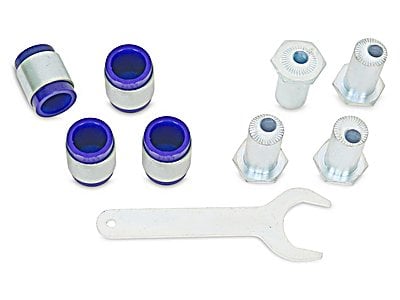
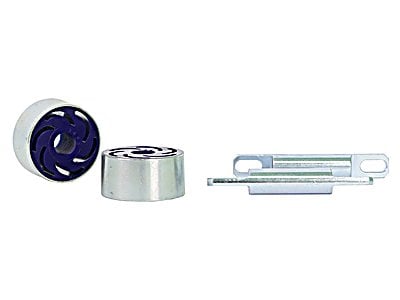
Two rubber bushings at the inner ends of the upper arm, on bolts that run front to back through brackets on the wheel house.
Signs of wear: A knock from high in the wheel well, or rubber that is cracked or pushed out.
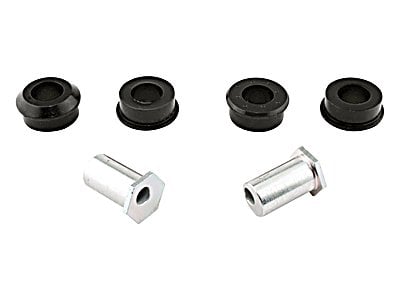
Tip: Adjustable inner bushings are made to add a little camber.
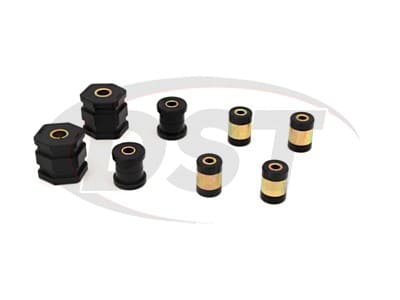
See all Front Control Arm Bushings parts for the 2000 Honda CR-V 2WD
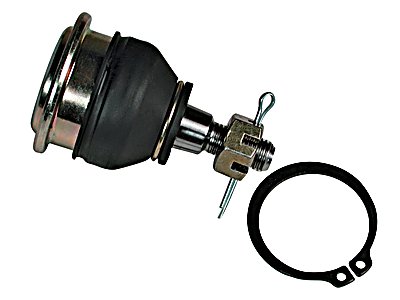
The upper ball joint sits in the tip of the upper arm. Its stud points down into the top of the knuckle upright.
Signs of wear: A clunk over bumps, play when the wheel is rocked top to bottom, or a split boot.
Tip: Adjustable upper joints give about a degree of camber or caster change.

See all Front Upper Ball Joint parts for the 2000 Honda CR-V 2WD
A stamped L shaped arm. Its outer end carries the lower ball joint, a short front leg pivots on a bushing in the subframe, and a long rear leg ends in the large compliance bushing. The damper fork and the sway bar link bolt to it beside the ball joint.
Signs of wear: Clunks over bumps or when braking, a vague steering feel, or cracked bushings.
Tip: Left and right arms are different parts. Replacement arms usually come with new bushings.
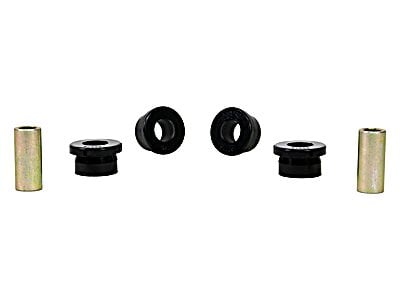
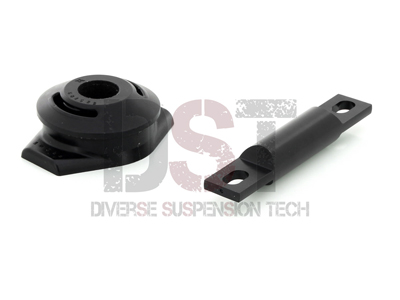
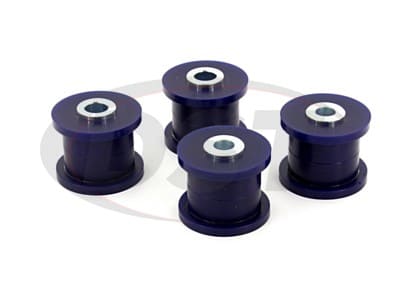
The bushing in the short front leg of the lower arm, on a bolt that runs front to back through the subframe.
Signs of wear: A clunk when pulling away or braking, or rubber that is torn.
See all Front Control Arm Bushings parts for the 2000 Honda CR-V 2WD
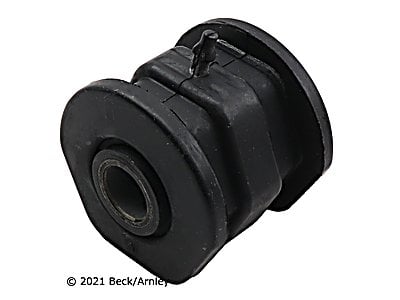
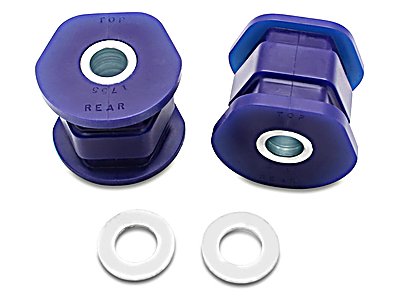
The large rear bushing of the lower arm, called the compliance bushing. It stands upright in the subframe's rear section and lets the wheel move back slightly over bumps.
Signs of wear: Shimmy or a shake under braking, a clunk over bumps, or rubber that has split.
Tip: Japan built cars use a hexagon shaped bushing; check the fit notes.
See all Front Control Arm Bushings parts for the 2000 Honda CR-V 2WD
The bushing pressed into the lower arm beside the ball joint. The foot of the damper fork bolts through it.
Signs of wear: A clunk from low in the corner over bumps, or a fork that moves on its bolt.
See all Front Control Arm Bushings parts for the 2000 Honda CR-V 2WD
A fork that straddles the CV axle. Its top clamps the foot of the coil over damper and its bottom bolts to the lower arm.
Signs of wear: A bent fork after a curb strike pulls the wheel out of line.
Tip: The fork is reused when the damper is replaced.
The damper stands on the fork and runs up through the upper arm to the tower. The coil spring sits on it, so it looks like a strut, but the two arms locate the wheel.
Signs of wear: Bouncing after bumps, nose dive under braking, or fluid on the body.
Tip: Complete assemblies with the spring and mount fitted need no spring compressor.
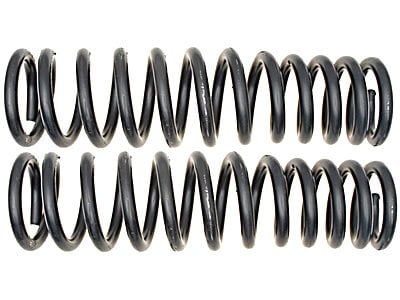
The front coil spring sits on a seat on the damper body and pushes up against the top mount, with a rubber insulator at the top.
Signs of wear: A corner sitting low, a broken coil end, or a clunk when turning at low speed.
Tip: Replace springs in pairs.
See all Front Coil Springs parts for the 2000 Honda CR-V 2WD
The rubber mount at the top of the damper, held to the tower by two studs.
Signs of wear: Knocks from the top of the damper over bumps.
Tip: Often replaced with the damper, since the damper must come out either way.
A rubber bellows over the damper rod with the bump stop inside. The spring hides it in the assembled view; the exploded view shows it.
Signs of wear: A torn boot, a scored rod, or a hard bang over big bumps.
Tip: Fit a new boot whenever the damper is replaced.
The knuckle carries the hub bearing and the caliper. A tall upright rises from it to the upper ball joint, the lower ball joint stud fits its bottom, and its rear arm takes the tie rod end.
Signs of wear: Knuckles rarely wear out. A bent one after a curb strike shows as a pull that an alignment will not fix.
The lower ball joint sits at the outer end of the lower arm, with its stud up into the bottom of the knuckle.
Signs of wear: A clunk over bumps or play when the wheel is rocked top to bottom.
Tip: It presses out with a ball joint press.
See all Front Lower Ball Joint parts for the 2000 Honda CR-V 2WD
The 26 mm front bar runs across behind the axle at the subframe's rear mounts, bent up over the propeller shaft. Short links join its ends to the lower arms.
Signs of wear: More body roll than before, usually from worn links or bushings rather than the bar.
Tip: Check the bar diameter before ordering bushings.
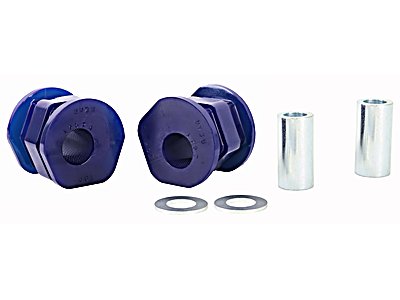
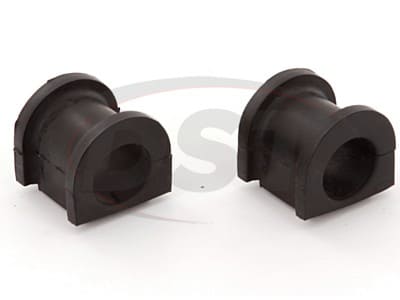
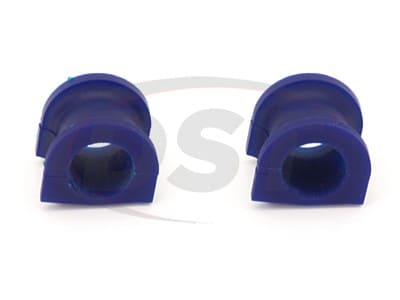
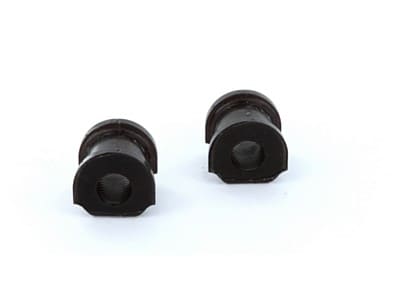
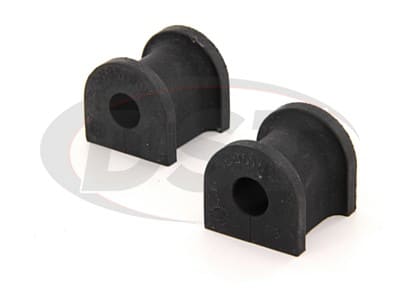
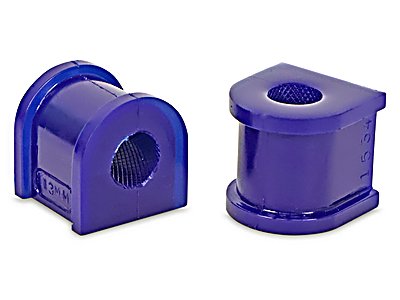
Two rubber bushings in steel clamps hold the front bar beside the subframe's rear mounts.
Signs of wear: Squeaks or knocks over speed bumps.
Tip: Bushings fit one bar diameter only; the stock bar is 26 mm.
See all Front Sway Bar Bushings parts for the 2000 Honda CR-V 2WD
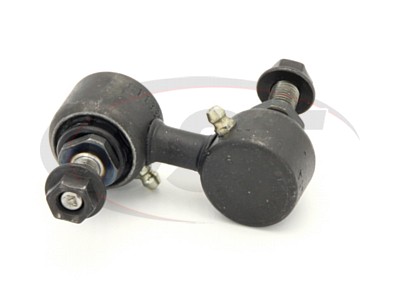
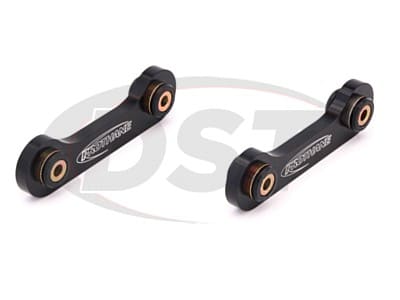
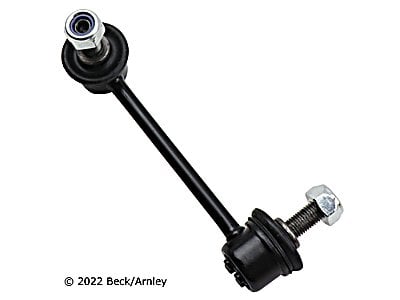
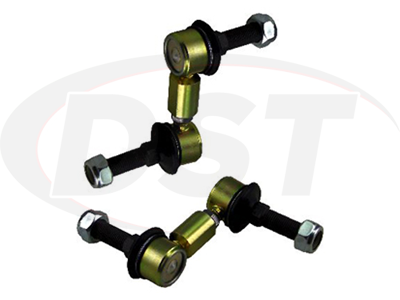
A short link, about 55 mm, with a ball stud at each end, from the lower arm down to the bar end.
Signs of wear: A rattle or knock over small bumps.
Tip: Both sides use the same link.

See all Front Sway Bar Endlinks parts for the 2000 Honda CR-V 2WD
The outer tie rod end threads onto the inner rod and its stud fits the steering arm at the rear of the knuckle.
Signs of wear: Loose steering, wander, or uneven tire wear.
Tip: Count the turns when you remove it and get an alignment afterward.
See all Front Outer Tie Rod End parts for the 2000 Honda CR-V 2WD
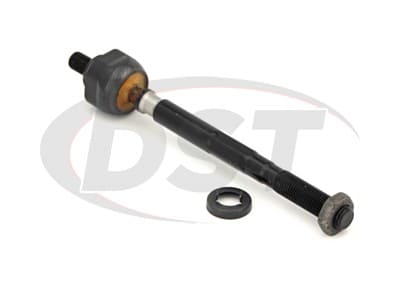
The inner tie rod screws into the end of the steering rack inside the rack boot.
Signs of wear: A clunk felt in the wheel or play at the rack end with the boot pulled back.
See all Front Inner Tie Rod End parts for the 2000 Honda CR-V 2WD
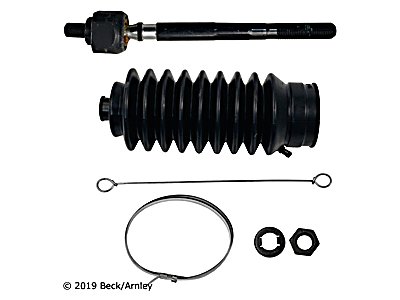
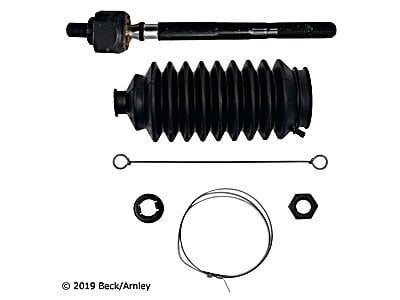
Rubber boots seal each end of the rack around the inner tie rods. Left and right boots differ.
Signs of wear: A split boot lets dirt into the rack.
Tip: Replace a torn boot before the inner tie rod wears.
See all Steering Rack Bellow parts for the 2000 Honda CR-V 2WD
The power rack and pinion sits behind the front axle on the subframe, with the pinion at the bulkhead on the driver side.
Signs of wear: Fluid leaks, a heavy wheel, or a knock over bumps.
Tip: Lowering or lifting the subframe needs a steering shaft extension.
Clamps with rubber bushings hold the rack to the subframe.
Signs of wear: A clunk felt through the wheel when turning, or a rack that shifts.
The CV axles run from the transaxle to the hubs. The passenger side runs through an intermediate shaft with a carrier bearing.
Signs of wear: A click when turning, grease thrown around the wheel, or a vibration under power.
Tip: The outer joint boot changed for 1999; 1997 and 1998 cars use their own boot kit.
See all CV Joint Parts - Front parts for the 2000 Honda CR-V 2WD
A two piece shaft runs from the transfer at the back of the transaxle to the rear differential, with a center carrier bearing bolted to the floor.
Not on every vehicle: Fitted to four wheel drive (Real Time 4WD) vehicles only; front wheel drive vehicles have no propeller shaft.
Signs of wear: A vibration that rises with speed, or a clunk from under the middle of the car.
Tip: The carrier bearing rubber is the usual wear point.
The rear differential sits on the rear cross member. Real Time 4WD uses two hydraulic pumps inside it to send power to the rear when the front wheels slip.
Not on every vehicle: Fitted to four wheel drive (Real Time 4WD) vehicles only; front wheel drive vehicles have no rear differential.
Signs of wear: A groan or shudder in tight turns usually means the differential fluid needs changing.
Tip: Use Honda dual pump fluid only.
Rubber mounts hold the differential: two at its rear arm on the cross member and two at its front support bracket on the body.
Not on every vehicle: Fitted to four wheel drive (Real Time 4WD) vehicles only; front wheel drive vehicles have no rear differential.
Signs of wear: A clunk from the rear when pulling away, or a differential that sits crooked.
Short CV axles run from the rear differential to the rear hubs.
Not on every vehicle: Fitted to four wheel drive (Real Time 4WD) vehicles only; front wheel drive vehicles have no rear drive shafts.
Signs of wear: A click or vibration from the rear under power.
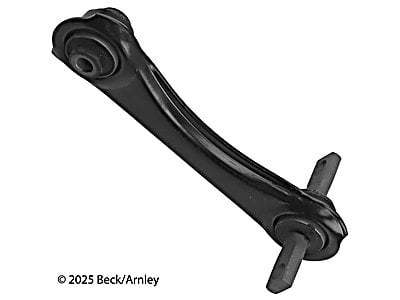
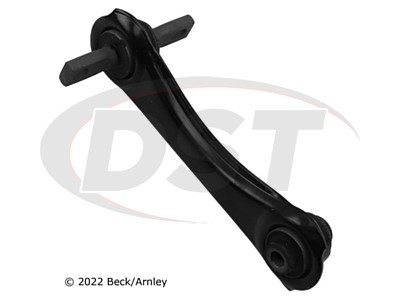
A short arm from the body to the top of the rear knuckle. It sets the rear camber.
Signs of wear: Inner edge wear on the rear tires, or a knock from the rear over bumps.
Tip: Adjustable arms are made for cars that need camber correction.
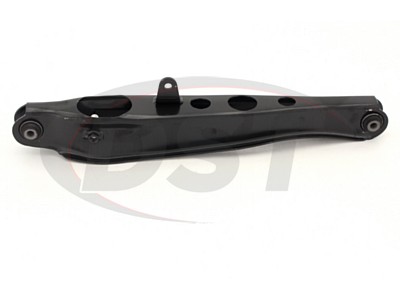
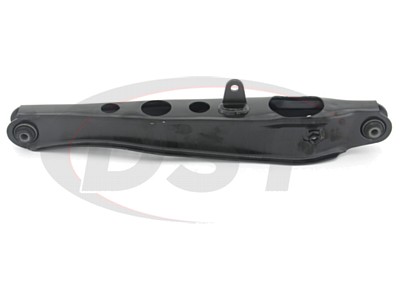
A long stamped arm from the rear cross member out to the bottom of the knuckle. The coil over damper stands on it near the outer end, and the sway bar link bolts to a tab on top.
Signs of wear: Clunks from the rear, sagging, or rear tire wear.
Tip: Left and right arms are different parts.
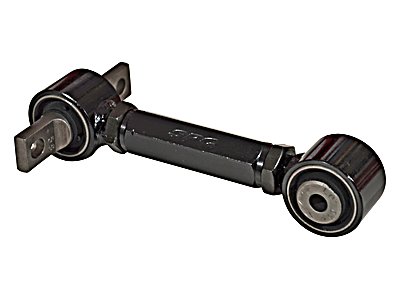
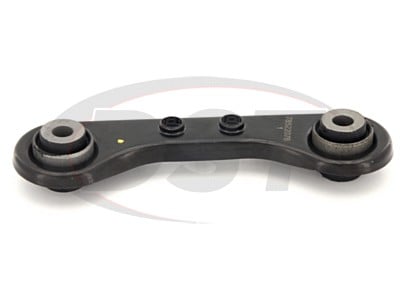
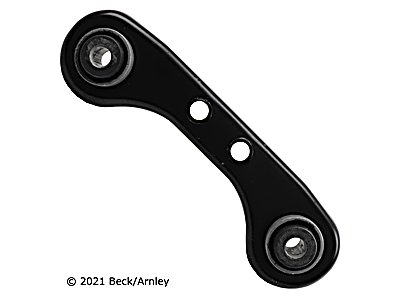
A short arm ahead of the axle between the body bracket and the trailing arm. It holds the rear toe as the suspension moves.
Signs of wear: Rear tires wearing on one edge, or a rear end that wanders.
Tip: Adjustable toe links replace it to set rear toe.
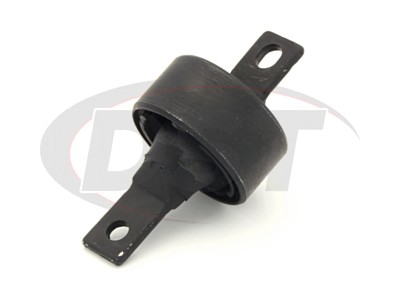
The bushings in both ends of the compensator arm.
Signs of wear: A knock from the rear over bumps.
See all Rear Compensator Arm Bushings parts for the 2000 Honda CR-V 2WD
A long stamped arm that pivots on a bushing in a body bracket ahead of the rear wheel. The rear knuckle is its back end: the hub, the drum brake and the ends of the other arms all bolt to it.
Signs of wear: A clunk or squeak from the rear on bumps, usually from its pivot bushing.
Tip: The arm itself rarely fails; its pivot bushing does.
The large pivot bushing at the front of the trailing arm, in a bracket bolted to the body on both sides of the arm.
Signs of wear: A clunk or squeak from the rear over bumps. A broken bushing is a common fault on this CR-V.
Tip: It presses out of the arm; the bracket must come off the body first.
See all Trailing Arm Bushings parts for the 2000 Honda CR-V 2WD
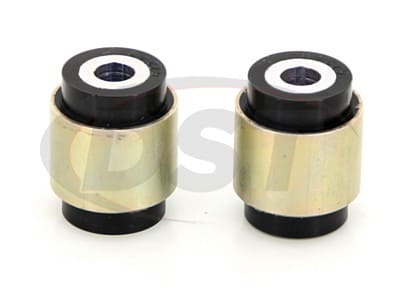
The rubber bushings in both ends of the upper and lower rear arms.
Signs of wear: Knocks from the rear and rear tire wear.
Tip: Offset bushings are made to adjust camber.
See all Rear Control Arm Bushings parts for the 2000 Honda CR-V 2WD
The rear damper carries the coil spring. Its lower eye bolts to the lower arm and its top bolts up into the body.
Signs of wear: Bouncing over bumps, a rear end that floats, or fluid on the body.
Tip: Complete assemblies with the spring and mount fitted need no spring compressor.
See all Rear Shock Absorber parts for the 2000 Honda CR-V 2WD
The rear spring sits on the damper between a lower seat and the top mount, with a rubber insulator.
Signs of wear: A sagging rear corner or a broken coil.
Tip: Replace in pairs.
The rubber mount at the top of the rear damper.
Signs of wear: A knock from the rear over bumps.
The bellows and bump stop on the rear damper rod.
Signs of wear: A torn boot or a hard bang over big bumps.
The thin rear bar runs across behind the rear cross member. Its ends reach forward to links on the lower arms.
Signs of wear: More rear body roll than before, usually from worn links or bushings.
Two bushings in clamps hold the rear bar to the body.
Signs of wear: Squeaks or knocks from the rear.
Tip: Bushings fit one bar diameter only.
See all Rear Sway Bar Bushings parts for the 2000 Honda CR-V 2WD
A link with a ball stud at each end, from the tab on the lower arm up to the bar end.
Signs of wear: A rattle from the rear over small bumps.
Tip: Left and right links are listed separately.
See all Rear Sway Bar Endlinks parts for the 2000 Honda CR-V 2WD
The bearing is pressed into the knuckle and the hub is pressed through it. The CV axle splines into the hub and an axle nut holds it.
Signs of wear: A hum or growl that changes with speed and gets louder in turns.
Tip: Pressing a bearing needs a press.
See all Front Wheel Bearing Assembly parts for the 2000 Honda CR-V 2WD
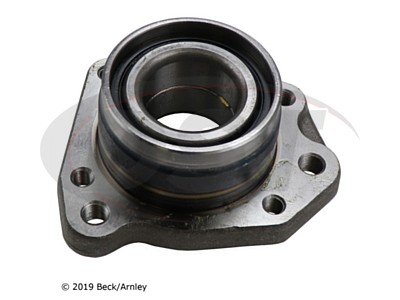
A bolt on hub and bearing unit on the trailing arm's knuckle. On 4WD the rear CV axle splines through it and an axle nut holds it.
Signs of wear: A hum from the rear that changes with speed.
Tip: Left and right hubs are different parts.
See all Rear Wheel Bearing and Hub Assembly parts for the 2000 Honda CR-V 2WD
The rear brakes are drums: a drum over the hub with two shoes inside on a backing plate.
Signs of wear: A weak parking brake, a scraping noise, or pulsing from the rear.
Tip: Adjust the shoes after fitting so the parking brake works.
Vented front rotors, 282 mm across.
Signs of wear: Pulsing in the pedal, grooves, or a lip at the edge.
A single piston floating caliper behind the axle, on a bracket bolted to the knuckle.
Signs of wear: Pulling under braking, a dragging wheel, or a fluid leak.
Tip: Calipers are listed by side.
The pads sit in the caliper bracket either side of the rotor.
Signs of wear: Squealing, grinding, or a long pedal.
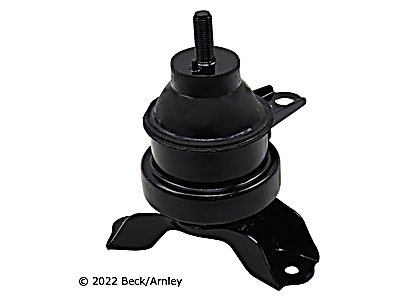
Rubber mounts hold the engine to the body and subframe. The side mount sits on the passenger frame rail.
Signs of wear: A thud when shifting, more vibration at idle, or an engine that rocks.
Tip: Replace a collapsed mount before it strains the others.

The transmission side mount sits on the driver frame rail. Manual and automatic cars use different brackets.
Signs of wear: A clunk when shifting into gear or pulling away.

See all Transmission Mount parts for the 2000 Honda CR-V 2WD
The rear trailing arm bushing is the classic one. It cracks and causes a clunk or squeak from the rear over bumps. The front compliance bushings, upper ball joints and sway bar links are next.
Yes, at both ends. The front upper arm sits high in the wheel well on top of a tall knuckle, and the rear has a short upper arm from the body to the top of the knuckle.
A short arm ahead of the rear axle that holds the rear toe as the suspension moves. Adjustable toe links replace it when the rear toe needs setting.
The arms, ball joints, tie rods, dampers and springs carry the same part numbers. The 4WD adds the propeller shaft, the rear differential and its mounts, and the rear CV axles.
No. Every 1997 to 2001 CR-V has rear drum brakes with shoes inside, and front disc brakes.
Numbered diagrams to print or save for the shop. The numbers match the numbered parts on the interactive diagram.