Complete Strut Assemblies
A strut with its spring, mount and boot already assembled, so no spring compressor is needed.
This interactive diagram shows the front suspension, steering and rear suspension of the 2018 Nissan Rogue. Hover over or tap any part to see what it does, the signs that it is worn, and the replacement parts we carry that fit your SUV, down to the side and position.
We carry parts for it Not stocked yet Hover or tap any part.
The 2014 to 2020 Rogue uses MacPherson struts at the front, with the coil spring on the strut and a stamped steel lower arm under each corner. The steering rack sits low on the subframe ahead of the axle, and the front brake caliper sits behind the axle. The rear is a multi-link design on its own subframe: a big trailing arm carries the coil spring, a long lateral lower link and a forged upper link locate the knuckle, and the rear shocks are separate from the springs. All wheel drive cars add a rear differential and two rear CV shafts, which are marked as optional.
We carry replacement parts for 29 of the 38 components on this diagram, 89 parts in all. See every part for the 2018 Nissan Rogue.
A strut with its spring, mount and boot already assembled, so no spring compressor is needed.
Front struts and rear shocks for the whole car in one order.
The strut is the shock absorber and the upper locating part of the front corner in one. Its bottom clamps to the top of the knuckle with two bolts, the coil spring sits on its perforated seat, and its top bolts into the strut tower.
Signs of wear: Bouncing after bumps, nose dive under braking, fluid on the body, or a knock from the top of the strut over rough roads.
Tip: Struts are sold bare or as a complete assembly with the spring and mount already fitted. The complete assembly needs no spring compressor.
See all Front Shock Absorber parts for the 2018 Nissan Rogue
The front coil spring rides on the strut between the lower seat on the strut body and the upper seat under the mount. It holds the front of the car at its ride height.
Signs of wear: A front corner sitting lower than the other, a clunk over bumps from a broken end coil, or tires rubbing on full lock.
Tip: Springs are replaced in pairs. A spring compressor is needed unless you fit a complete strut assembly.
The strut mount bolts the top of the strut to the body. It holds a bearing so the strut and spring can turn with the steering, and rubber to keep road noise out of the car.
Signs of wear: A clunk or creak from the top of the strut when turning, or steering that springs back unevenly.
Tip: Mounts are often replaced with the struts, since the strut has to come out anyway.
A rubber bellows covers the strut rod above the spring seat and keeps dirt off its seal. A bump stop inside it cushions the strut at full compression.
Signs of wear: A torn boot, or a harsh bang when the front hits a big bump.
Tip: Fit new boots when replacing struts; a split boot shortens the life of the new strut.
See all Front Shock Bellows Boot Kit parts for the 2018 Nissan Rogue
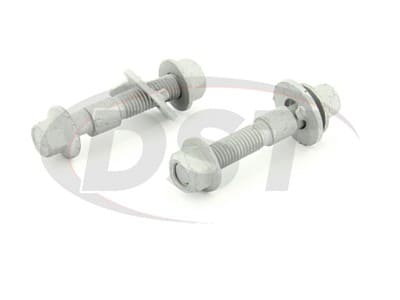
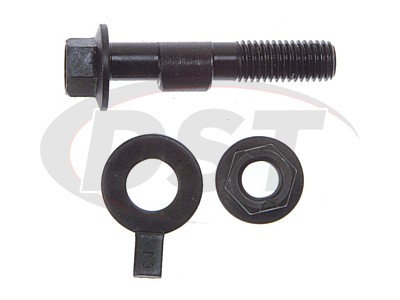
The upper of the two bolts that clamp the strut to the knuckle. An eccentric replacement bolt lets the shop adjust front camber, which is otherwise fixed.
Signs of wear: Inner or outer edge tire wear that an ordinary alignment cannot correct.
Tip: Replace one bolt per side with the eccentric bolt and have the car aligned.
See all Front End Alignment Kit parts for the 2018 Nissan Rogue
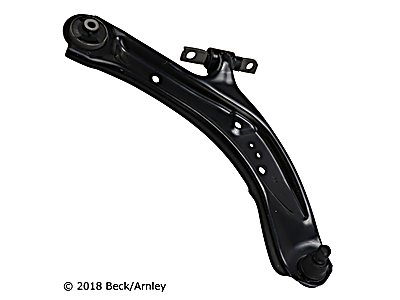
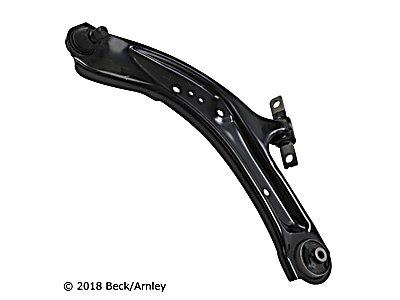
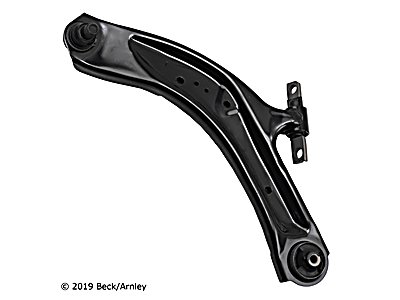
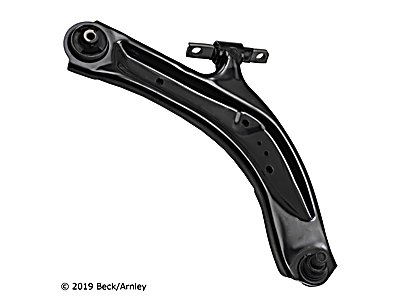
The stamped steel lower arm runs from the bottom of the knuckle to the subframe, with a bushing at its front and a bushing at its rear. The ball joint is pressed into its outer end.
Signs of wear: A clunk over bumps or when braking, steering wander, uneven tire wear, or a torn ball joint boot.
Tip: The arms come with the ball joint and both bushings fitted. Cars with a third row of seats take a different arm; check the notes. An alignment is needed afterwards.
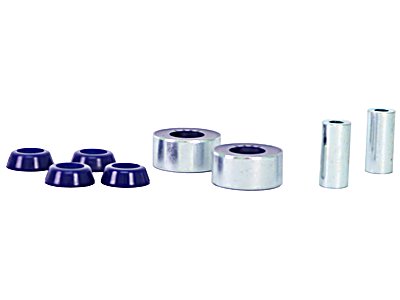
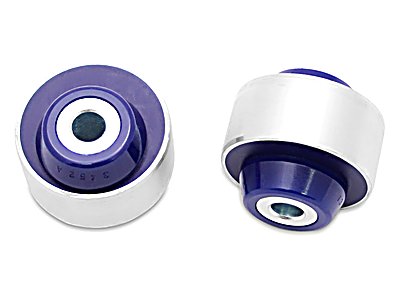
Each lower arm sits in two rubber bushings, one at its front end and one at its rear end.
Signs of wear: A clunk when accelerating or braking, a loose feel over bumps, or the car pulling on braking.
Tip: The arm comes with new bushings, so pressing bushings alone saves money only if the arm and ball joint are good.
See all Front Control Arm Bushings parts for the 2018 Nissan Rogue
The ball joint is pressed into the outer end of the lower arm. Its stud rises into the knuckle, where a pinch bolt holds it.
Signs of wear: A knock over bumps, a loose steering feel, or grease leaking from a split boot.
Tip: The joint is sold alone for cars with a third row of seats, and comes already fitted in the lower arm on every car.
See all Front Lower Ball Joint parts for the 2018 Nissan Rogue
The knuckle carries the hub and brake. The strut clamps to its top, the ball joint holds its bottom, and the outer tie rod turns it through the steering arm at its front.
Signs of wear: Usually replaced only after damage; a bent knuckle shows up as an alignment that will not set.
Tip: The hub bolts to the knuckle from behind with four bolts.
The front sway bar crosses the car on the subframe ahead of the engine. Long links at its ends reach up to the struts, so the bar resists body roll in corners.
Signs of wear: Heavy body roll, or a clunk from a worn link or bushing.
Tip: The bar rarely fails. Its bushings and links are the wear parts.
Two rubber bushings in clamps hold the front sway bar to the subframe.
Signs of wear: A squeak or clunk from under the front over bumps.
Tip: Buy the bushing for your bar's diameter.
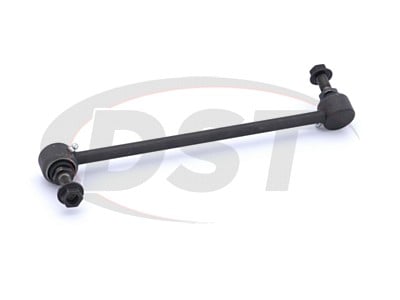
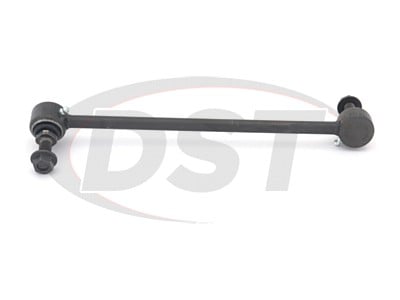
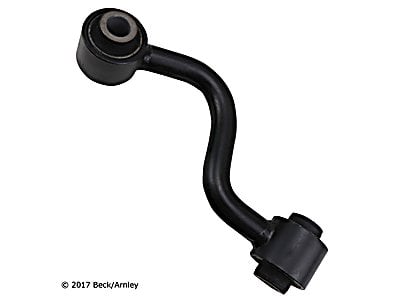
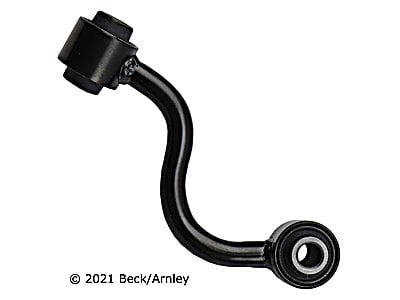
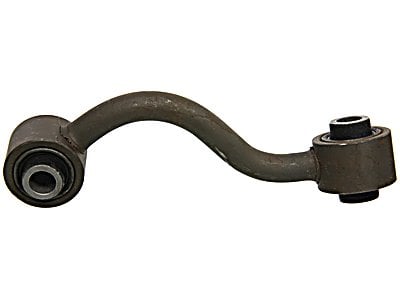
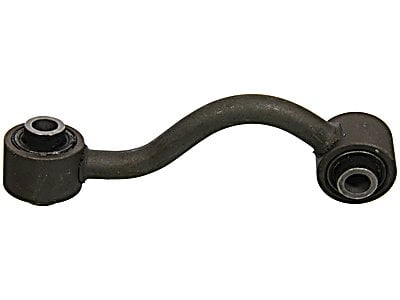
A long link with a ball stud at each end joins each end of the front sway bar to a tab on the strut body.
Signs of wear: A knock or rattle from the front over small bumps, often the first front end noise on these cars.
Tip: Hold the stud with a hex key while turning the nut.

See all Front Sway Bar Endlinks parts for the 2018 Nissan Rogue
The rack and pinion sits low on the subframe ahead of the axle. Rubber boots at each end cover the inner tie rods and keep dirt out of the rack.
Signs of wear: A torn boot, a clunk when turning, or steering fluid on the boot.
Tip: Replace a torn boot quickly; grit in the rack wears it fast.
See all Steering Rack Bellow parts for the 2018 Nissan Rogue
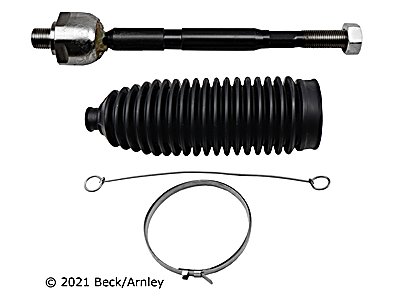
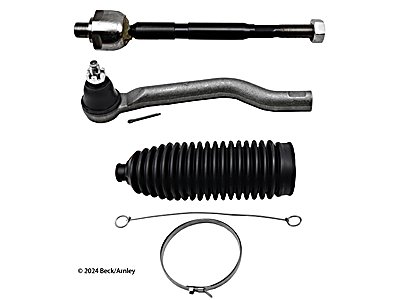
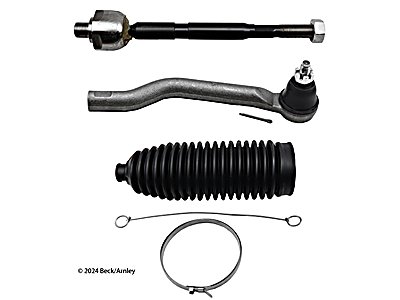
The inner tie rod screws into the end of the rack under the boot and carries the outer tie rod end on its threaded end.
Signs of wear: A clunk or play in the steering, or the car wandering on the road.
Tip: Count the turns when you unscrew the outer end and set the toe afterwards.

See all Front Inner Tie Rod End parts for the 2018 Nissan Rogue
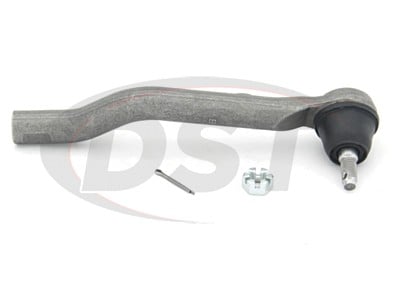
The outer tie rod end joins the inner tie rod to the steering arm at the front of the knuckle with a ball stud.
Signs of wear: Loose steering, a knock over bumps, or wear on the edges of the front tires.
Tip: An alignment is needed after replacing either tie rod.

See all Front Outer Tie Rod End parts for the 2018 Nissan Rogue
A CV shaft runs from the transaxle out to each front hub, with a constant velocity joint at each end under a rubber boot.
Signs of wear: A clicking noise when turning, a vibration when accelerating, or grease thrown from a split boot.
Tip: The shafts are different lengths. Boot kits are sold for each joint.
See all CV Joint Parts - Front parts for the 2018 Nissan Rogue
On all wheel drive cars a CV shaft runs from the rear differential out to each rear hub.
Not on every vehicle: All wheel drive cars only
Signs of wear: A clicking noise on turns, or grease thrown from a split boot.
Tip: Only on all wheel drive cars; front wheel drive cars have no rear shafts.
See all CV Joint Parts - Rear parts for the 2018 Nissan Rogue
The rear knuckle carries the hub. The trailing arm bolts to a bracket behind the hub, the lateral lower link to its bottom, the upper link to its top, and the shock to an ear behind the hub.
Signs of wear: Usually replaced only after damage.
Tip: Mark the alignment bolts before taking the rear apart.
The big stamped trailing arm runs forward from the knuckle to a bushing at the body. The coil spring stands in a pocket on its top.
Signs of wear: A clunk from the rear under braking or over bumps, or a rear wheel that wanders.
Tip: We sell the bushing at its front end; the arm itself is a dealer part.
A rubber bushing in the front eye of each trailing arm.
Signs of wear: A clunk from the rear when braking or accelerating.
Tip: The bushing sits in the arm, so the arm comes off to press it out.
See all Trailing Arm Bushings parts for the 2018 Nissan Rogue
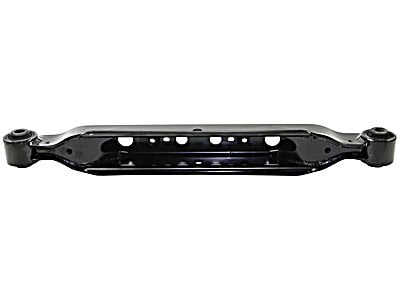
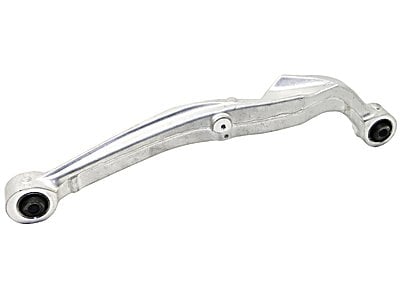
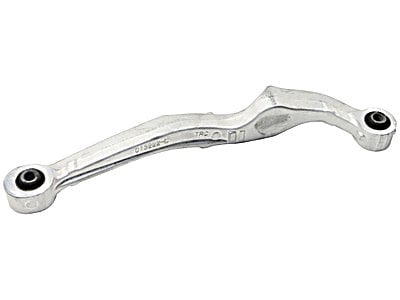
The long stamped lower link runs across from the subframe to the bottom of the rear knuckle. An eccentric bolt at its inner end sets rear camber, and the rear sway bar links stand on it.
Signs of wear: A knock from the rear over bumps, tire wear on the rear inner edges, or a rear wheel that will not hold its alignment.
Tip: The same link fits the left and right sides. An alignment is needed afterwards.
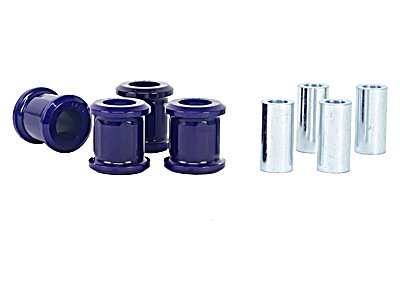
A rubber bushing in each end of the lateral lower link.
Signs of wear: A clunk from the rear over bumps, or rear tire wear.
Tip: Mark the alignment bolt washer before removing the bolt, so the toe stays close.
See all Rear Control Arm Bushings parts for the 2018 Nissan Rogue
The rear coil spring stands in the pocket of the trailing arm, with rubber seats at each end, and pushes up against a pad on the body.
Signs of wear: A sagging rear corner or a clunk from a broken coil.
Tip: Replace springs in pairs.
The forged tube-shaped upper link joins the top of the rear knuckle to the subframe, behind the lateral lower link.
Signs of wear: Rear tires wearing on their inside edges, or a clunk from the rear.
Tip: The links are made for each side. An alignment is needed afterwards.
The rear shock is separate from the spring, with a bushed eye at each end. It stands behind the hub.
Signs of wear: Bouncing after bumps, a floaty rear on the highway, or fluid on the body.
Tip: Replace shocks in pairs.
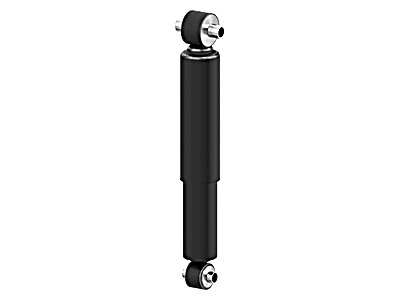
Rubber bushings, a sleeve and retainer washers hold the top of the rear shock.
Signs of wear: A knock from the rear over bumps.
Tip: Fit new mount rubbers with new shocks.
The rear sway bar runs across behind the subframe. Short links drop from its ends to the rear lateral lower links.
Signs of wear: Body roll in corners, or a clunk from the rear.
Tip: The bar rarely fails. Its bushings and links are the wear parts.
Two rubber bushings in clamps hold the rear bar to the subframe.
Signs of wear: A squeak or knock from the rear.
Tip: Replace both bushings together.
See all Rear Sway Bar Bushings parts for the 2018 Nissan Rogue
A short link with a ball stud at each end joins each end of the rear sway bar to a bracket on the rear lateral lower link.
Signs of wear: A rattle from the rear over small bumps.
Tip: Hold the stud with a hex key while turning the nut.
See all Rear Sway Bar Endlinks parts for the 2018 Nissan Rogue
The hub assembly bolts to the knuckle and holds the wheel studs, the bearing and the CV shaft splines.
Signs of wear: A hum or growl that changes with speed or when turning, play at the wheel, or an ABS light.
Tip: The hub bolts on from behind, so no press is needed. Use a new axle nut.
See all Front Wheel Bearing and Hub Assembly parts for the 2018 Nissan Rogue
A 296 mm vented rotor on the front hub.
Signs of wear: A pulsing brake pedal, a vibration under braking, or a grooved or rusted disc.
Tip: Replace rotors in pairs and fit new pads with them.
A single piston floating caliper on a bracket behind the axle. Cars with a third row of seats have a two piston caliper.
Signs of wear: The car pulling under braking, a dragging wheel, or a brake fluid leak.
Tip: Bleed the brakes after replacing a caliper.
The pads sit in the caliper bracket either side of the rotor. The pads we sell have a slot and a wear sensor tab. Cars with a third row of seats take a different pad.
Signs of wear: A squeal from the wear sensor, grinding, or a longer stop.
Tip: Replace pads on both sides together.
The rear hub assembly bolts to the rear knuckle and carries the wheel studs and the bearing. Front wheel drive and all wheel drive cars use different hubs.
Signs of wear: A hum or growl from the rear that changes with speed.
Tip: The hub bolts on as a unit. Check the notes for your drive.

See all Rear Wheel Bearing and Hub Assembly parts for the 2018 Nissan Rogue
A 292 mm vented rotor on the rear hub. Its hat is a small drum for the parking brake shoes inside it.
Signs of wear: A pulsing pedal, a grooved rotor, or a parking brake that does not hold.
Tip: Cars with an electric parking brake take a different rotor from 2018; check the notes.
A single piston caliper on a bracket on the rear knuckle, behind the axle.
Signs of wear: A dragging rear wheel, or a leak.
Tip: The parking brake works on separate shoes, so the piston pushes straight back.
The rear pads sit in the caliper bracket either side of the rotor.
Signs of wear: Squealing or grinding from the rear.
Tip: Cars with an electric parking brake (2018 on) take different pads; check the notes.
Two small shoes inside the hat of each rear rotor work the parking brake.
Signs of wear: A parking brake lever that pulls up too far, or a car that rolls with the brake set.
Tip: They sit inside the rotor hat, so the rotor comes off first.
Front sway bar links and front lower control arms are the parts most often replaced, followed by the rear sway bar links, strut mounts, tie rod ends and the rear lateral lower link bushings. A knock over small bumps at the front is most often a sway bar link.
No. The front uses struts, so the strut itself locates the top of the knuckle. There is one lower control arm per side. The rear does have an upper link on each side.
The links, coil springs, shocks and sway bar are the same. All wheel drive cars add a rear differential, a prop shaft and two rear CV shafts, and they use a different rear wheel bearing and hub from the front wheel drive cars, so check the fit notes on each part.
Not always. Cars with a third row take a different front lower control arm, front lower ball joint, front rotor, caliper and pads. The listings carry a note for those parts.
Yes, after replacing tie rods, struts, front lower arms or any rear link. Rear camber and toe are set at eccentric bolts on the rear links, so mark them before you take the rear apart.
Numbered diagrams to print or save for the shop. The numbers match the numbered parts on the interactive diagram.