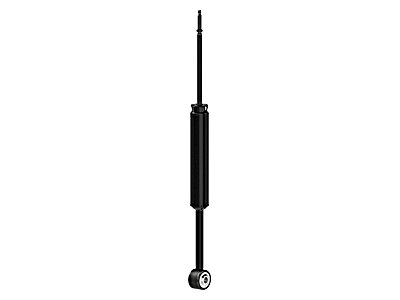
Strut and Shock Sets
Front struts and rear shocks for the whole vehicle in one order.
This interactive diagram shows the front suspension, steering and rear suspension of the 2016 Chrysler 200. Hover over or tap any part to see what it does, the signs that it is worn, and the replacement parts we carry that fit your 200, down to the side and position.
We carry parts for it Not stocked yet Hover or tap any part.
The 2015 to 2017 Chrysler 200 uses MacPherson struts at the front, with the coil spring on the strut and an aluminum L shaped lower arm under each corner. The lower ball joint is pressed into the arm and its stud is clamped in the knuckle by a pinch bolt. The steering rack sits on the front cradle behind the axle, and long links connect the front sway bar to the struts. The rear is a multi-link design on its own crossmember: a long lower arm behind the axle carries the coil spring, a lower arm sits ahead of the axle, an upper arm sits on top, and a trailing arm runs forward to the body. The rear shocks are separate from the springs. The diagram shows the front wheel drive car.
We carry replacement parts for 24 of the 35 components on this diagram, 72 parts in all. See every part for the 2016 Chrysler 200.
Front struts and rear shocks for the whole vehicle in one order.
A strut with its spring, mount and boot already assembled, so no spring compressor is needed.
The strut is the shock absorber and the upper locating part of the front corner in one. Its plain lower tube is clamped in a collar at the top of the knuckle, the coil spring sits on it, and its top bolts into the strut tower.
Signs of wear: Bouncing after bumps, nose dive under braking, fluid on the tube, or a knock from the top of the strut over rough roads.
Tip: Left and right struts are different parts, because the brackets on the tube are handed.
See all Front Shock Absorber parts for the 2016 Chrysler 200
The front coil spring sits on a seat on the strut tube and pushes up against the top mount. It carries the weight of the front of the car.
Signs of wear: A front corner sitting lower than the other, a broken coil end, or a clunk when turning the wheel at a stop.
Tip: A complete strut assembly comes with the spring already fitted.
The strut mount is the rubber and bearing block at the top of the strut. It bolts to the strut tower, and its bearing lets the strut turn with the steering.
Signs of wear: Clunks or creaks from the top of the strut when steering at low speed, or a steering wheel that does not return to center.
Tip: The mount is often replaced along with the strut, since the strut has to come out either way.
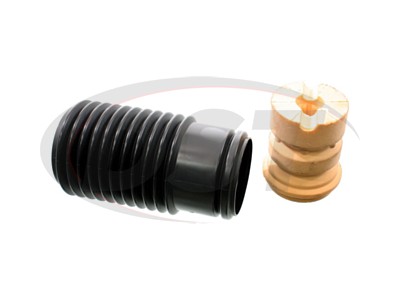
A rubber bellows covers the strut rod and a bump stop inside it stops the strut from bottoming out.
Signs of wear: A torn or missing bellows, or a hard thump over large bumps.
Tip: Bellows kits usually include the bump stop.
See all Front Shock Bellows Boot Kit parts for the 2016 Chrysler 200
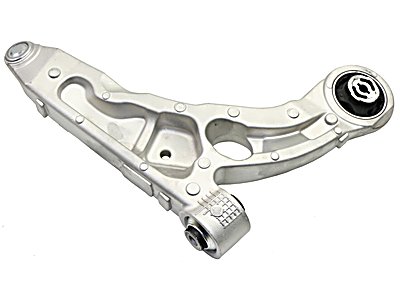
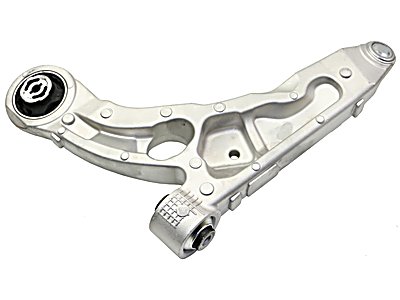
An aluminum L shaped arm under each front corner. Its front leg runs along the axle line to a bushing on a front to back bolt in the front cradle, its rear leg ends in an upright bushing, and the ball joint is pressed into its outer end with the stud pointing up into a pinch bolt boss on the knuckle.
Signs of wear: Clunks over bumps or under braking, steering that wanders, play at the ball joint, or uneven tire wear on the inner edge.
Tip: Two arms were fitted: one for cars with 17 inch wheels and one for 18 and 19 inch wheels. The arm comes with the ball joint and bushings fitted.
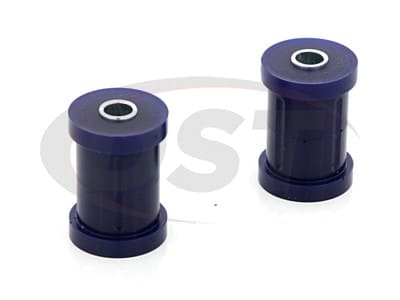
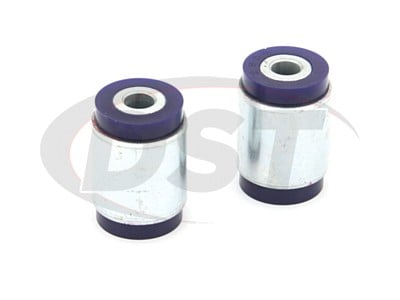
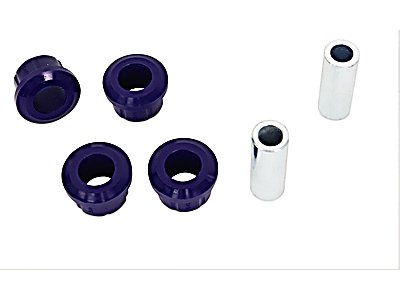
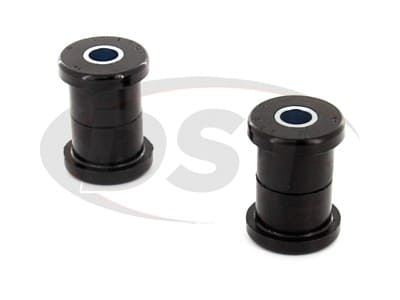
Each lower arm has two bushings: one in the front leg on a bolt that runs front to back, and a larger one in the end of the rear leg on an upright bolt.
Signs of wear: Clunks when braking or pulling away, a vague steering feel, or rubber that is cracked or pushed out of its eye.
Tip: Front and rear bushings are different parts. The Moog bushings are listed for cars with 17 inch wheels.
See all Front Control Arm Bushings parts for the 2016 Chrysler 200
The knuckle carries the hub bearing and the brake caliper. The strut sits in a collar at its top, the ball joint stud is clamped in a pinch bolt boss at its bottom, and its rear arm takes the outer tie rod end.
Signs of wear: Knuckles rarely wear out. A bent knuckle after a curb strike shows as a pull that an alignment will not fix.
The front sway bar runs across the front cradle and is held in two rubber bushings. Its ends connect to the struts by long links.
Signs of wear: Body roll in turns or a knock over uneven bumps.
Two rubber bushings in steel clamps hold the bar to the front cradle.
Signs of wear: A squeak or knock over bumps, worst in cold weather.
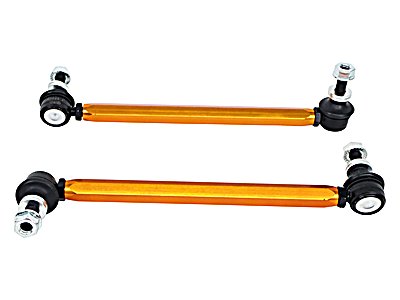
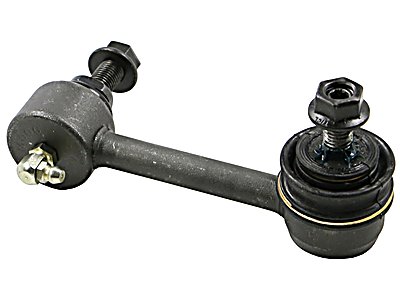
A long link with a ball stud at each end runs from the end of the sway bar up to a bracket on the strut tube.
Signs of wear: A knock from the front over small bumps, or a torn ball stud boot.
Tip: Two link designs are listed. Check the trim and drive on each part.

See all Front Sway Bar Endlinks parts for the 2016 Chrysler 200
Eccentric bolts that replace a factory bolt to give extra camber adjustment at the front.
Signs of wear: Camber that cannot be brought into range after a curb strike or a spring change.
The electric power steering rack sits across the rear of the front cradle, behind the axle line. It pushes the inner tie rods left and right.
Signs of wear: A knock through the steering wheel, a warning light, or play in the steering.
The inner tie rod screws into the end of the rack under a rubber boot and runs out to the outer tie rod end.
Signs of wear: Play in the steering, a clunk when turning, or uneven tire wear.
Tip: Set the toe after replacing one.
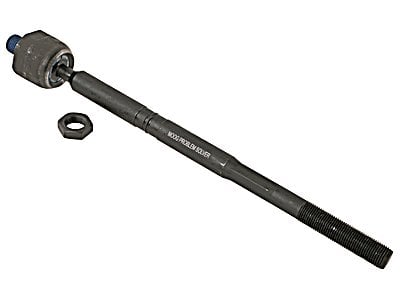

See all Front Inner Tie Rod End parts for the 2016 Chrysler 200
The outer tie rod end threads onto the inner tie rod and its stud fits the steering arm at the rear of the knuckle.
Signs of wear: Play in the wheel when rocked side to side, a clunk when steering, or a torn boot.
Tip: Count the turns when you remove the old end, then get an alignment.

See all Front Outer Tie Rod End parts for the 2016 Chrysler 200
A CV axle runs from the transaxle to each front hub, with a boot over the joint at each end.
Signs of wear: Clicking when turning under power, a vibration when accelerating, or grease on the inside of the wheel.
The rear knuckle carries the hub. The two lower arms, the upper arm, the trailing arm and the shock all attach to it.
Signs of wear: A clunk from the rear over bumps, or rear tires wearing on the edges.
A wide stamped arm behind the axle line. The rear coil spring sits in a pocket on it, the inner end pivots on the rear crossmember and the outer end bolts to the knuckle. The rear sway bar link bolts to it.
Signs of wear: A clunk over bumps, a rear corner sitting low, or rust through the spring pocket.
The rear coil spring sits between the pocket in the lower rearward arm and a seat on the body. The shock is separate.
Signs of wear: A rear corner sitting low, a broken coil end, or a clunk over bumps.
Tip: Front wheel drive and AWD V6 cars take different springs. Replace them in pairs.
A short arm ahead of the axle line, from the rear crossmember out to the knuckle.
Signs of wear: A clunk over bumps or rear toe that will not hold.
Eccentric cam bolts with cam washers at the inner ends of the rear arms. Turning them moves the arm in or out to set the rear camber or toe.
Signs of wear: A cam bolt seized by rust, so the rear alignment cannot be set.
Tip: Seized cam bolts often have to be cut out, so a new kit is worth having on hand.
See all Rear End Alignment Kit parts for the 2016 Chrysler 200
An arm above the axle line, from the rear crossmember out to the top of the knuckle.
Signs of wear: A clunk from the rear, or tires wearing on the inner edge.
A stamped arm bolted to the front of the rear knuckle and running forward to a bushing in a bracket on the body.
Signs of wear: A clunk when pulling away or braking, or a rear wheel that steers itself over bumps.
The rear shock is separate from the spring. Its lower eye bolts to the rear knuckle and its stem top bolts through a mount on the body.
Signs of wear: Bouncing at the rear, fluid on the body, or a knock from the top mount.
A rubber bellows with a bump stop covers the rear shock rod under its top mount.
Signs of wear: A torn bellows, or a hard thump from the rear over large bumps.
See all Rear Shock Bellows Boot parts for the 2016 Chrysler 200
The rear sway bar runs behind the rear crossmember in two clamped bushings, and short links connect its ends to the spring arms.
Signs of wear: Body roll at the rear or a knock over uneven bumps.
Two rubber bushings in steel clamps hold the rear bar.
Signs of wear: A squeak or knock from the rear over bumps.
A short link with a ball stud at each end connects each end of the rear bar to the spring arm.
Signs of wear: A rattle or knock from the rear over small bumps.
Tip: The links are sided.
See all Rear Sway Bar Endlinks parts for the 2016 Chrysler 200
A sealed bearing and hub bolted to the face of the knuckle. The wheel bolts thread into its flange; the 200 uses lug bolts, not studs and nuts.
Signs of wear: A hum or growl that changes with speed or when turning, or play in the wheel.
Tip: Moog 515192 replaces 513348.
See all Front Wheel Bearing and Hub Assembly parts for the 2016 Chrysler 200
The vented front rotor sits over the hub, clamped by the wheel.
Signs of wear: Pulsing in the pedal, grooves or a lip on the disc, or squealing.
Tip: Two sizes were fitted: 305 mm on standard brakes and 330 mm on heavy duty brakes. Measure yours or check the part notes.
The single piston caliper sits on its bracket ahead of the axle line and squeezes the pads against the rotor.
Signs of wear: Pulling to one side, a sticking brake, or fluid at the caliper.
Tip: The caliper is matched to the rotor size. Check before ordering.
Two pads in the caliper, one each side of the rotor.
Signs of wear: Squealing from the wear indicator, grinding, or a longer pedal.
Tip: Pads depend on the rotor size. Check the part notes.
A sealed bearing and hub bolted to the rear knuckle.
Signs of wear: A hum or growl from the rear that changes with speed.
Tip: Front wheel drive and AWD 200s take different rear hubs.
See all Rear Wheel Bearing and Hub Assembly parts for the 2016 Chrysler 200
The solid rear rotor sits over the rear hub, clamped by the wheel.
Signs of wear: Pulsing, grooves, or a parking brake that does not hold.
The rear caliper sits on its bracket on the rear knuckle.
Signs of wear: A dragging rear brake or fluid at the caliper.
Tip: The rear caliper has the electric parking brake motor on it.
Two pads in the rear caliper.
Signs of wear: Squealing or grinding from the rear.
Sway bar links, front lower control arm bushings and ball joints, tie rod ends, struts and rear shocks are the usual wear parts on this suspension.
The ball joint is pressed into the aluminum lower arm, and replacement arms come with the ball joint and both bushings already fitted. The arm bushings are also sold on their own.
Cars with 17 inch wheels take one arm and cars with 18 or 19 inch wheels take another. Check the wheel size on each part before ordering.
The 2.4 liter four cylinder cars use 305 mm front rotors, and the 3.6 liter V6 cars use 330 mm heavy duty rotors with their own calipers and pads. Measure your rotor or check the notes on each part.
The arms and brakes are shared, but AWD cars add a driveshaft, a rear drive module and rear halfshafts, and use their own rear hubs and rear springs. Check the drive type on each part before ordering.
Yes, after replacing tie rods, struts, control arms or rear arms. Front toe is set at the tie rods. Rear camber and toe can be set with the cam bolt kits we list for this car.
Numbered diagrams to print or save for the shop. The numbers match the numbered parts on the interactive diagram.