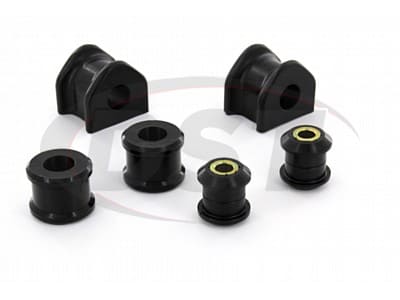
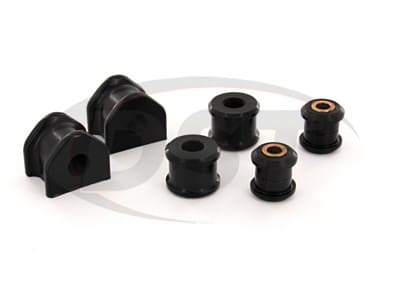
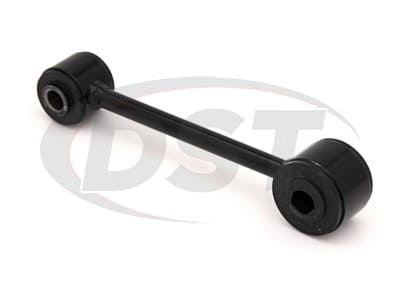
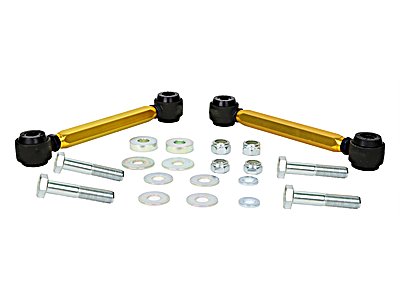
Front End Steering Rebuild Kits
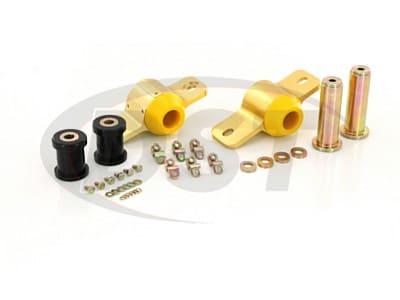
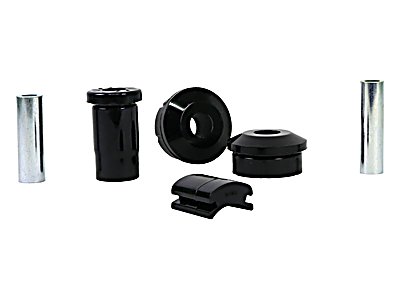
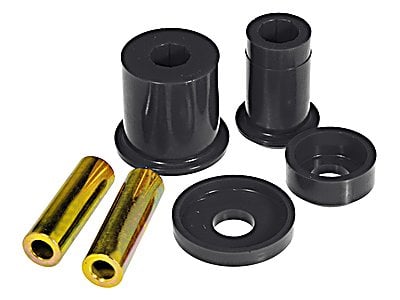
Package kits bundle the wearing front end parts in one order.

This interactive diagram shows the front suspension, steering and rear suspension of the 2005 Ford Mustang. Hover over or tap any part to see what it does, the signs that it is worn, and the replacement parts we carry that fit your Mustang, down to the side and position.
We carry parts for it Not stocked yet Hover or tap any part.
The Mustang uses MacPherson struts at the front, with the coil spring on the strut and a forged L shaped lower control arm under each corner. The steering rack is bolted to the front of the K-member ahead of the front wheels, and the front sway bar runs across ahead of it with links up to the struts. At the rear a solid axle sits on coil springs, located by two lower arms, a single third link on top of the differential and a Panhard rod behind the axle. The diagram shows the V6 coupe.
We carry replacement parts for 29 of the 34 components on this diagram, 116 parts in all. See every part for the 2005 Ford Mustang.
Package kits bundle the wearing front end parts in one order.
Front struts and rear shocks for the whole car in one order.
A strut with its spring and mount already assembled.
Height adjustable coilovers for the whole car.
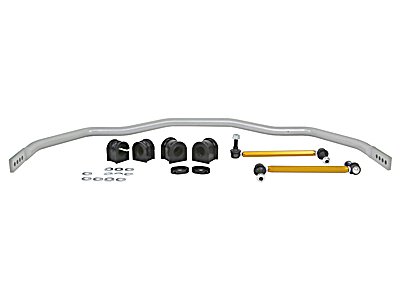
Front and rear sway bars sold as a set.
One kit with the suspension bushings for the whole car or one end of it.

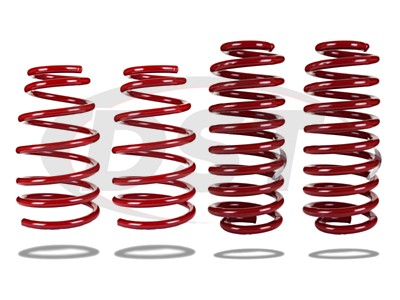
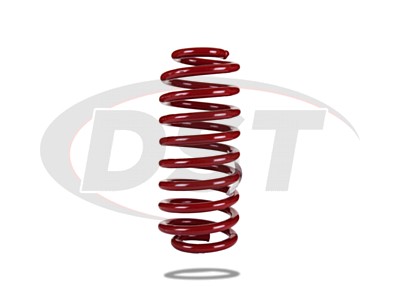
Front and rear lowering springs sold as a set.
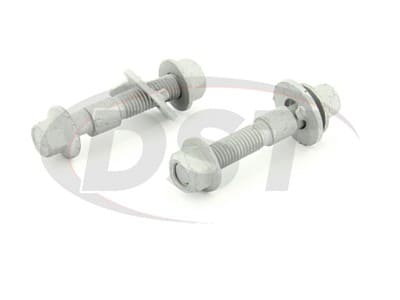
Cam bolts for the rear arm mounts that adjust the rear axle position and pinion angle.
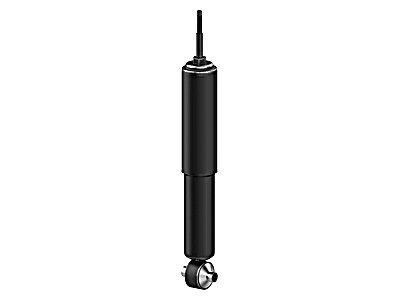
The strut is the shock absorber and the upper locating part of the front corner. Its clevis bolts to the top of the knuckle with two bolts, the coil spring sits on it and its top bolts into the strut tower.
Signs of wear: Bouncing after bumps, nose dive under braking, fluid on the tube, or a knock from the top of the strut.
Tip: The same strut fits the V6 and the GT from 2005 to 2010; the Shelby GT500 is different. Replace struts in pairs.
See all Front Shock Absorber parts for the 2005 Ford Mustang
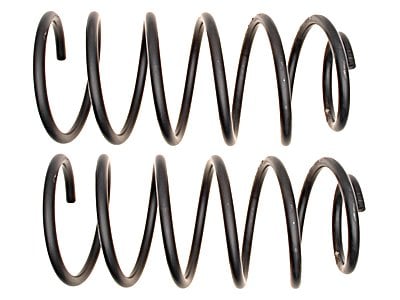
The front coil spring sits on a seat on the strut and pushes up against the top mount. It carries the weight of the front of the car.
Signs of wear: A front corner sitting lower than the other, a broken coil end, or a clunk when turning at a stop.
Tip: Lowering springs drop the car and usually need an alignment afterward. Replace springs in pairs.
The top mount bolts the strut into the strut tower and carries the spring's upper seat.
Signs of wear: A clunk or creak from the top of the strut when turning or over bumps.
Tip: Caster and camber plates replace the mount and allow alignment changes on lowered cars.
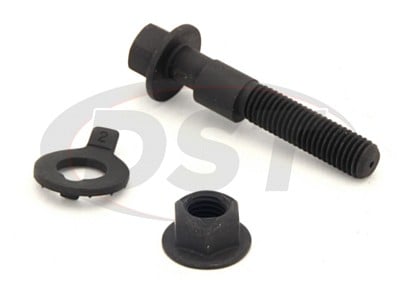
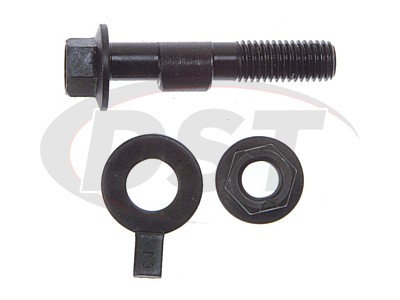
A cam bolt that replaces one of the two strut clevis bolts so the top of the knuckle can be moved in or out to set camber.
Signs of wear: Camber that cannot be brought into specification, often after lowering.
Tip: An aftermarket part; the factory clevis bolts are plain.
See all Front End Alignment Kit parts for the 2005 Ford Mustang
The L shaped lower arm carries the ball joint at its outer corner, a short front leg to a pivot in the K-member and a long rear leg to a bushing in a bracket bolted to the body.
Signs of wear: Clunks over bumps, wandering under braking, or uneven tire wear.
Tip: 2005 to 2009 cars (and 2010 cars built before 8/3/09) use the forged arm shown; later 2010 cars use a stamped arm that does not interchange.

Two bushings hold the lower arm: a small one at the front pivot in the K-member and a large one in the rear bracket.
Signs of wear: A clunk when braking or turning, or steering that wanders.
Tip: The rear bushing comes with or without its bracket; polyurethane versions sharpen the steering but add some vibration.

See all Front Control Arm Bushings parts for the 2005 Ford Mustang
The ball joint at the outer corner of the lower arm; its stud fits up into the knuckle and is held by a pinch bolt.
Signs of wear: A knock over bumps, play in the wheel, or uneven tire wear.
Tip: Roll center correction ball joints suit lowered cars.
See all Front Lower Ball Joint parts for the 2005 Ford Mustang
The knuckle carries the hub and brake. The strut bolts to its top, the ball joint to its bottom and the tie rod to its forward steering arm.
Signs of wear: Knuckles rarely wear; they are replaced after a collision.
Tip: Shown for reference.
The front bar runs across ahead of the steering rack, held by two bushings under the front rails, with links up to the struts.
Signs of wear: More body roll than usual or a knock from the front over uneven roads.
Tip: Larger bars reduce body roll.
Two rubber bushings in brackets hold the front bar under the rails.
Signs of wear: A squeak or clunk from the front over bumps.
Tip: Match the bushing size to the bar diameter.

See all Front Sway Bar Bushings parts for the 2005 Ford Mustang
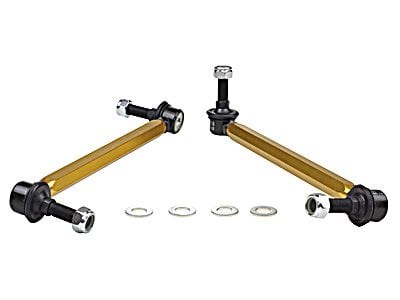
A link with a ball stud at each end from the end of the bar up to a bracket on the strut.
Signs of wear: A rattle or clunk from the front over small bumps.
Tip: Adjustable links suit lowered cars.

See all Front Sway Bar Endlinks parts for the 2005 Ford Mustang
The rack and pinion is bolted to the front of the K-member, ahead of the front axle, with bellows over each end.
Signs of wear: Leaks, a clunk in the steering or play in the wheel.
Tip: Shown for reference.
The inner tie rod screws onto the end of the rack under the bellows and carries the outer end.
Signs of wear: Play in the steering, wandering or a clunk when turning.
Tip: Set the toe after replacing it.
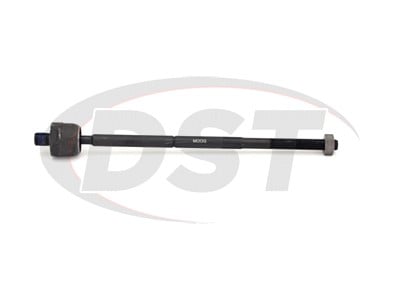

See all Front Inner Tie Rod End parts for the 2005 Ford Mustang
The outer end threads onto the inner rod and its stud fits up into the knuckle's steering arm ahead of the axle.
Signs of wear: Play in the steering, a torn boot or uneven tire wear.
Tip: Set the toe after replacing it.
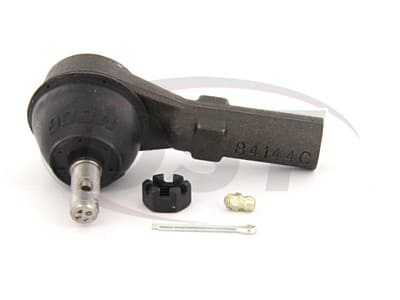
See all Front Outer Tie Rod End parts for the 2005 Ford Mustang
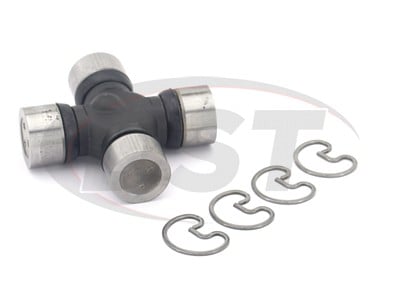
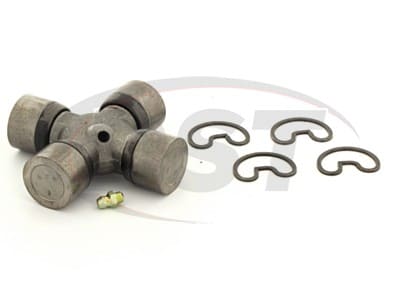
The driveshaft runs from the transmission to the differential pinion, with a U-joint at the axle end.
Signs of wear: A clunk when shifting into gear, a squeak, or vibration at speed.
Tip: The V6 has a one piece shaft.
A solid rear axle carries the differential and both wheels. Two lower arms, a third link on top of the differential and a Panhard rod locate it.
Signs of wear: Gear whine, leaks at the cover or axle seals.
Tip: The V6 has a 7.5 in axle and the GT an 8.8 in axle.
Each lower arm runs forward from a bracket under the axle tube to a body bracket ahead of the axle.
Signs of wear: Wheel hop, a clunk on take off or a rear that steers over bumps.
Tip: Adjustable arms and relocation brackets change the rear geometry on lowered cars.
Rubber bushings at both ends of each lower arm, at the body bracket and in the axle bracket.
Signs of wear: A clunk on take off or wheel hop.
Tip: Polyurethane bushings reduce wheel hop.

See all Rear Control Arm Bushings parts for the 2005 Ford Mustang
A single upper arm runs forward from the top of the differential to the body. It controls axle wind up.
Signs of wear: A clunk on take off or when shifting.
Tip: Adjustable arms set the pinion angle.
The third link's rear bushing is pressed into an ear on the top of the differential housing; a second bushing sits in its front end.
Signs of wear: A clunk on take off, under braking or when shifting.
Tip: The differential housing bushing is also sold as a rear differential bushing.
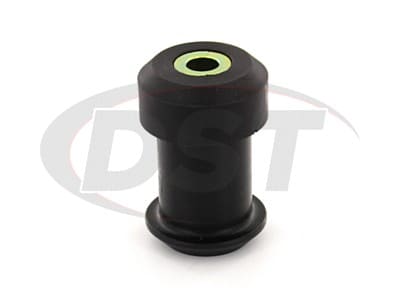
See all Rear Control Arm Bushings parts for the 2005 Ford Mustang
The Panhard rod runs across behind the axle from a bracket on the driver side axle tube to a body bracket on the passenger side. It keeps the axle centered.
Signs of wear: The rear steering over bumps or a clunk in turns.
Tip: Adjustable rods recenter the axle on lowered cars.

A rubber bushing in each eye of the Panhard rod.
Signs of wear: A clunk in turns or over bumps.
Tip: Polyurethane bushings firm up the rear.
See all Rear Track Arm Bar Bushings parts for the 2005 Ford Mustang
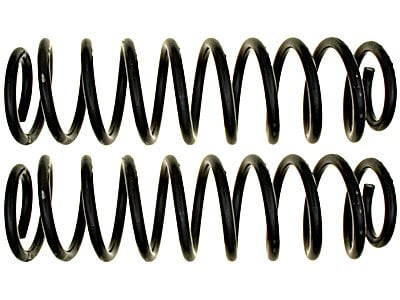
The rear coil sits on a seat on the axle tube and pushes up into the body.
Signs of wear: A rear corner sitting low or a broken coil end.
Tip: Coupes and convertibles use different springs.
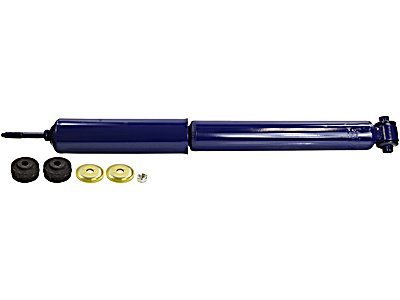
The rear shock stands behind the axle tube, from the rear of the axle bracket up to the body.
Signs of wear: Bouncing, a floaty rear, or fluid on the body.
Tip: Replace shocks in pairs.

The rear bar crosses behind the axle; it is clamped near its ends in saddles at the bottoms of the axle brackets, and two links hold it up to the body.
Not on every vehicle: Fitted to GT models and many V6 models; some V6 cars left the factory without a rear sway bar.
Signs of wear: More body roll or a rattle from the rear.
Tip: Bar sizes differ by trim and year.
Two bushings clamp the bar in saddles at the bottoms of the axle brackets, and the links grip the bar in bushings of their own.
Not on every vehicle: Only on cars with a rear sway bar; some V6 cars have none.
Signs of wear: A rattle or squeak from the rear.
Tip: Match the bushing to the bar diameter.
See all Rear Sway Bar Bushings parts for the 2005 Ford Mustang
A short link with a bushed eye at each end from the bar up to the body.
Not on every vehicle: Only on cars with a rear sway bar; some V6 cars have none.
Signs of wear: A rattle from the rear over bumps.
Tip: Adjustable links suit lowered cars.

See all Rear Sway Bar Endlinks parts for the 2005 Ford Mustang
The hub and bearing assembly bolts to the knuckle and carries the wheel studs.
Signs of wear: A growl or hum that changes with speed, or play in the wheel.
Tip: Hubs with and without an ABS sensor ring exist.

See all Front Wheel Bearing and Hub Assembly parts for the 2005 Ford Mustang
The vented front rotor sits over the hub between the wheel and the hub flange.
Signs of wear: A pulsing pedal, grooves or a lip at the edge.
Tip: The V6 uses a 293 mm rotor and the GT a 317 mm rotor.
The caliper sits behind the axle on its bracket and squeezes the pads against the rotor.
Signs of wear: Pulling to one side, a sticking brake or a leak.
Tip: Shown for reference.
Two pads sit in the caliper either side of the rotor.
Signs of wear: Squealing, grinding or a long pedal.
Tip: The same pads fit the V6 and the GT; the Shelby GT500 uses different pads.
The vented rear rotor sits over the axle shaft flange.
Signs of wear: A pulsing pedal or a grinding noise.
Tip: Rotors fit every 2005 to 2009 trim except the GT500.
The single piston rear caliper also works the parking brake.
Signs of wear: A dragging brake or a parking brake that will not hold.
Tip: Shown for reference.
Two pads in the rear caliper either side of the rotor.
Signs of wear: Squealing or grinding from the rear.
Tip: The same pads fit every 2005 to 2009 trim.
The front lower control arm rear bushings, the front sway bar links, the outer tie rod ends and the struts are the parts most often replaced, followed by the rear lower arm bushings, the third link bushing and the rear shocks.
No. The front uses struts, so the strut locates the top of the knuckle. There is one L shaped lower arm with a ball joint per side. At the rear there is one upper arm, the third link, on top of the differential.
Not always. Cars built from 8/3/09, which includes most 2010 models, use a stamped steel lower arm with a different ball joint and knuckle. The 2005 to 2009 cars use the forged arm shown here.
Most suspension parts are shared. The GT has larger 317 mm front rotors against 293 mm on the V6, an 8.8 inch rear axle against the V6 7.5 inch, and different wheels and tires. Rear springs differ between the coupe and the convertible.
Not entirely. The 2007 to 2009 Shelby GT500 has its own front brakes and pads, and its springs are not listed with the V6 and GT parts. Check each part for GT500 fit.
Yes, after replacing tie rods, struts, front control arms or rear arms. Front toe is set at the tie rods, and camber can be corrected with a cam bolt in the strut clevis. Adjustable rear arms and a Panhard rod are sold for lowered cars.
Numbered diagrams to print or save for the shop. The numbers match the numbered parts on the interactive diagram.