Front End Steering Rebuild Kits
Package kits bundle the wearing front end parts in one order, usually for less than buying them one by one.
This interactive diagram shows the front suspension, steering and rear suspension of the 2015 GMC Acadia. Hover over or tap any part to see what it does, the signs that it is worn, and the replacement parts we carry that fit, down to the side and position.
We carry parts for it Not stocked yet Hover or tap any part.
The Acadia shares its chassis with the Buick Enclave, the Chevrolet Traverse and the Saturn Outlook. The front uses MacPherson struts with the coil on the strut and a stamped L shaped lower arm under each corner, with the steering rack and the sway bar behind the axle. The rear is a linked H arm design on its own cradle: a cast aluminium lower arm carries the coil spring, the shock and the sway bar link, a short vertical link ties it to the knuckle, a straight toe link runs to the front of the knuckle and an S shaped upper arm sets the camber. All wheel drive models add rear drive shafts from a drive unit on the rear cradle.
We carry replacement parts for 34 of the 40 components on this diagram, 83 parts in all. See every part for the 2015 GMC Acadia.
Package kits bundle the wearing front end parts in one order, usually for less than buying them one by one.
Front struts and rear shocks for the whole vehicle in one order.
A complete strut comes with the spring, mount and boot already fitted, so no spring compressor is needed.
The strut is the shock absorber and the upper locating part of the front corner in one. Its bottom clamps to the top of the knuckle with two bolts, the coil spring sits on it, and its top bolts into the strut tower.
Signs of wear: Bouncing after bumps, nose dive under braking, fluid on the strut body, or a knock from the top of the strut over rough roads.
Tip: Struts come bare or as a complete assembly with the spring and mount fitted. The 2007 to 2012 and the 2013 to 2017 struts are different part numbers, so check your year.
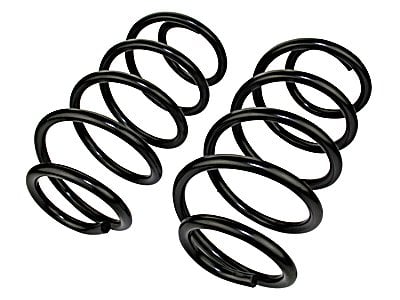
The front coil spring sits on a seat on the strut body and pushes up against the top mount. It carries the weight of the front of the vehicle.
Signs of wear: One front corner sitting lower than the other, a broken coil end, or a clunk when turning the wheel at a stop.
Tip: Replace springs in pairs so both sides sit at the same height.
The strut mount is the rubber and bearing block at the top of the strut. Three studs bolt it to the strut tower, and its bearing lets the strut turn with the steering. The spring insulators sit between the coil and its seats.
Signs of wear: Clunks or creaks from the top of the strut when steering at low speed, or steering that does not return to center.
Tip: The mount is often replaced with the strut, since the strut has to come out either way.
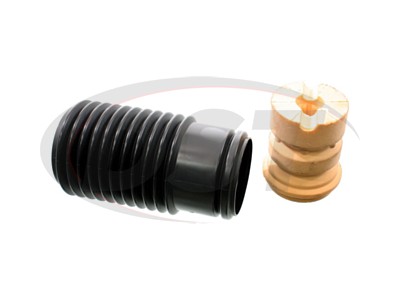
A rubber bellows covers the strut rod to keep grit off its seal, and the bump stop inside it cushions the strut at full compression. The spring hides it in the assembled view; the exploded view lifts it clear.
Signs of wear: A torn or missing boot, a rusty or scored strut rod, or a hard bang over big bumps.
Tip: Fit a new boot and bump stop whenever the strut is replaced. The 2007 to 2012 and later bellows differ.
See all Front Shock Bellows Boot Kit parts for the 2015 GMC Acadia
Front camber is set where the strut clamps to the knuckle. An eccentric bolt in place of the upper clevis bolt lets a shop tilt the top of the wheel in or out.
Not on every vehicle: An aftermarket part: the factory clevis bolts are plain; a camber bolt goes in when an alignment needs more range.
Signs of wear: Tire wear on the inner or outer edge after an alignment shows the camber is out of range.
Tip: Camber bolts go in during an alignment. Mark the strut before loosening the clevis bolts.
See all Front End Alignment Kit parts for the 2015 GMC Acadia
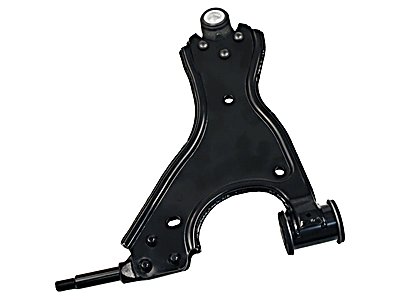
The lower control arm is a stamped L shaped arm under each front corner. Its outer end carries the ball joint, its front leg pivots in a bushing bolted under the cradle, and its rear leg in an upright bushing at the cradle's rear corner.
Signs of wear: Clunks over bumps, wandering, uneven tire wear, or a torn ball joint boot.
Tip: Most replacement arms come with both bushings and the ball joint fitted, which saves pressing them.
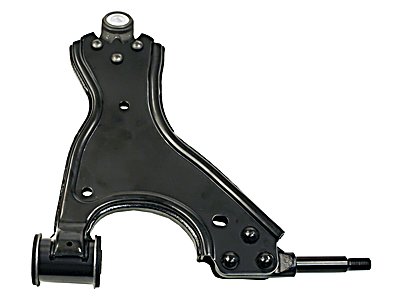
Each front lower arm pivots on two bushings: a forward one in a two bolt bracket under the cradle, and a rearward one pressed upright into the arm.
Signs of wear: A clunk on braking or acceleration, steering pull, or rubber cracked and pushed out of the bracket.
Tip: The rearward bushing has to be pressed out of the arm. Many owners fit a complete arm instead.

See all Front Control Arm Bushings parts for the 2015 GMC Acadia
The lower ball joint joins the outer end of the lower arm to the bottom of the knuckle and lets the knuckle turn and move up and down. The factory joint is riveted to the arm; the replacement bolts in.
Signs of wear: A knock over bumps, play in the wheel when rocked top to bottom, or a torn boot.
Tip: Drill the rivets out carefully so the arm holes stay round for the new bolts.
See all Front Lower Ball Joint parts for the 2015 GMC Acadia
The knuckle holds the wheel hub and brake. The strut clamps to its top, the ball joint holds its bottom, and the tie rod turns it through the steering arm at the back.
Signs of wear: Knuckles rarely wear, but a bent knuckle after a curb strike pulls the alignment out of range.
Tip: Check the hub and ball joint bores before reusing a knuckle.
The front sway bar runs across the rear of the front cradle behind the steering rack. Links at each end connect it to tabs on the struts, so the bar resists body roll in corners.
Signs of wear: Body lean in corners, or a knock from a broken mount.
Tip: The bar itself rarely fails. Its bushings and links do.
Two rubber bushings clamp the front bar to the cradle, letting it twist while holding it in place.
Signs of wear: Squeaks or knocks over bumps, or a bar that moves in its clamps.
Tip: The bar is 29.5 mm. Grease rubber bushings only with a rubber safe grease.

See all Front Sway Bar Bushings parts for the 2015 GMC Acadia
Each front link has a ball stud at both ends. The top stud bolts to a tab on the strut and the bottom stud to the end of the sway bar.
Signs of wear: A knocking or rattling noise over small bumps, often the first front end wear item on these vehicles.
Tip: Hold the stud with a hex key while loosening the nut so the ball does not spin.
See all Front Sway Bar Endlinks parts for the 2015 GMC Acadia
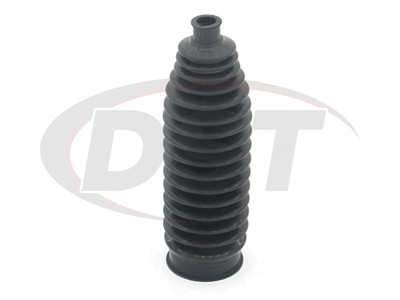
The rack and pinion sits behind the front axle on the cradle. The rubber boots on each end keep dirt and water off the inner tie rods and the rack seals.
Signs of wear: A torn boot, fluid around the boot, or a clunk felt in the steering wheel.
Tip: Replace a torn boot quickly: grit inside wears the inner tie rod and the rack seal.
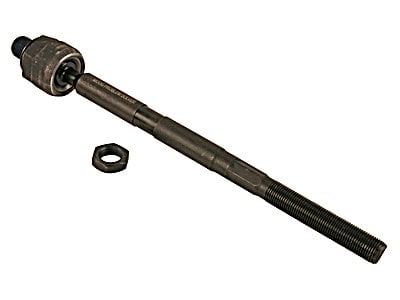
The inner tie rod screws into the end of the rack inside the boot. It carries the steering push and pull out to the outer tie rod end.
Signs of wear: Play in the steering, a clunk when turning, or uneven front tire wear.
Tip: Count the turns when removing the outer end so the new parts start close to the old toe setting.
See all Front Inner Tie Rod End parts for the 2015 GMC Acadia
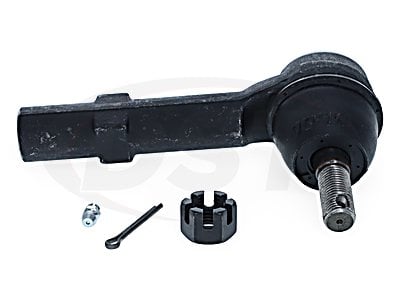
The outer tie rod end threads onto the inner tie rod and its ball stud fits up through the steering arm at the back of the knuckle.
Signs of wear: Loose or wandering steering, a torn boot, or feathered tire edges.
Tip: Get an alignment after replacing tie rods.
See all Front Outer Tie Rod End parts for the 2015 GMC Acadia
The front CV axles carry drive from the transaxle to the front hubs. The driver side shaft is longer than the passenger side.
Signs of wear: Clicking when turning sharply, grease thrown inside the wheel, or a vibration under load.
Tip: A torn boot found early can save the joint; once it clicks, replace the shaft.
See all CV Joint Parts - Front parts for the 2015 GMC Acadia
On all wheel drive vehicles, rear CV axles carry drive from the rear drive unit on the cradle out to the rear hubs.
Not on every vehicle: Fitted to all wheel drive vehicles only; front wheel drive vehicles have no rear drive shafts.
Signs of wear: Clicking or a clunk when pulling away, or grease thrown from a torn boot.
Tip: The 2007 to 2011 and the 2012 and later rear shafts are different part numbers.
The rear knuckle carries the hub and brake. The camber arm holds its top, the toe link and the vertical link its front, and the lower arm bolts through a bushing at its bottom.
Signs of wear: Knuckles rarely wear; a worn bushing in its lower eye is the usual fault.
Tip: The lower knuckle bushing can be pressed out with the knuckle on the vehicle using the right tool.
The rear lower arm is a cast aluminium H. Two inner bushings pivot it on the rear cradle, its rear outer leg bolts to the knuckle bottom, and its front corner holds the vertical link. The coil spring, the shock and the sway bar link all sit on it.
Signs of wear: Clunks from the rear over bumps or rear tire wear, usually from its bushings rather than the arm.
Tip: Support the arm with a jack before removing the knuckle bolt: the coil spring holds it under load.
The lower arm bolts to the rear knuckle through a rubber bushing pressed into the knuckle's lower eye.
Signs of wear: A clunk from the rear over bumps or on braking, or rubber cracked or pushed out of the eye.
Tip: Check the rear alignment after replacing it.

See all Rear Control Arm Bushings parts for the 2015 GMC Acadia
The short vertical link ties the front corner of the lower arm to the front of the knuckle, with a bushing at each end. It steadies the knuckle against braking and cornering loads.
Signs of wear: A knock from the rear over bumps or a vague feel when changing lanes.
Tip: GM bulletin PIT5139C points at the rear links and their bushings when owners feel rear end sway at highway speed.
The toe link is the straight forward arm between the cradle and the front of the knuckle at hub height. It holds the rear wheel's toe; GM calls it the toe adjustment bar.
Signs of wear: Rear end sway when changing lanes, or rear tires wearing on the inner edges.
Tip: Check the bushings at both ends with the vehicle on its wheels, as GM bulletin PIT5139C describes.
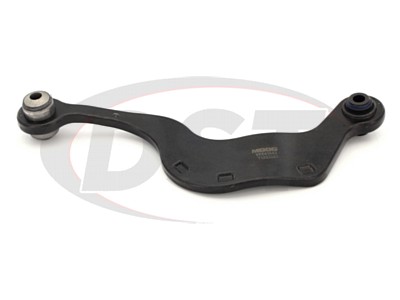
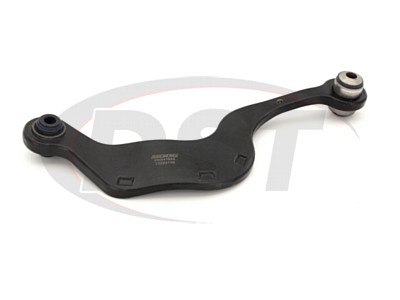
The rear upper arm is a stamped S shaped arm that runs from the top of the cradle over the shock and behind the spring to the top of the knuckle. It sets the rear camber, and the left and right arms are different parts.
Signs of wear: Rear tires wearing on the inner edge, or a clunk from its bushings.
Tip: Order by side: the driver and passenger arms are not the same part.
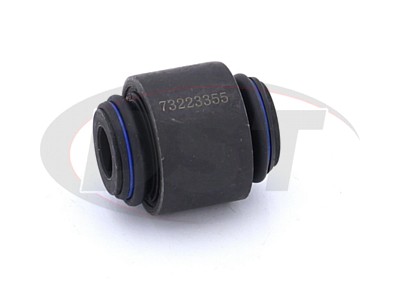
A rubber bushing at each end of the rear upper arm: the inner one at the cradle, the outer one at the knuckle top.
Signs of wear: Clunks over bumps and rear camber drifting out of spec.
Tip: The inner bushing can be replaced with an adjustable camber bushing that adds camber range.
See all Rear Control Arm Bushings parts for the 2015 GMC Acadia
Rear camber is set at the inner end of the rear upper arm, where an eccentric bolt or an adjustable bushing moves the arm in or out.
Not on every vehicle: An aftermarket part: an eccentric kit replaces the factory bolt or bushing when an alignment needs more rear camber range.
Signs of wear: Rear tires wearing on one edge after an alignment.
Tip: Lock the eccentric before tightening the bolt so the setting does not move.
See all Rear End Alignment Kit parts for the 2015 GMC Acadia
Rear toe is set at the inner end of the toe link, where a cam bolt with eccentric washers moves the link in or out.
Signs of wear: Rear tires wearing on the edges, or a crooked steering wheel when driving straight.
Tip: Set rear toe before front toe during an alignment.
See all Rear End Alignment Kit parts for the 2015 GMC Acadia
The rear coil spring stands on a pocket in the lower arm behind the drive shaft and pushes up against a seat in the body, with the jounce bumper inside it.
Signs of wear: A rear corner sitting low, a broken coil end, or the rear bottoming out with a load.
Tip: Replace in pairs. Support the lower arm with a jack before unbolting it from the knuckle.
The rear shock stands behind the spring, from an ear on the lower arm up to a mount in the body.
Signs of wear: A floaty or bouncy rear, oil on the shock body, or a rear that sags with a load.
Tip: Air adjustable shocks are sold for towing and heavy loads.
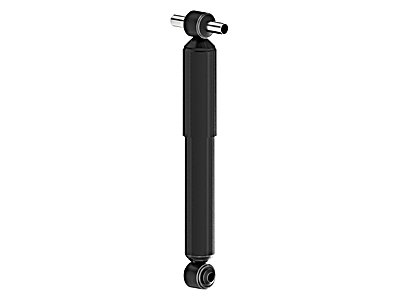
The rear sway bar crosses the rear cradle ahead of the springs and links down to the lower arms.
Signs of wear: More body lean than usual, or knocks from the bar mounts.
Tip: Its bushings and links wear long before the bar.
Two bushings hold the rear bar to the cradle.
Signs of wear: Squeaks or knocks from the rear over bumps.
Tip: Replace both sides together.
See all Rear Sway Bar Bushings parts for the 2015 GMC Acadia
Each rear link is a long bolt through the bar end and the lower arm, with a sleeve between and rubber bushings and washers at both ends.
Signs of wear: A rattle from the rear over small bumps.
Tip: Tighten the nut until the bushings just start to bulge, with the vehicle on its wheels.
See all Rear Sway Bar Endlinks parts for the 2015 GMC Acadia
The hub and bearing unit bolts to the knuckle with three bolts and carries the six wheel studs. The CV axle splines into it.
Signs of wear: A hum or growl that changes with speed or in turns, or play in the wheel.
Tip: The same hub fits the rear. Torque the axle nut to spec, never with an impact gun.
See all Front Wheel Bearing and Hub Assembly parts for the 2015 GMC Acadia
The front rotor is a 325 mm vented disc on the hub, gripped by the caliper behind the axle.
Signs of wear: Pulsing in the pedal, grooves, or a lip at the rotor edge.
Tip: Replace rotors in pairs and clean the hub face before fitting.
The floating front caliper sits behind the axle on its bracket and squeezes the pads against the rotor.
Signs of wear: Pulling under braking, a dragging wheel, or fluid at the caliper.
Tip: Bleed the brakes after replacing a caliper.
The front pads sit in the caliper either side of the rotor.
Signs of wear: Squealing from the wear indicator, grinding, or a longer pedal.
Tip: Fit new pads with new or resurfaced rotors for a quiet bed in.
The rear hub and bearing unit bolts to the rear knuckle and carries the six wheel studs. It is the same part as the front hub.
Signs of wear: A hum or growl from the rear that changes with speed.
Tip: Check for play with the wheel off the ground, rocking it top to bottom.
See all Rear Wheel Bearing and Hub Assembly parts for the 2015 GMC Acadia
The rear rotor is a 331 mm vented disc. Its hat doubles as the drum for the parking brake shoes inside it.
Signs of wear: Pulsing, grooves, or a parking brake that no longer holds.
Tip: Back off the parking brake adjuster if the rotor will not come off.
The rear caliper sits behind the axle and squeezes the rear pads.
Signs of wear: A dragging rear wheel, pulling under braking, or fluid at the caliper.
Tip: Bleed the brakes after replacing a caliper.
The rear pads sit in the caliper either side of the rotor.
Signs of wear: Squealing, grinding, or uneven wear.
Tip: Two different rear pad shapes were fitted in 2010 and 2011, so check the listing.
Small drum brake shoes inside each rear rotor hat hold the vehicle when parked.
Signs of wear: A parking brake that will not hold on a slope or a lever that travels too far.
Tip: Adjust the shoes through the access hole after fitting new ones.
The parts with rubber or ball joints wear: the front sway bar links, the front lower arm bushings and ball joints, the tie rod ends, the rear arm and link bushings and the rear knuckle bushing, along with the struts, rear shocks and wheel hubs. A knock over small bumps is often a sway bar link.
GM describes this in bulletin PIT5139C for the 2007 to 2016 Acadia and its twins. It points at the rear links and the bushings at both ends of the toe link, checked with the vehicle on its wheels. Worn rear upper arm bushings can feel the same.
No. The S shaped rear upper arms are side specific, so order the driver and passenger arms separately. The straight forward arm, the toe link, fits either side.
The arms, links, springs, struts and brakes are shared. All wheel drive models add the rear CV axles and the rear drive unit. The same hub is used front and rear on both.
The 2007 to 2016 Acadia, the 2008 to 2017 Enclave, the 2009 to 2017 Traverse and the 2007 to 2010 Saturn Outlook share this layout. The front struts changed part number for 2013. The 2017 and later Acadia and the 2018 and later Traverse and Enclave are a different design.
Numbered diagrams to print or save for the shop. The numbers match the numbered parts on the interactive diagram.