


Front End Steering Rebuild Kits
Package kits bundle the wearing steering parts and ball joints for this truck.

This interactive diagram shows the front suspension, steering, driveline and rear suspension of the 2003 Dodge Ram 1500 with two wheel drive. Hover over or tap any part to see what it does, the signs that it is worn, and the replacement parts we carry that fit your truck, down to the side and position.
We carry parts for it Not stocked yet Hover or tap any part.
The two wheel drive Ram 1500 of these years has an independent front suspension: an upper and a lower control arm on each side, a coil spring on the lower arm with the shock inside it, and a rack and pinion that sits ahead of the front wheels. The rear is a solid axle on leaf springs, with one shock ahead of the axle and one behind it.
We carry replacement parts for 29 of the 40 components on this diagram, 134 parts in all. See every part for the 2003 Dodge Ram 1500 2WD.
Package kits bundle the wearing steering parts and ball joints for this truck.
Front and rear shock sets for the whole truck.
One kit with the suspension bushings and bump stops for the whole truck.
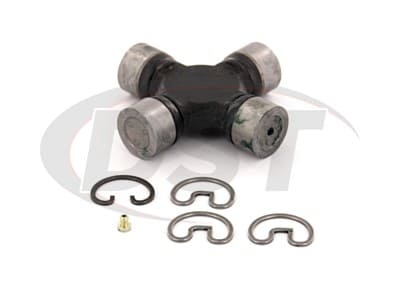
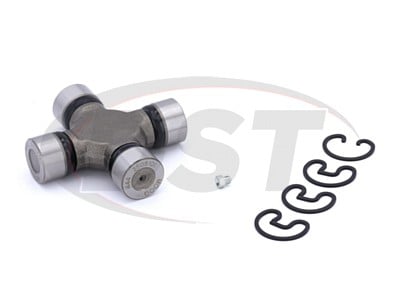
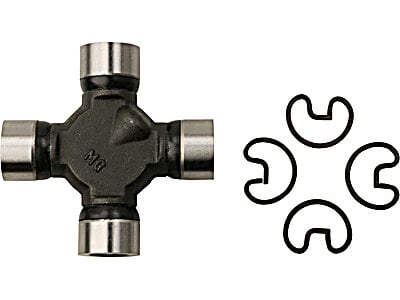
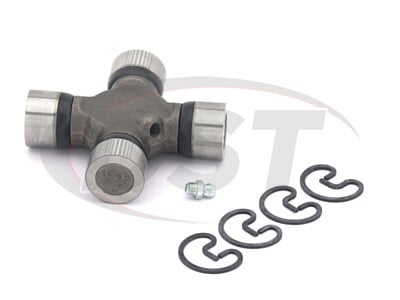
Every U-joint for the truck in one order. Check the engine and driveshaft notes on each package.

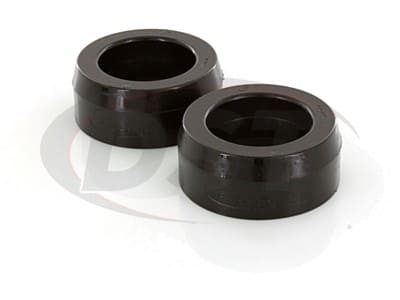
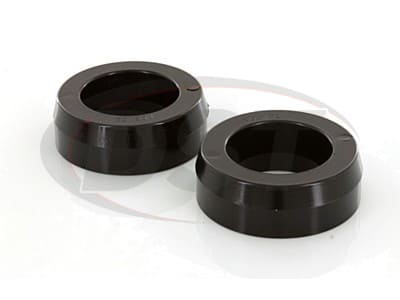
Spacers on top of the front coil springs that raise the front to level the truck.
The lower ball joint presses into the outer end of the lower control arm. Its stud points up into the bottom of the steering knuckle and carries the truck's weight.
Signs of wear: A clunk or knock over bumps, a shimmy, or play at the bottom of the tire with the front lifted.
Tip: The lower joint is loaded by the coil spring, so the arm must be supported before the joint is separated.

See all Front Lower Ball Joint parts for the 2003 Dodge Ram 1500 2WD
A forged A-arm on two rubber bushings at a bracket on the frame rail. Its ball joint is built into the outer end and its stud goes down into the knuckle.
Signs of wear: Clunks, torn or cracked bushings, or a worn ball joint at the outer end.
Tip: The upper ball joint comes with the arm, so worn joints mean a complete arm. The arm comes with new bushings.

See all Front Control Arm parts for the 2003 Dodge Ram 1500 2WD
A stamped steel A-arm on two bushings beside the frame rail. The coil spring sits on a seat in the middle of it, the shock bolts under that seat, and the lower ball joint sits in its outer end.
Signs of wear: Clunks, a shimmy after bumps, torn bushings, or a worn lower ball joint.
Tip: Support the arm before unbolting anything, because the coil spring is under load. Left and right arms are different parts, and they come with the ball joint and bushings.
See all Front Control Arm parts for the 2003 Dodge Ram 1500 2WD
Rubber bushings in the two inner eyes of the upper arm, where it pivots on the frame bracket.
Signs of wear: Clunks over bumps, alignment that won't hold, or cracked rubber.
Tip: Press the old bushings out of the arm and the new ones in; aftermarket urethane kits replace them in pairs.
See all Front Control Arm Bushings parts for the 2003 Dodge Ram 1500 2WD
Rubber bushings in the front and rear inner eyes of the lower arm, where it pivots on brackets beside the frame rails.
Signs of wear: Clunks when braking or over bumps, or the tire moving fore and aft.
Tip: The lower arms are sold with new bushings already pressed in.

See all Front Control Arm Bushings parts for the 2003 Dodge Ram 1500 2WD
The cast knuckle (spindle) turns between the upper and lower ball joints. It carries the hub bearing, the brake caliper and the steering arm for the outer tie rod end.
Signs of wear: Rarely wears out. Replace it after damage, or if a tapered ball joint or tie rod hole is worn.
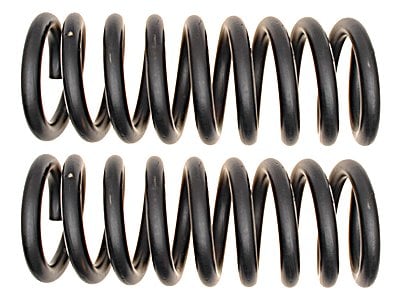
Each front coil sits on the lower control arm and pushes up into a spring pocket on the frame. The shock runs up through the middle of it.
Signs of wear: A sagging front, the truck leaning to one side, or a broken coil end.
Tip: The coil is under heavy load. Use a spring compressor, or support the lower arm with a jack, before separating the lower ball joint. Springs are sold by cab and engine, so check the listing.
A thick rubber pad between the top of the coil and the frame spring pocket. It quiets the spring.
Signs of wear: A squeak or clunk from the spring over bumps, or a torn pad.
Tip: Replace it whenever the coil is out.
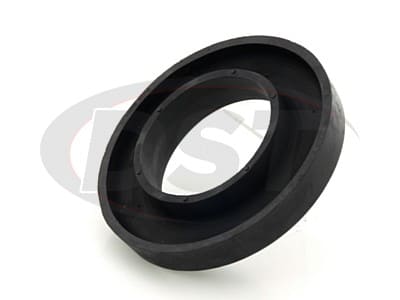
See all Front Coil Spring Isolator Pads parts for the 2003 Dodge Ram 1500 2WD
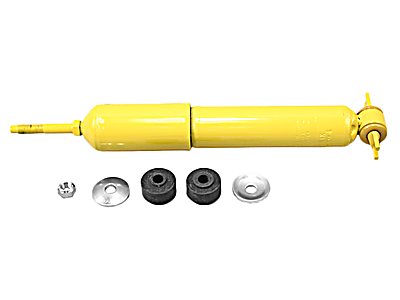
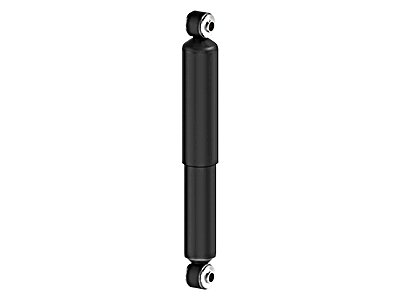
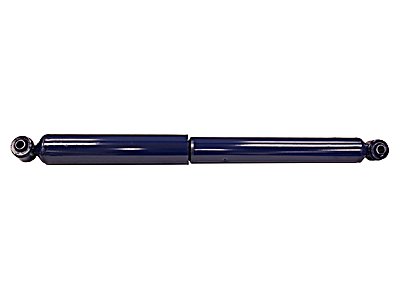
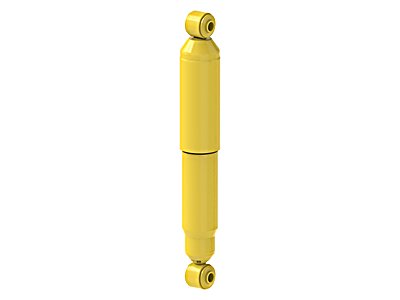
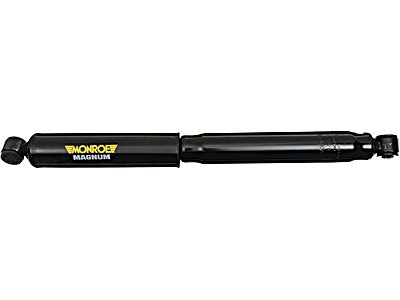
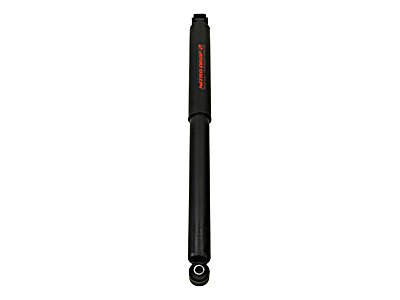
The front shock runs up through the coil spring. Its stem goes through the top of the spring pocket and its cross bar bolts under the coil seat on the lower control arm.
Signs of wear: Bouncing after bumps, nose dive under braking, or a leaking shock.
Tip: Leveling kits often need a spacer on the shock stem. Check the kit's notes.
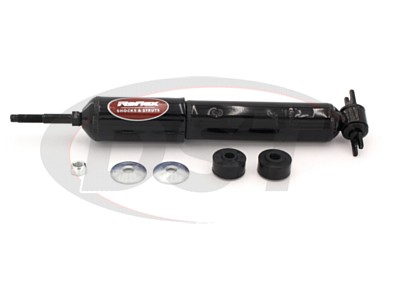
See all Front Shock Absorber parts for the 2003 Dodge Ram 1500 2WD
A rubber stop on the frame that the lower control arm meets at full compression. Its place on the drawing is approximate.
Signs of wear: A harsh bang when the front bottoms out, or a missing or crumbled stop.
Tip: The stop presses into its cup. Leveling and lift kits often add a spacer under it.

See all Front Bump Stops parts for the 2003 Dodge Ram 1500 2WD
The bar runs across the front of the truck ahead of the steering rack, in bushings under the frame rails, and its arms reach back to links on the lower control arms.
Signs of wear: Body roll in turns. The bar itself rarely fails; listen for its bushings and links first.
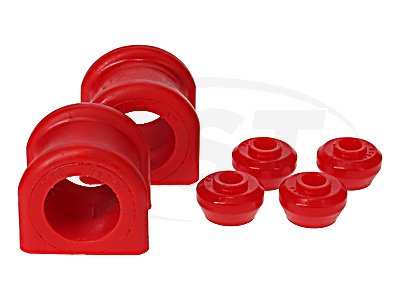
Two rubber bushings in straps that hold the sway bar to the frame.
Signs of wear: Squeaks or clunks over bumps and in turns.
Tip: Bushings are sold by bar diameter (32, 33 to 34 and 36 mm). Measure the bar, or check the size in the listing.

See all Front Sway Bar Bushings parts for the 2003 Dodge Ram 1500 2WD
A vertical link from the end of each sway bar arm down to a tab on the lower control arm.
Signs of wear: Rattles or clunks over small bumps, or a broken link.

See all Front Sway Bar Endlinks parts for the 2003 Dodge Ram 1500 2WD
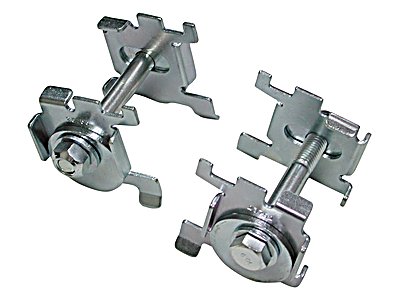
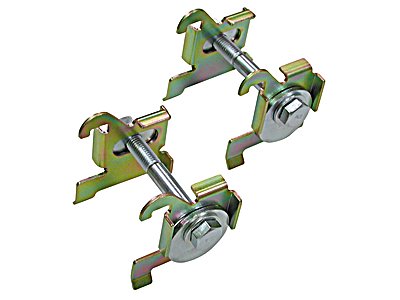
Listed here, not drawn: cam bolt and caster/camber kits that replace the plain control arm pivot bolts so a shop can set camber and caster.
Not on every vehicle: An aftermarket correction part. The diagram shows the factory plain pivot bolts.
Signs of wear: Uneven tire wear, or an alignment that is out of range after a lift, leveling kit or a hard hit.
Tip: The factory pivot bolts are plain; these kits add adjustment, usually about plus or minus 1 to 2 degrees.
See all Front End Alignment Kit parts for the 2003 Dodge Ram 1500 2WD
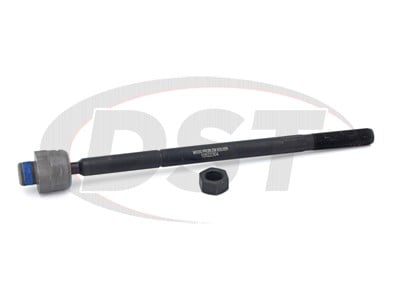
The inner tie rod screws onto the end of the steering rack inside the rubber boot. The rack sits ahead of the front axle line.
Signs of wear: Wandering, loose steering, or a clunk when turning the wheel back and forth. Check by squeezing the boot while someone turns the wheel.
Tip: Replace the boot at the same time, and set the toe with an alignment afterwards.
See all Front Inner Tie Rod End parts for the 2003 Dodge Ram 1500 2WD
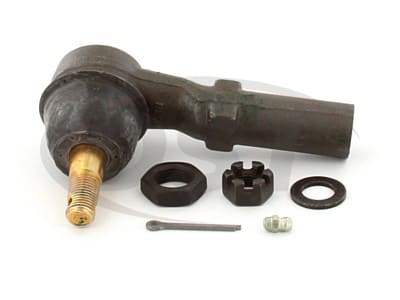
The outer tie rod end threads onto the inner tie rod and its stud goes into the steering arm at the front of the knuckle.
Signs of wear: Loose or wandering steering, uneven inner or outer tire wear, or a torn boot.
Tip: Count the turns when you remove it, so the toe stays close until the alignment.
See all Front Outer Tie Rod End parts for the 2003 Dodge Ram 1500 2WD
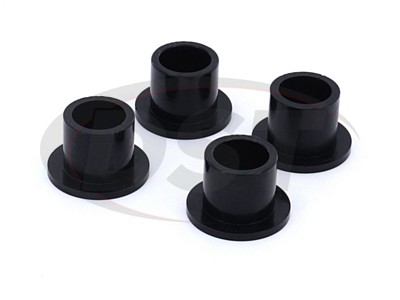
Rubber bushings in the two mounting clamps of the rack and pinion, where it bolts to the front crossmember.
Signs of wear: The steering wheel turns a little before the wheels respond, or a clunk when turning.
Tip: Only move the rack forward enough to press out the old bushings.
See all Steering Rack Bushings parts for the 2003 Dodge Ram 1500 2WD
The rear driveshaft. The three joint version is two pieces with a center support bearing; some trucks have a one piece, two joint shaft.
Signs of wear: Vibration on takeoff or at speed.
The front U-joint of the rear driveshaft, at the transmission.
Signs of wear: A clunk when shifting into gear, or vibration.
The middle U-joint, just behind the center support bearing, on trucks with the three joint shaft.
Not on every vehicle: Only on trucks with a two piece (three joint) rear driveshaft. The 140.5 inch wheelbase Quad Cab drawn here has a one piece shaft with two joints.
Signs of wear: Vibration that comes and goes with load.
The U-joint at the rear differential end of the rear driveshaft.
Signs of wear: A clunk on takeoff, a squeak, or rust dust around the caps.
Tip: Rear joints come in 1-3/16 in and 1-3/8 in cap sizes depending on engine and transmission. Check the fit notes.
Holds the middle of the two piece rear driveshaft to a crossmember.
Not on every vehicle: Only on trucks with a two piece (three joint) rear driveshaft. The 140.5 inch wheelbase Quad Cab drawn here has a one piece shaft with two joints.
Signs of wear: A rumble or vibration at speed, or a torn rubber mount.
The solid rear axle. It came in more than one size, including 8.25 in and 9.25 in ring gear axles, so check the axle tag before you order axle parts.
Signs of wear: Leaks at the cover or axle seals, or gear whine.
A multi leaf spring each side, clamped on top of the axle with U-bolts. The front eye bolts to a fixed hanger and the rear eye to a shackle.
Signs of wear: A sagging rear, a broken leaf, or a spring that has shifted on the axle.
Bushings in the spring eyes at the front hanger and the rear shackle.
Signs of wear: Squeaks over bumps, clunks on takeoff, or rubber pushed out of the eye.
See all Rear Leaf Spring Bushings parts for the 2003 Dodge Ram 1500 2WD
The link at the rear of each spring that lets the spring grow longer as it flexes.
Signs of wear: Squeaks, a clunk, or a worn or cracked shackle.

Two U-bolts each side clamp the spring to the axle perch with a plate underneath.
Signs of wear: A spring that has shifted on the axle, or loose U-bolt nuts.
Tip: Use new U-bolts when the spring is removed.
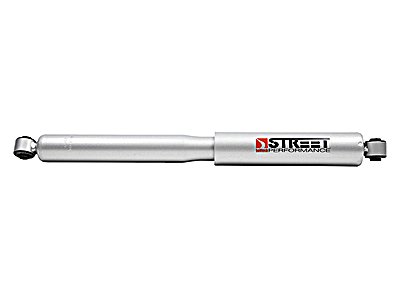
The rear shocks are staggered: the driver side shock sits behind the axle and the passenger side shock ahead of it.
Signs of wear: Bouncing, a rear that squats or floats, or leaks.
See all Rear Shock Absorber parts for the 2003 Dodge Ram 1500 2WD
A rubber stop on a bracket under each frame rail, above the leaf spring.
Signs of wear: A hard bang when loaded, or a torn or missing stop.
Tip: Check the fit notes on each listing.
An aftermarket rear sway bar, clamped to the axle with links up to the frame rails. These trucks were not built with one.
Not on every vehicle: Not drawn: we found no photo of a factory rear sway bar on a 2002-2005 Ram 1500 4WD. Rear links are listed for 2002, 2004 and 2005 trucks; if your truck has a bar, its links and bushings fit here.
Signs of wear: Body roll at the rear, or clunks from the links.
Tip: Not drawn: the factory truck has no rear bar. Look for links hanging from the frame rails behind the axle if one was added.
Links from each end of an added rear sway bar up to brackets on the frame rails.
Not on every vehicle: Not drawn: we found no photo of a factory rear sway bar on a 2002-2005 Ram 1500 4WD. Rear links are listed for 2002, 2004 and 2005 trucks; if your truck has a bar, its links and bushings fit here.
Signs of wear: Rattles over small bumps, or a broken link.
Tip: Not drawn.
Bushings that clamp an added rear sway bar to the axle.
Not on every vehicle: Not drawn: we found no photo of a factory rear sway bar on a 2002-2005 Ram 1500 4WD. Rear links are listed for 2002, 2004 and 2005 trucks; if your truck has a bar, its links and bushings fit here.
Signs of wear: Clunks or squeaks from the rear over bumps.
Tip: Not drawn.
A sealed bearing and hub unit bolted to the knuckle with three bolts, with five wheel studs. On the two wheel drive truck nothing drives it: the splined bore in the middle is empty.
Signs of wear: A hum or growl that changes with speed, play in the wheel, or an ABS light.
Tip: Check whether your truck has the wheel speed sensor at the hub; the hubs are sold with and without it.
See all Front Wheel Bearing and Hub Assembly parts for the 2003 Dodge Ram 1500 2WD
A vented 336 mm rotor that slips over the hub studs.
Signs of wear: A pulsing pedal, grooves or rust ridges, or thickness under the minimum.
See all Front Brake Rotor parts for the 2003 Dodge Ram 1500 2WD
The caliper sits at the back of each front rotor and squeezes the pads with its pistons.
Signs of wear: Pulling while braking, a dragging wheel, leaks, or uneven pad wear.
One pad each side of the rotor, held in the caliper.
Signs of wear: Squealing, grinding, or a long pedal.
See all Front Brake Pads parts for the 2003 Dodge Ram 1500 2WD
A 352 mm rear rotor. The inside of its hat is the drum for the parking brake shoes.
Signs of wear: A pulsing pedal or worn friction faces.
See all Rear Brake Rotor parts for the 2003 Dodge Ram 1500 2WD
The caliper sits behind each rear rotor, toward the bottom.
Signs of wear: Pulling, a dragging wheel, or leaks.
See all Rear Brake Caliper parts for the 2003 Dodge Ram 1500 2WD
One pad each side of the rear rotor.
Signs of wear: Squealing, grinding, or low pad material.
See all Rear Brake Pads parts for the 2003 Dodge Ram 1500 2WD
Small drum brake shoes inside the hat of each rear rotor, worked by the parking brake cable.
Signs of wear: A parking brake that will not hold the truck on a slope.
Tip: Take the rear caliper and rotor off to reach them. Adjust the shoes so the rotor just turns free.
See all Parking Brake Shoes parts for the 2003 Dodge Ram 1500 2WD
Some are shared and some are not. The upper control arms, the lower ball joint, the tie rods, the hubs and the brakes carry the same part numbers on both. The two wheel drive truck has its own lower control arms, front coil springs and sway bar links, where the 4x4 has torsion bars, so check the drive on each listing.
Common causes are worn lower ball joints, upper control arms with worn ball joints, lower control arm bushings, sway bar links and inner tie rods. With the front lifted, check for play at the top and bottom of each tire, and squeeze the rack boots while someone turns the wheel to feel for a loose inner tie rod.
The 2002 and 2003 two wheel drive trucks we found records of had no rear sway bar from the factory, so none is drawn. We list rear sway bar links for trucks that have a bar, and add-on rear bars for trucks that don't.
Yes. Replacing tie rods, ball joints or control arms changes the alignment. Count the turns when you remove an outer tie rod end so the toe stays close until the truck is aligned.
Numbered diagrams to print or save for the shop. The numbers match the numbered parts on the interactive diagram.