Front End Steering Rebuild Kits
Package kits bundle the wearing steering parts and ball joints for this truck.

This interactive diagram shows the front suspension, steering, driveline and rear suspension of the 2003 Dodge Ram 1500 with four wheel drive. Hover over or tap any part to see what it does, the signs that it is worn, and the replacement parts we carry that fit your truck, down to the side and position.
We carry parts for it Not stocked yet Hover or tap any part.
The four wheel drive Ram 1500 of these years has an independent front suspension sprung by torsion bars: each bar runs back from the lower control arm to an adjustable key in a crossmember under the cab. A frame-mounted front differential drives the front wheels through two CV shafts, and a rack and pinion sits ahead of the front wheels. The rear is a solid axle on leaf springs, with one shock ahead of the axle and one behind it.
We carry replacement parts for 26 of the 41 components on this diagram, 93 parts in all. See every part for the 2003 Dodge Ram 1500 4WD.
Package kits bundle the wearing steering parts and ball joints for this truck.
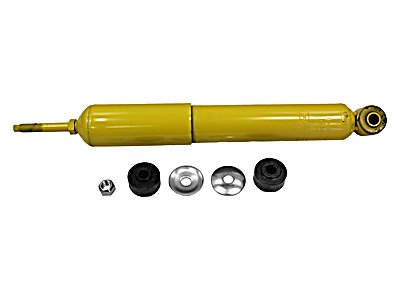
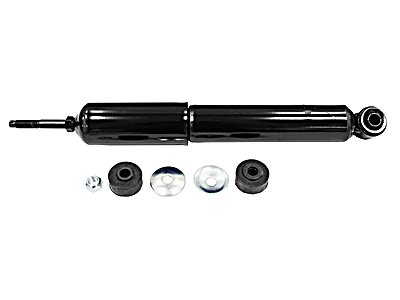
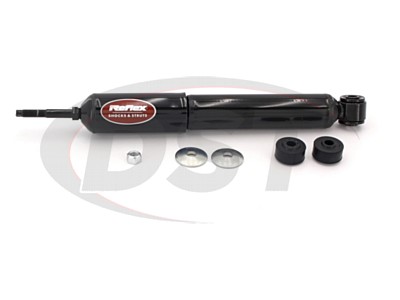
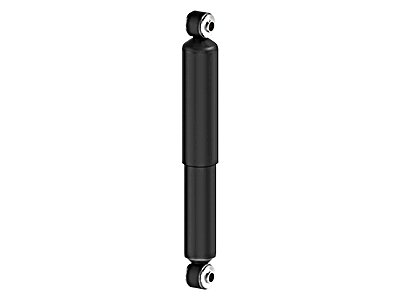
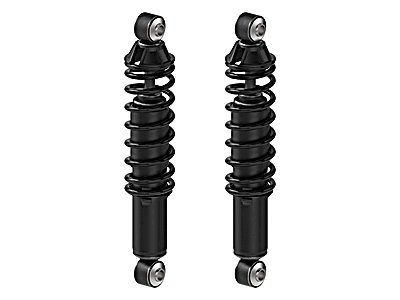
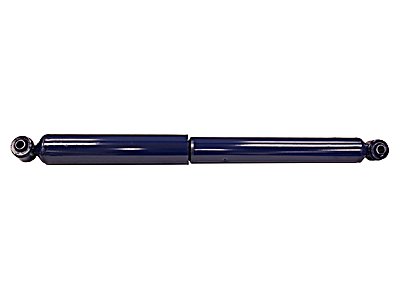
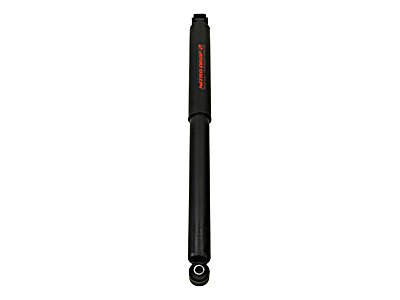
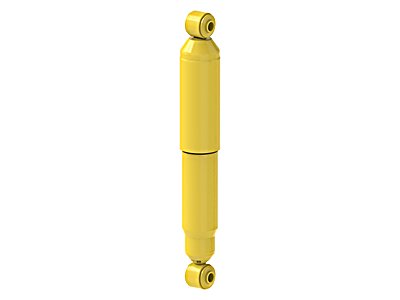
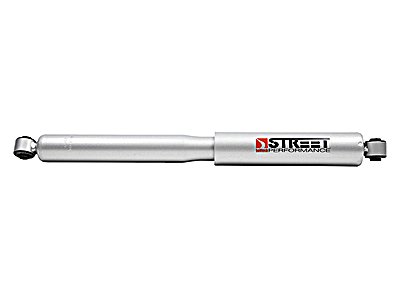
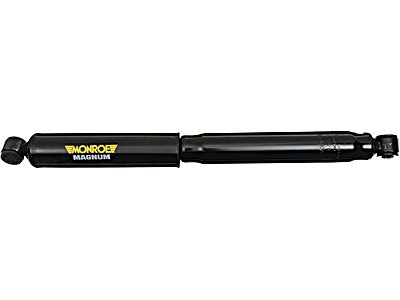
Front and rear shock sets for the whole truck.
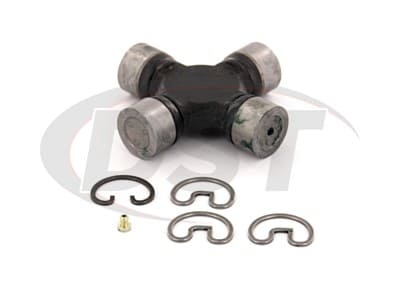
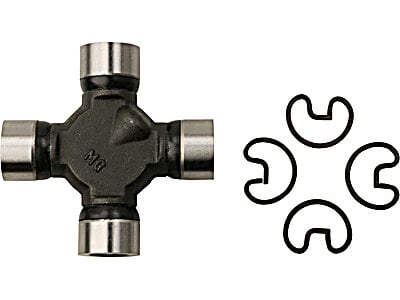
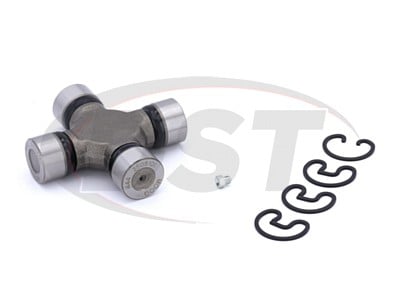
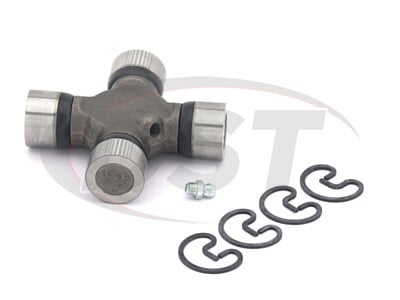
Every U-joint for the truck in one order. Check the engine and driveshaft notes on each package.
The lower ball joint presses into the outer end of the lower control arm. Its stud points up into the bottom of the steering knuckle and carries the truck's weight.
Signs of wear: A clunk or knock over bumps, a shimmy, or play at the bottom of the tire with the front lifted.
Tip: The lower joint is loaded by the coil spring, so the arm must be supported before the joint is separated.
See all Front Lower Ball Joint parts for the 2003 Dodge Ram 1500 4WD
A forged A-arm on two rubber bushings at a bracket on the frame rail. Its ball joint is built into the outer end and its stud goes down into the knuckle.
Signs of wear: Clunks, torn or cracked bushings, or a worn ball joint at the outer end.
Tip: The upper ball joint comes with the arm, so worn joints mean a complete arm. The arm comes with new bushings.

See all Front Control Arm parts for the 2003 Dodge Ram 1500 4WD
A forged A-arm. Its front eye bolts into a pocket bracket on the frame, and its long rear leg ends in a hex socket that the torsion bar slides into, turning in a bushing pressed into the frame. The shock bolts between two tabs in the middle of the arm, and the lower ball joint presses into its outer end.
Signs of wear: Clunks, a shimmy after bumps, torn bushings, or a worn lower ball joint.
Tip: Unload the torsion bar with the right tool before taking the arm off: the bar holds the truck up. Left and right arms are different parts.

See all Front Control Arm parts for the 2003 Dodge Ram 1500 4WD
Rubber bushings in the two inner eyes of the upper arm, where it pivots on the frame bracket.
Signs of wear: Clunks over bumps, alignment that won't hold, or cracked rubber.
Tip: Press the old bushings out of the arm and the new ones in; aftermarket urethane kits replace them in pairs.
See all Front Control Arm Bushings parts for the 2003 Dodge Ram 1500 4WD
The front bushing sits in the arm's front eye. The rear bushing is pressed into the frame plate around the arm's rear barrel, where the torsion bar enters the arm.
Signs of wear: Clunks when braking or over bumps, or the tire moving fore and aft.
Tip: The rear bushing presses out of the frame, not the arm, and needs a press or a bushing tool.

See all Front Control Arm Bushings parts for the 2003 Dodge Ram 1500 4WD
The cast knuckle (spindle) turns between the upper and lower ball joints. It carries the hub bearing, the brake caliper and the steering arm for the outer tie rod end.
Signs of wear: Rarely wears out. Replace it after damage, or if a tapered ball joint or tie rod hole is worn.
The front spring. A steel bar runs back from the hex socket in the lower control arm to a key in the crossmember under the cab. Twisting it holds the front of the truck up.
Signs of wear: Front ride height that sags and cannot be corrected at the adjuster.
Tip: The bars are under heavy load. Measure the adjuster bolts before any work and unload the bars with a torsion bar tool.
The key sits on the rear hex of each torsion bar in the crossmember. An adjuster bolt pushes on its tail and sets the front ride height.
Signs of wear: Front end sits low or uneven, the adjuster bolt is seized or at the end of its travel.
Tip: Leveling keys raise the front by clocking the bar. Expect a front alignment afterwards, and do not crank the front so high that the CV shafts run at a steep angle.
See all Torsion Bar Key Lift Kit parts for the 2003 Dodge Ram 1500 4WD
The front shock bolts by its lower eye between two tabs on the lower control arm and runs up through the upper arm to a stem mount in a frame bracket.
Signs of wear: Bouncing after bumps, nose dive under braking, or a leaking shock.
Tip: Leveled or lifted trucks may need longer shocks; check the listing for the lift height it suits.
See all Front Shock Absorber parts for the 2003 Dodge Ram 1500 4WD
A rubber bump stop in a cup on the frame, over the lower control arm. It cushions the arm at the end of its travel.
Signs of wear: A harsh bang when the front bottoms out, or a missing or crumbled stop.
Tip: The stop presses into its cup. Leveling and lift kits often add a spacer under it.
The bar runs across the front of the truck ahead of the differential, in bushings under the frame, and its arms reach back to links on the lower control arms.
Signs of wear: Body roll in turns. The bar itself rarely fails; listen for its bushings and links first.
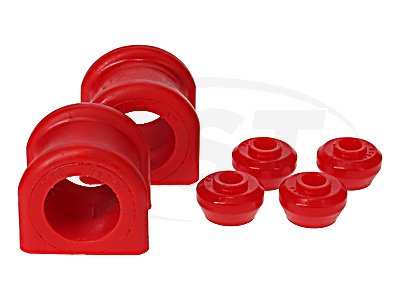
Two rubber bushings in straps that hold the sway bar to the frame.
Signs of wear: Squeaks or clunks over bumps and in turns.
Tip: Bushings are sold by bar diameter (32, 33 to 34 and 36 mm). Measure the bar, or check the size in the listing.
See all Front Sway Bar Bushings parts for the 2003 Dodge Ram 1500 4WD
A vertical link from the end of each sway bar arm down to a tab on the lower control arm.
Signs of wear: Rattles or clunks over small bumps, or a broken link.

See all Front Sway Bar Endlinks parts for the 2003 Dodge Ram 1500 4WD
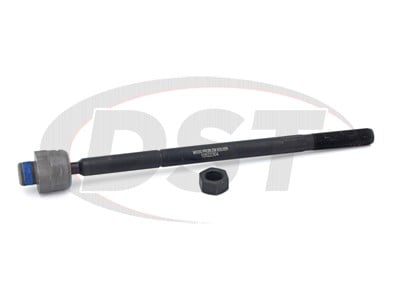
The inner tie rod screws onto the end of the steering rack inside the rubber boot. The rack sits ahead of the front axle line.
Signs of wear: Wandering, loose steering, or a clunk when turning the wheel back and forth. Check by squeezing the boot while someone turns the wheel.
Tip: Replace the boot at the same time, and set the toe with an alignment afterwards.
See all Front Inner Tie Rod End parts for the 2003 Dodge Ram 1500 4WD
The outer tie rod end threads onto the inner tie rod and its stud goes into the steering arm at the front of the knuckle.
Signs of wear: Loose or wandering steering, uneven inner or outer tire wear, or a torn boot.
Tip: Count the turns when you remove it, so the toe stays close until the alignment.
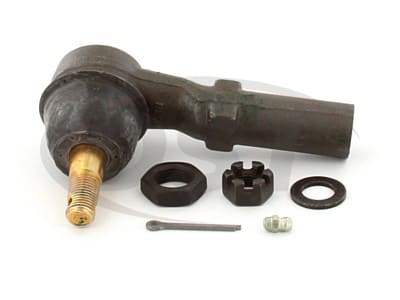
See all Front Outer Tie Rod End parts for the 2003 Dodge Ram 1500 4WD
Rubber bushings in the two mounting clamps of the rack and pinion, where it bolts to the front crossmember.
Signs of wear: The steering wheel turns a little before the wheels respond, or a clunk when turning.
Tip: Only move the rack forward enough to press out the old bushings.
A CV shaft on each side runs from the frame-mounted front differential to the hub, with a plunging joint at the differential and a fixed joint in the knuckle. The same shaft fits both sides.
Signs of wear: Clicking when turning in four wheel drive, grease thrown from a torn boot, or a vibration.
Tip: Torn boots let grease out and grit in. Replace the shaft when a joint clicks on tight turns.

See all CV Joint Parts - Front parts for the 2003 Dodge Ram 1500 4WD
The U-joint at the front of the front driveshaft, bolted to the front differential's input flange.
Signs of wear: Clunks when shifting into four wheel drive, or a vibration in four wheel drive.
The rear driveshaft. The three joint version is two pieces with a center support bearing; some trucks have a one piece, two joint shaft.
Signs of wear: Vibration on takeoff or at speed.
The front U-joint of the rear driveshaft, at the transmission.
Signs of wear: A clunk when shifting into gear, or vibration.
The middle U-joint, just behind the center support bearing, on trucks with the three joint shaft.
Not on every vehicle: Only on trucks with a two piece (three joint) rear driveshaft. The 140.5 inch wheelbase Quad Cab drawn here has a one piece shaft with two joints.
Signs of wear: Vibration that comes and goes with load.
The U-joint at the rear differential end of the rear driveshaft.
Signs of wear: A clunk on takeoff, a squeak, or rust dust around the caps.
Tip: Rear joints come in 1-3/16 in and 1-3/8 in cap sizes depending on engine and transmission. Check the fit notes.
Holds the middle of the two piece rear driveshaft to a crossmember.
Not on every vehicle: Only on trucks with a two piece (three joint) rear driveshaft. The 140.5 inch wheelbase Quad Cab drawn here has a one piece shaft with two joints.
Signs of wear: A rumble or vibration at speed, or a torn rubber mount.
The solid rear axle. Diesel trucks use the AAM 11.5 in full floating axle drawn here; gas trucks typically use the 10.5 in axle.
Signs of wear: Leaks at the cover or axle seals, or gear whine.
A multi leaf spring each side, clamped on top of the axle with U-bolts. The front eye bolts to a fixed hanger and the rear eye to a shackle.
Signs of wear: A sagging rear, a broken leaf, or a spring that has shifted on the axle.
Bushings in the spring eyes at the front hanger and the rear shackle.
Signs of wear: Squeaks over bumps, clunks on takeoff, or rubber pushed out of the eye.
The link at the rear of each spring that lets the spring grow longer as it flexes.
Signs of wear: Squeaks, a clunk, or a worn or cracked shackle.
Two U-bolts each side clamp the spring to the axle perch with a plate underneath.
Signs of wear: A spring that has shifted on the axle, or loose U-bolt nuts.
Tip: Gas and diesel trucks use different U-bolt sizes. Use new U-bolts when the spring is removed.
The rear shocks are staggered: the driver side shock sits behind the axle and the passenger side shock ahead of it.
Signs of wear: Bouncing, a rear that squats or floats, or leaks.
See all Rear Shock Absorber parts for the 2003 Dodge Ram 1500 4WD
A rubber stop on a bracket under each frame rail, above the leaf spring.
Signs of wear: A hard bang when loaded, or a torn or missing stop.
Tip: Check the fit notes on each listing.

See all Rear Bump Stops parts for the 2003 Dodge Ram 1500 4WD
An aftermarket rear sway bar, clamped to the axle with links up to the frame rails. These trucks were not built with one.
Not on every vehicle: Not drawn: we found no photo of a factory rear sway bar on a 2002-2005 Ram 1500 4WD. Rear links are listed for 2002, 2004 and 2005 trucks; if your truck has a bar, its links and bushings fit here.
Signs of wear: Body roll at the rear, or clunks from the links.
Tip: Not drawn: the factory truck has no rear bar. Look for links hanging from the frame rails behind the axle if one was added.
Links from each end of an added rear sway bar up to brackets on the frame rails.
Not on every vehicle: Not drawn: we found no photo of a factory rear sway bar on a 2002-2005 Ram 1500 4WD. Rear links are listed for 2002, 2004 and 2005 trucks; if your truck has a bar, its links and bushings fit here.
Signs of wear: Rattles over small bumps, or a broken link.
Tip: Not drawn.
Bushings that clamp an added rear sway bar to the axle.
Not on every vehicle: Not drawn: we found no photo of a factory rear sway bar on a 2002-2005 Ram 1500 4WD. Rear links are listed for 2002, 2004 and 2005 trucks; if your truck has a bar, its links and bushings fit here.
Signs of wear: Clunks or squeaks from the rear over bumps.
Tip: Not drawn.
A sealed bearing and hub unit bolted to the knuckle with three bolts, with five wheel studs. The CV shaft's splined stub runs through it and is held by the axle nut.
Signs of wear: A hum or growl that changes with speed, play in the wheel, or an ABS light.
Tip: Check whether your truck has the wheel speed sensor at the hub; the hubs are sold with and without it.
See all Front Wheel Bearing and Hub Assembly parts for the 2003 Dodge Ram 1500 4WD
A vented 353 mm rotor that slips over the hub studs.
Signs of wear: A pulsing pedal, grooves or rust ridges, or thickness under the minimum.
See all Front Brake Rotor parts for the 2003 Dodge Ram 1500 4WD
The caliper sits at the back of each front rotor and squeezes the pads with its pistons.
Signs of wear: Pulling while braking, a dragging wheel, leaks, or uneven pad wear.
One pad each side of the rotor, held in the caliper.
Signs of wear: Squealing, grinding, or a long pedal.
See all Front Brake Pads parts for the 2003 Dodge Ram 1500 4WD
A 352 mm rear rotor. The inside of its hat is the drum for the parking brake shoes.
Signs of wear: A pulsing pedal or worn friction faces.
See all Rear Brake Rotor parts for the 2003 Dodge Ram 1500 4WD
The caliper sits behind each rear rotor, toward the bottom.
Signs of wear: Pulling, a dragging wheel, or leaks.
See all Rear Brake Caliper parts for the 2003 Dodge Ram 1500 4WD
One pad each side of the rear rotor.
Signs of wear: Squealing, grinding, or low pad material.
See all Rear Brake Pads parts for the 2003 Dodge Ram 1500 4WD
Small drum brake shoes inside the hat of each rear rotor, worked by the parking brake cable.
Signs of wear: A parking brake that will not hold the truck on a slope.
Tip: Take the rear caliper and rotor off to reach them. Adjust the shoes so the rotor just turns free.
See all Parking Brake Shoes parts for the 2003 Dodge Ram 1500 4WD
Torsion bars. The 2002 to 2005 Ram 1500 4x4 uses a torsion bar in each lower control arm, set by a key and adjuster bolt in a crossmember under the cab. The 2006 and later 4x4 trucks changed to coil spring struts, so their front parts do not fit.
Yes. Leveling torsion keys clock the bars to raise the front about one to three inches. Plan on a front alignment afterwards, and keep the lift moderate so the CV shafts don't run at a steep angle.
Common causes are worn lower ball joints, upper control arms with worn ball joints, sway bar links, inner tie rods and lower control arm bushings. With the front lifted, check for play at the top and bottom of each tire, and look for torn CV boots.
No. The driver and passenger lower control arms are different parts. The upper arms and the CV shafts are the same on both sides.
Yes. Replacing tie rods, ball joints, control arms or torsion keys changes the alignment. Measure the torsion bar adjuster bolts before you start, so the ride height goes back where it was.
Numbered diagrams to print or save for the shop. The numbers match the numbered parts on the interactive diagram.