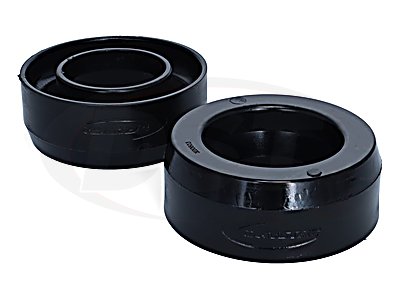


Front End Steering Rebuild Kits
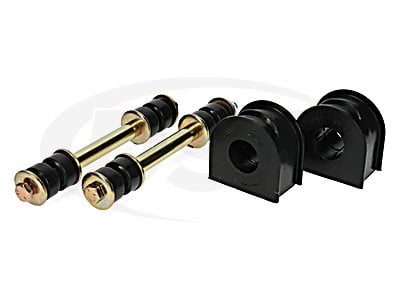
Package kits bundle the wearing steering parts for this truck in one order.

This interactive diagram shows the front suspension, steering linkage, driveline and rear suspension of the 2002 Ford F-150 2WD. Hover over or tap any part to see what it does, the signs that it is worn, and the replacement parts we carry that fit, down to the side and position.
We carry parts for it Not stocked yet Hover or tap any part.
The 2002 F-150 2WD holds each front wheel on a short upper and a long lower control arm. A coil spring sits in a seat in the middle of each lower arm and pushes up into a spring tower on the frame, with the shock inside the coil. The rotor and hub are one casting that turns on two tapered bearings on the spindle. A center link behind the sway bar, held by the pitman arm and the idler arm, steers both wheels through tie rods with adjusting sleeves. The rear is a solid axle on leaf springs, hung from a shackle at the rear of each spring, with drum brakes.
We carry replacement parts for 41 of the 46 components on this diagram, 210 parts in all. See every part for the 2002 Ford F-150 2WD.
Package kits bundle the wearing steering parts for this truck in one order.
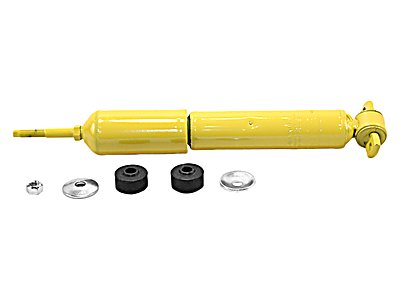
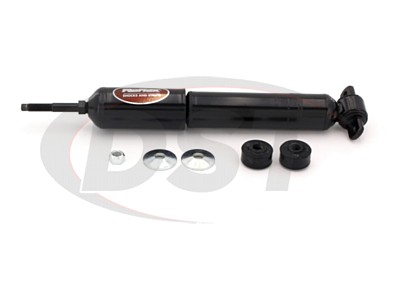
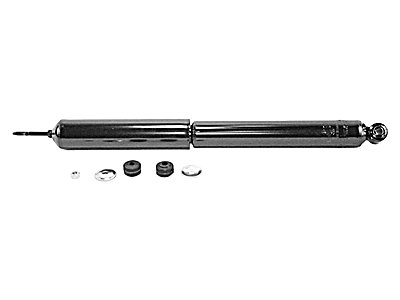
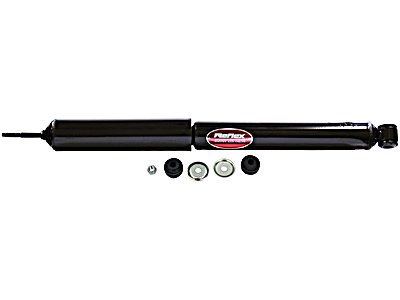
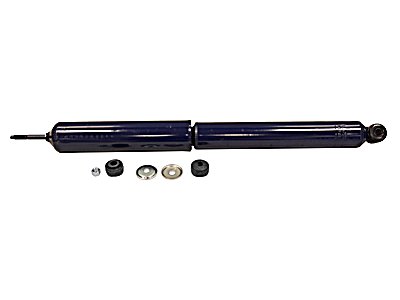
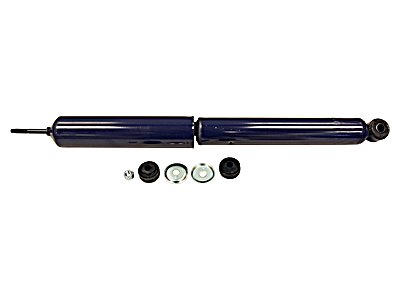
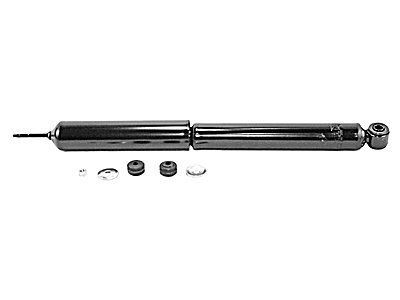
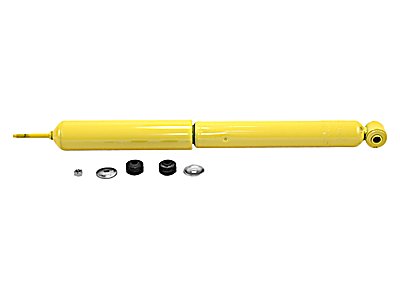
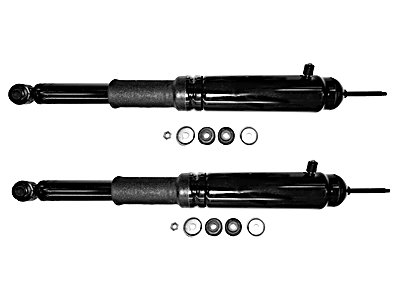
Front and rear shock sets for the whole truck.
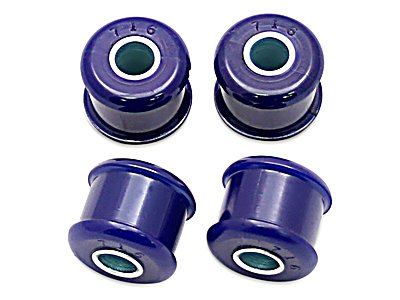
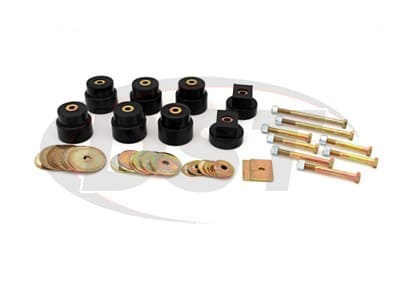
One kit with the suspension bushings for the whole truck.
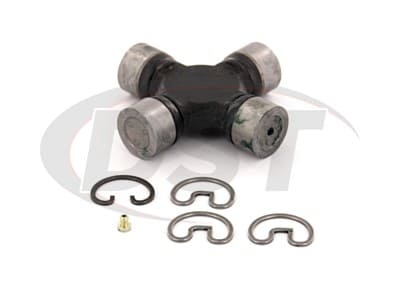
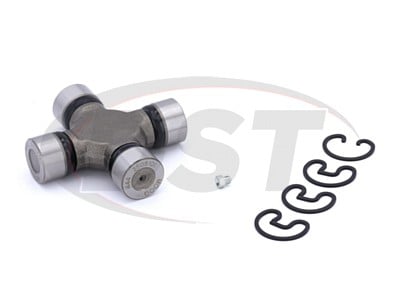
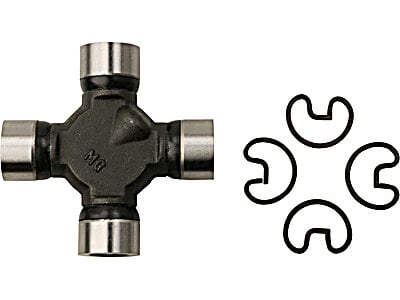
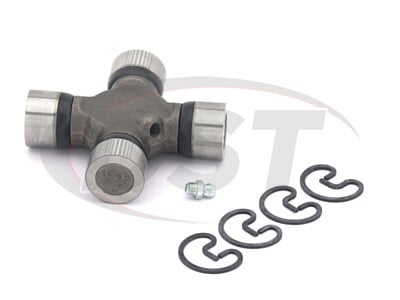
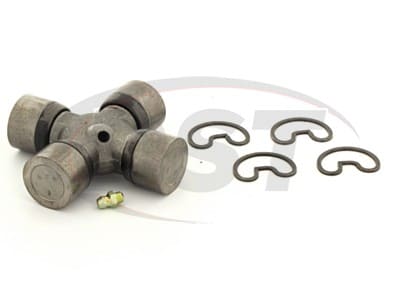
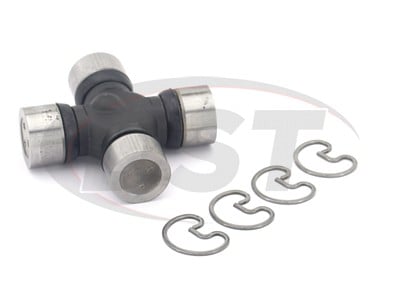
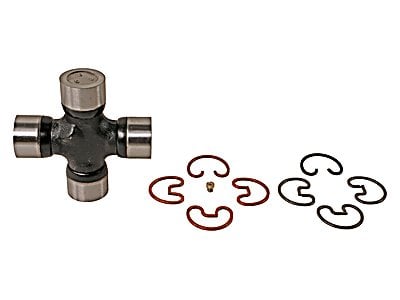
All the U-joints for the driveline in one order. One package fits the regular cab short box, the other every other cab and box.
The upper ball joint is the top pivot between the upper control arm and the steering knuckle. Its stud points down into the knuckle.
Signs of wear: Clunks over bumps, wandering, uneven tire wear, or play when the wheel is rocked top to bottom.
Tip: On these trucks the factory joint comes in the upper arm, so most owners replace the arm and joint together.
See all Front Upper Ball Joint parts for the 2002 Ford F-150 2WD
The lower ball joint is pressed into the outer end of the lower control arm, with its stud pointing up into the spindle. It carries the weight the coil spring puts on the arm.
Signs of wear: Clunks, a loose front end, or play when the wheel is rocked top to bottom with the truck on a jack.
Tip: Unload the torsion bar or support the lower arm before separating the joint, then get an alignment.
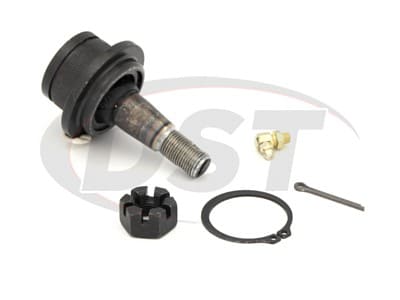
See all Front Lower Ball Joint parts for the 2002 Ford F-150 2WD
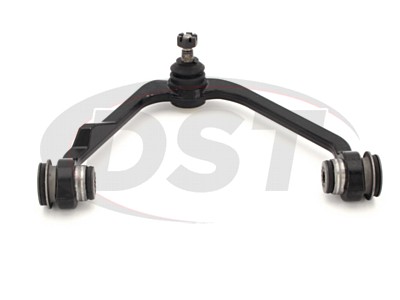
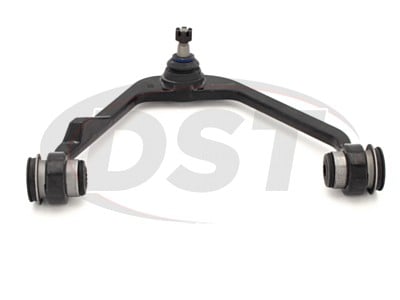
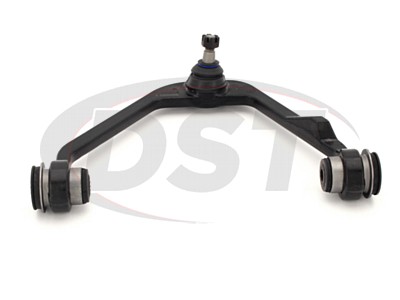
An arm shaped like an A that holds the top of the spindle. Two bushings pivot on cam bolts at the frame, and the ball joint is at the outer end.
Signs of wear: Torn bushings, a worn ball joint, clunks, or an alignment that will not stay set.
Tip: An arm with the ball joint and bushings already fitted saves pressing them.
The wide pressed steel lower arm pivots on two bushings in the front crossmember. The coil spring sits in a round seat in its middle, the shock bolts under that seat, and the ball joint and sway bar link mount near its outer end.
Signs of wear: Clunks, worn bushings, a worn ball joint, or a tire that wears on one edge.
Tip: Unload the torsion bar with the key adjuster before removing the arm.

Rubber or polyurethane bushings pressed into the two inner eyes of the upper arm, around the cam bolts.
Signs of wear: Clunks over bumps, a shifting alignment, or cracked rubber at the arm's inner end.
Tip: The cam bolts that pass through these bushings set caster and camber, so mark them before taking them out.

See all Front Control Arm Bushings parts for the 2002 Ford F-150 2WD
Bushings in the lower arm's front and rear eyes, where the arm pivots on the crossmember.
Signs of wear: Clunks, a pull under braking, or cracked rubber at the pivots.
Tip: The rear bushing sits around the torsion bar socket, so the bar has to be unloaded first.
See all Front Control Arm Bushings parts for the 2002 Ford F-150 2WD
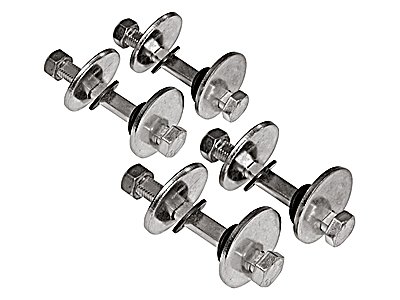
Cam bolts and washers through the upper arm's inner bushings. Turning them moves the arm in or out to set caster and camber.
Signs of wear: Rusted, seized or worn cams, or a truck that cannot be aligned after a lift or new arms.
Tip: Adjustable kits give more range than the factory cams after a leveling kit.

See all Front End Alignment Kit parts for the 2002 Ford F-150 2WD
The spindle turns on the two ball joints. The hub and rotor turn on its stub shaft on two tapered bearings, the caliper bolts to it, and its steering arm carries the outer tie rod end.
Signs of wear: Rarely fails, but check the ball joint tapers and the caliper mounts when replacing joints.
Tip: The front axle shaft passes through the knuckle into the hub.
The front shock stands inside the coil spring. Its lower cross pin bolts under the spring seat in the lower arm, and its stem goes up through the top of the spring tower.
Signs of wear: Bouncing after bumps, nose dive under braking, leaks, or cupped tires.
Tip: The shock comes out from below through the lower arm once its two lower bolts and the upper nut are off. The coil can stay in place.

See all Front Shock Absorber parts for the 2002 Ford F-150 2WD
Each front coil sits in a round seat in the middle of the lower control arm and pushes up into a spring tower on the frame. The shock stands inside it.
Signs of wear: A front end that sits low or leans, or a broken coil end.
Tip: The coil is under heavy load. Support the lower arm with a jack and use a spring compressor before freeing the ball joint.
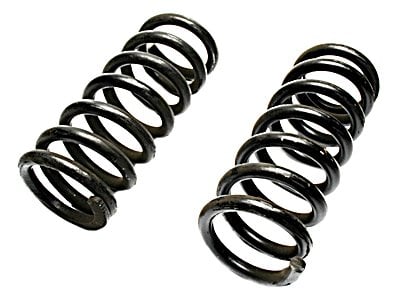
See all Front Coil Springs parts for the 2002 Ford F-150 2WD
A rubber insulator between the top of the coil and the spring tower. It quiets the spring.
Tip: Replace it whenever the coil is out.
See all Front Coil Spring Isolator Pads parts for the 2002 Ford F-150 2WD
A steel bar across the front, bushed to the frame, with its ends linked down to the lower control arms. It reduces body roll.
Signs of wear: A cracked bar is rare; look for broken links and worn bushings first.
Tip: A thicker bar firms up roll. The factory bar size varies by option, so check the bushing size.
Rubber bushings that hold the sway bar to the frame in clamp brackets.
Signs of wear: Squeaks or clunks over bumps, or a bar that moves in its brackets.
Tip: Measure the bar first: these trucks came with 27, 30, 33 and 35 mm bars.

See all Front Sway Bar Bushings parts for the 2002 Ford F-150 2WD
A long bolt with a spacer sleeve and rubber bushings that joins each end of the sway bar to the lower control arm.
Signs of wear: Rattles over bumps, torn bushings, or a broken bolt.
Tip: Replace both sides together.

See all Front Sway Bar Endlinks parts for the 2002 Ford F-150 2WD
The center link runs across the front behind the sway bar and ahead of the axle. The pitman arm and idler arm hold it, and the inner tie rod ends bolt into its ends.
Signs of wear: Play in the steering, wander, or worn tapered holes.
Tip: This link is the 4WD part. The 2WD truck uses another one.


See all Tie Rod Center Link parts for the 2002 Ford F-150 2WD
The pitman arm is splined to the steering gear's output shaft and moves the center link when the wheel is turned.
Signs of wear: Play at its ball stud, or a loose arm on the gear shaft.
Tip: Use a puller to remove the arm from the splines.
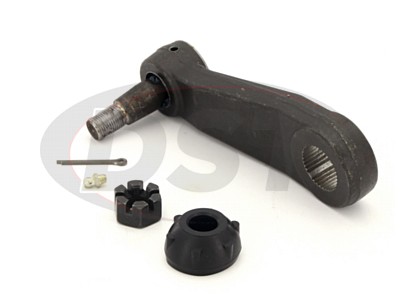

The idler arm holds the passenger end of the center link to the frame and pivots as the link moves.
Signs of wear: Up and down play at the passenger end of the link, wander, or uneven tire wear.
Tip: Two bracket hole spacings were used, 2.48 in and 3.43 in. Measure yours before ordering.

The inner tie rod end is a ball joint whose stud bolts into the end of the center link. Its threaded shank goes into the adjusting sleeve.
Signs of wear: Play in the steering, torn boots, or toe that keeps changing.
Tip: Count the turns when removing it from the sleeve, then get an alignment.

See all Front Inner Tie Rod End parts for the 2002 Ford F-150 2WD
A threaded steel tube with two clamps that joins the inner and outer tie rod ends. Turning it sets the toe.
Signs of wear: A sleeve rusted to the tie rod ends, or bent from an impact.
Tip: Replace a seized sleeve with the tie rod ends, and set the toe afterward.
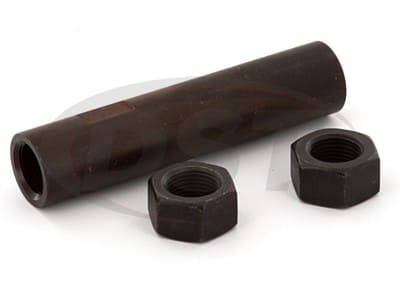
See all Tie Rod Adjusting Sleeve parts for the 2002 Ford F-150 2WD
The outer tie rod end is a ball joint whose stud goes down through the steering arm of the knuckle.
Signs of wear: Play, a torn boot, clunks, or a feathered tire edge.
Tip: Replace in pairs and align afterward.

See all Front Outer Tie Rod End parts for the 2002 Ford F-150 2WD
The power steering gear bolts to the driver side frame rail ahead of the front axle. Its output shaft turns the pitman arm.
Signs of wear: Leaks, a dead spot in the wheel, or play at the gear's output shaft.
Tip: Check the linkage before the gear: worn joints feel the same.
The U-joint at the front of the rear driveshaft, behind the transmission.
Signs of wear: A clunk taking off, squeaks, or vibration at speed.
Tip: Mark the shaft before removal so it goes back in phase.
The U-joint at the rear axle's pinion yoke.
Signs of wear: A clunk taking off, squeaks, or vibration at speed.
Tip: Replace both rear joints together.
The U-joint at the center support bearing on trucks with a two piece rear driveshaft.
Not on every vehicle: Only trucks with a two piece rear driveshaft (some SuperCab and SuperCrew trucks). The SuperCab with the 6.5 ft box drawn here has a one piece shaft.
Signs of wear: Vibration at speed or a clunk taking off.
Tip: Only trucks with a two piece rear driveshaft have this joint.
A pack of steel leaves on each side that carries the rear of the truck. It sits on top of the axle tube, held by two U-bolts, with an eye at each end.
Signs of wear: A rear end that sags, a broken leaf, or a spring that has shifted on the axle.
Tip: Replace springs in pairs.
The bushing pressed into the spring's front eye, where the spring pivots on the front hanger.
Signs of wear: Clunks taking off and stopping, or a rear axle that steers the truck over bumps.
Tip: Polyurethane kits replace the front and rear eye bushings together.
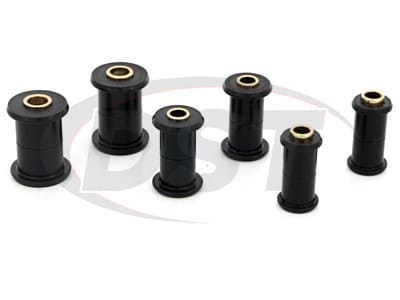
See all Rear Leaf Spring Bushings parts for the 2002 Ford F-150 2WD
The bushing in the spring's rear eye, where the spring hangs from the shackle.
Signs of wear: Squeaks or clunks over bumps.
Tip: Replace with the shackle bushings.
See all Rear Leaf Spring Bushings parts for the 2002 Ford F-150 2WD
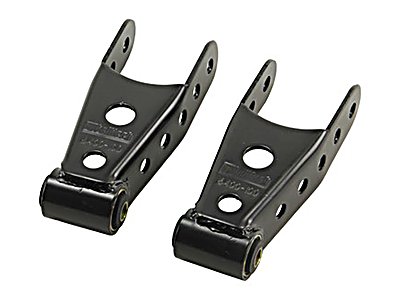
Two plates that hang the spring's rear eye from a bracket on the frame, so the spring can lengthen as it flexes.
Signs of wear: Clunks, a rusted or bent shackle, or worn bushings.
Tip: The listed shackle is for trucks under 7700 GVW.
See all Rear Leaf Spring Shackles parts for the 2002 Ford F-150 2WD
The bushing in the frame bracket where the shackle pivots.
Signs of wear: Squeaks or clunks over bumps.
Tip: Replace with the shackle.
See all Rear Leaf Spring Shackle Bushings parts for the 2002 Ford F-150 2WD
Two U-bolts on each side wrap under the axle tube and clamp the spring to the top of it with a plate on the spring.
Signs of wear: Loose U-bolts let the axle shift on the springs.
Tip: Use new U-bolts and nuts whenever they are removed.
The rear shock runs from a bracket under the axle tube up and back to the frame, inboard of the spring.
Signs of wear: Bouncing, a floaty rear, leaks, or cupped tires.
Tip: Trucks with the 7700 GVW package use their own rear shocks.
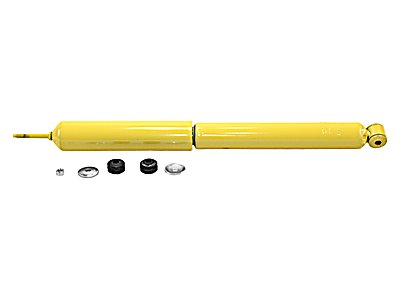
See all Rear Shock Absorber parts for the 2002 Ford F-150 2WD
A bar across the rear axle with its ends linked up to the frame.
Not on every vehicle: Some trucks only (listed for SuperCrew, Harley-Davidson and Lightning trucks). The 2001 XL SuperCab drawn here has no rear bar, so it is not drawn.
Signs of wear: Rattles from broken links or worn bushings.
Tip: Not every truck has a rear bar.
Bushings that hold the rear sway bar in its clamps.
Not on every vehicle: Trucks with a rear sway bar only.
Signs of wear: Squeaks or clunks over bumps.
Tip: Match the bar diameter.
See all Rear Sway Bar Bushings parts for the 2002 Ford F-150 2WD
Links from the ends of the rear sway bar up to the frame.
Not on every vehicle: Trucks with a rear sway bar only (Moog K80085 is listed for 1997-2001).
Signs of wear: Rattles over bumps.
Tip: Replace both sides.
See all Rear Sway Bar Endlinks parts for the 2002 Ford F-150 2WD
On the 2WD truck the front rotor and the wheel hub are one casting. It turns on two tapered bearings on the spindle, and the wheel bolts to its five studs.
Signs of wear: Pulsing in the brake pedal, grooves on the rotor faces, or a rough wheel bearing.
Tip: Repack or replace the wheel bearings and seal when fitting a new rotor and hub.
See all Front Brake Rotor and Hub Assembly parts for the 2002 Ford F-150 2WD
Tapered roller bearings inside the rotor and hub, an inner and an outer on each side, with a grease seal behind the inner bearing.
Signs of wear: A hum or growl that changes with speed, or play in the wheel.
Tip: Adjust the bearing preload with the spindle nut, then fit a new cotter pin.
See all Front Wheel Bearing Assembly parts for the 2002 Ford F-150 2WD
The caliper straddles the rotor behind the axle and squeezes the pads against it.
Signs of wear: A pull to one side, a sticking brake, or a leak.
Tip: The calipers listed for this section are the 7700 GVW package ones; check your truck's package before ordering. Bleed the brakes afterward.
See all Front Brake Caliper parts for the 2002 Ford F-150 2WD
The pads sit in the caliper either side of the rotor.
Signs of wear: Squealing, grinding, or a long pedal.
Tip: Ceramic pads make less dust.
The cast iron drum on each end of the rear axle. The wheel bolts over it and the shoes inside press out against it.
Signs of wear: Pulsing when braking, scoring, or a drum worn past its limit.
Tip: Check the shoes and hardware whenever a drum is off.
Two curved shoes inside each rear drum, pushed out against it by the wheel cylinder. On these trucks they also work as the parking brake.
Signs of wear: Grinding, a low pedal, or a parking brake that will not hold.
Tip: Adjust the shoes after fitting the drum.
The rear disc on trucks with rear disc brakes.
Not on every vehicle: Rear disc brakes. The 2001 F-150 2WD XL drawn here has rear drums (NHTSA test 3494 truck).
Signs of wear: Pulsing, grooves, or a weak parking brake.
Tip: Check the parking shoes when the rotor is off.
The rear caliper on trucks with rear disc brakes.
Not on every vehicle: Rear disc brakes only; the drawn truck has rear drums.
Signs of wear: A dragging brake or a leak.
Tip: Bleed the brakes afterward.
See all Rear Brake Caliper parts for the 2002 Ford F-150 2WD
The pads in the rear calipers on trucks with rear disc brakes.
Not on every vehicle: Rear disc brakes only; the drawn truck has rear drums.
Signs of wear: Squealing or grinding from the rear.
Tip: Replace both sides together.
Small shoes inside the rear rotor's hat on trucks with rear disc brakes.
Not on every vehicle: Rear disc brakes only; on the drum brake truck drawn here the rear shoes are the parking brake.
Signs of wear: A parking brake that will not hold.
Tip: Adjust them before fitting the rotor.
See all Parking Brake Shoes parts for the 2002 Ford F-150 2WD
Rubber cushions between the cab and the frame brackets. The kits differ by cab: regular cab, SuperCab and SuperCrew.
Signs of wear: Clunks, a cab that shifts on the frame, or cracked rubber.
Tip: Replace the whole set at once and match the kit to your cab.

See all Body Mount Bushings parts for the 2002 Ford F-150 2WD
The rubber mount between the transmission and its crossmember.
Signs of wear: Clunks shifting into gear or a vibration at idle.
Tip: Support the transmission before unbolting it.

See all Transmission Mount parts for the 2002 Ford F-150 2WD
Coil springs. Each front coil sits on the lower control arm with the shock inside it. The four wheel drive truck uses torsion bars instead, so its front springs, arms and hubs are different parts.
No. On the 2WD truck the rotor and the hub are one casting, so the hub comes with the rotor. The wheel bearings are separate: an inner and an outer tapered bearing in each hub, with a seal behind the inner one.
Lower ball joints, the idler arm, tie rod ends and the upper control arm bushings. Check them with the front wheels off the ground, where play shows up when the wheel is rocked by hand.
Most 2002 F-150 2WD trucks, like the XL drawn here, have rear drum brakes. Rear disc parts are listed for some packages, so check your truck before ordering rear brake parts.
Body mount kits are made for the regular cab, SuperCab and SuperCrew, and some long trucks have a two piece rear driveshaft with a support bearing. The SuperCab with the 6.5 ft box drawn here has a one piece shaft.
Numbered diagrams to print or save for the shop. The numbers match the numbered parts on the interactive diagram.