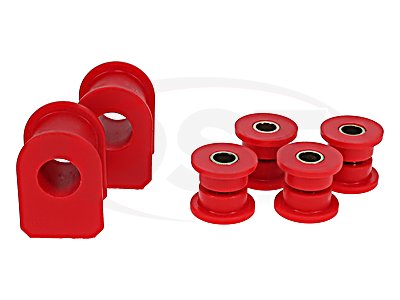
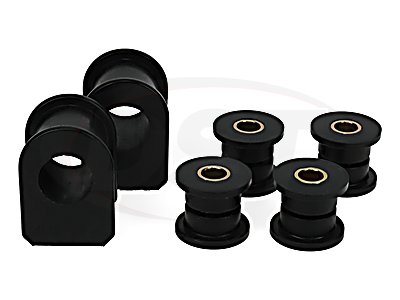
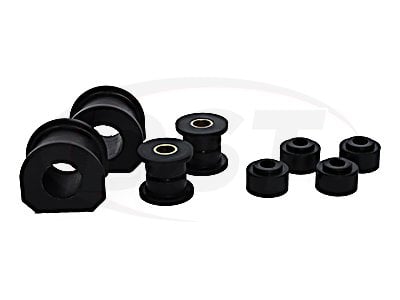
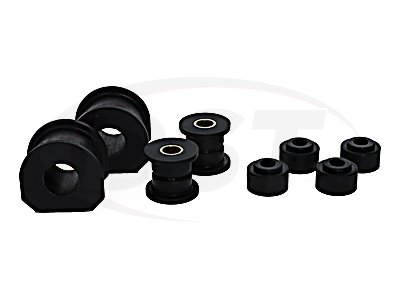
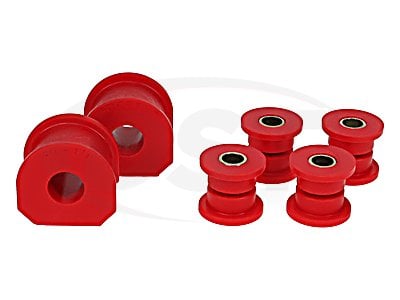
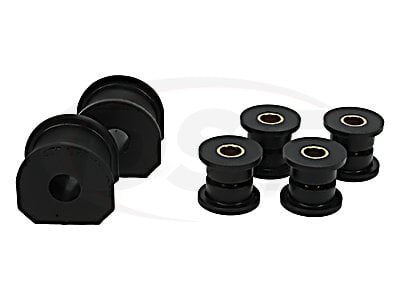
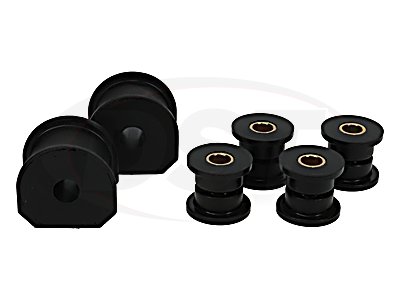
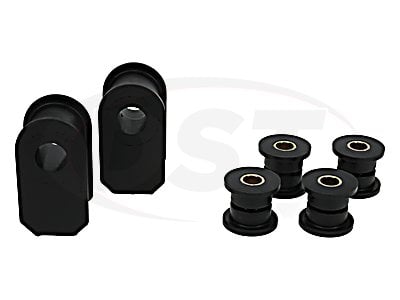
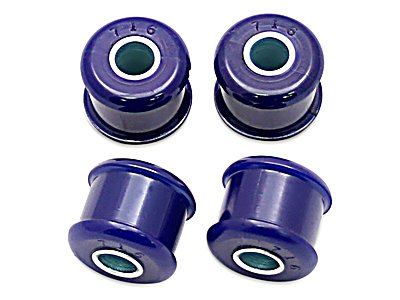
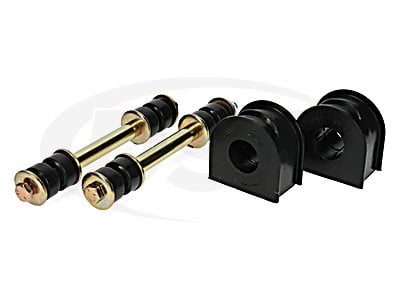
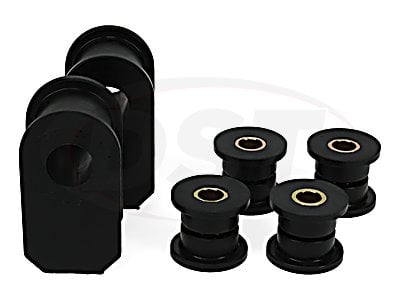
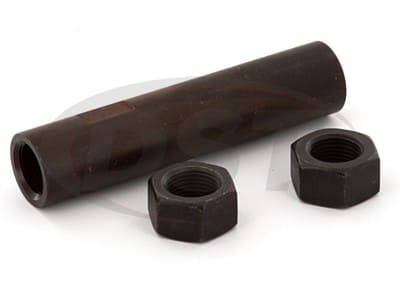
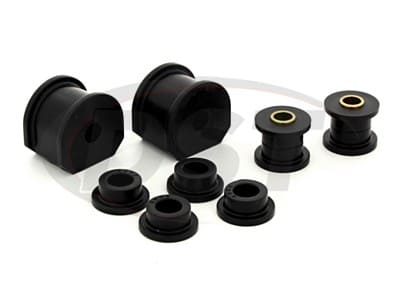
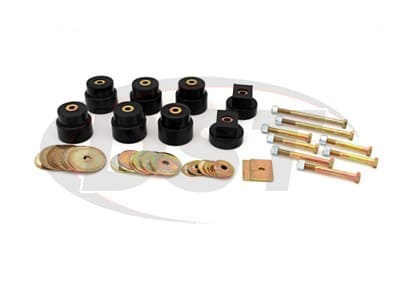
Front End Steering Rebuild Kits
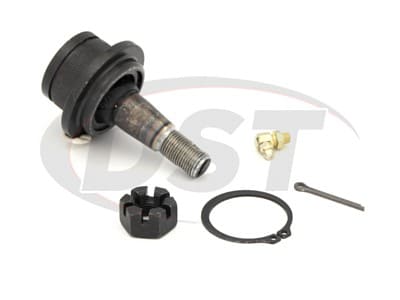
Package kits bundle the wearing steering parts for this truck in one order.

This interactive diagram shows the front suspension, steering linkage, driveline and rear suspension of the 2000 Ford F-150 4x4. Hover over or tap any part to see what it does, the signs that it is worn, and the replacement parts we carry that fit, down to the side and position.
We carry parts for it Not stocked yet Hover or tap any part.
The 2000 F-150 4x4 holds its front on forged upper and lower control arms with a torsion bar on each side, running back from the lower arm to an adjustable key in a crossmember behind the transmission. CV axles run out from a frame mounted front differential, and a center link ahead of the axle, held by the pitman arm and idler arm, steers both wheels through tie rods with adjusting sleeves. The rear is a solid axle on leaf springs, clamped on top of the axle tubes with U-bolts and joined to a shackle at the rear of each spring, with rear drum brakes on the truck drawn here.
We carry replacement parts for 41 of the 49 components on this diagram, 208 parts in all. See every part for the 2000 Ford F-150 4WD.
Package kits bundle the wearing steering parts for this truck in one order.
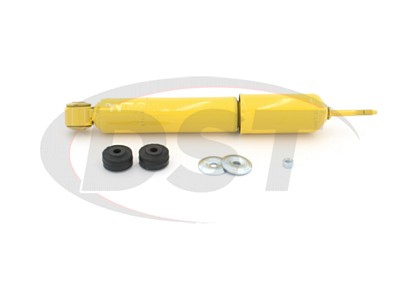
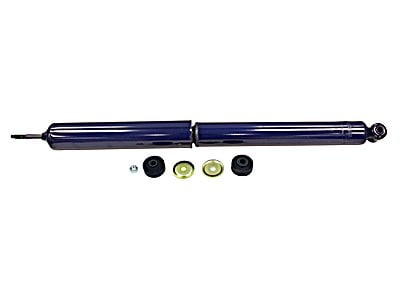
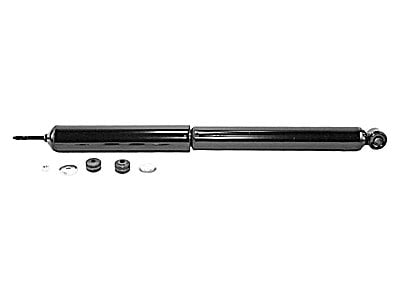
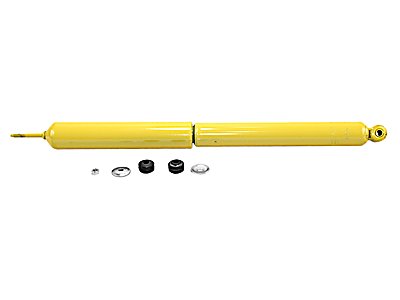
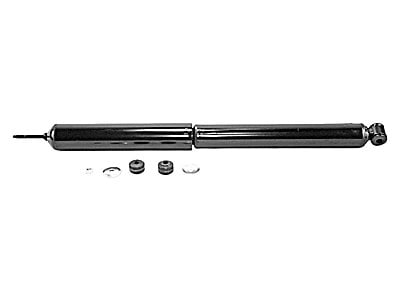
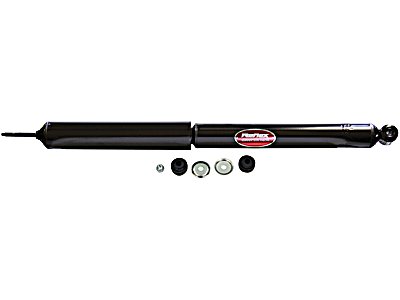
Front and rear shock sets for the whole truck.
One kit with the suspension bushings for the whole truck.
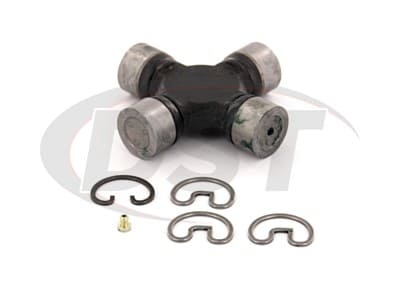
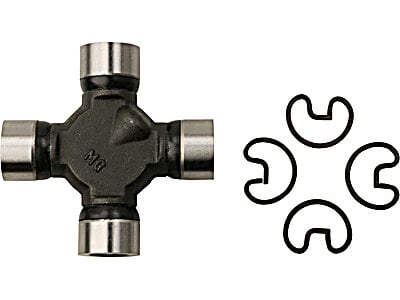
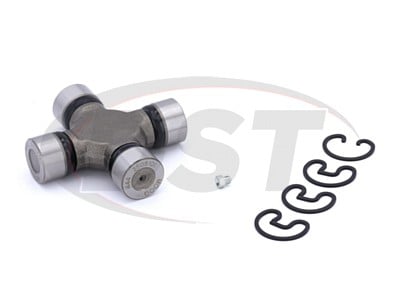
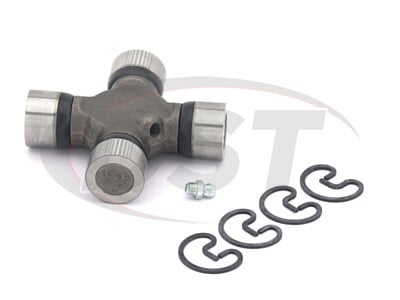
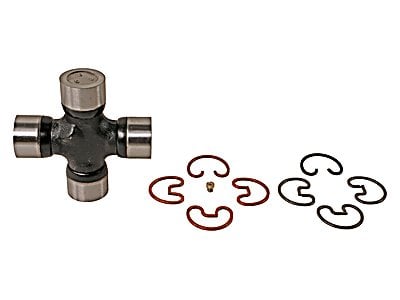
All the U-joints for the driveline in one order. One package fits the regular cab short box, the other every other cab and box.
The upper ball joint is the top pivot between the upper control arm and the steering knuckle. Its stud points down into the knuckle.
Signs of wear: Clunks over bumps, wandering, uneven tire wear, or play when the wheel is rocked top to bottom.
Tip: On these trucks the factory joint comes in the upper arm, so most owners replace the arm and joint together.
See all Front Upper Ball Joint parts for the 2000 Ford F-150 4WD
The lower ball joint is pressed into the outer end of the lower control arm, with its boot under the arm and its stud pointing down through the knuckle's lower ear. It carries the weight the torsion bar puts on the arm.
Signs of wear: Clunks, a loose front end, or play when the wheel is rocked top to bottom with the truck on a jack.
Tip: Unload the torsion bar or support the lower arm before separating the joint, then get an alignment.

See all Front Lower Ball Joint parts for the 2000 Ford F-150 4WD
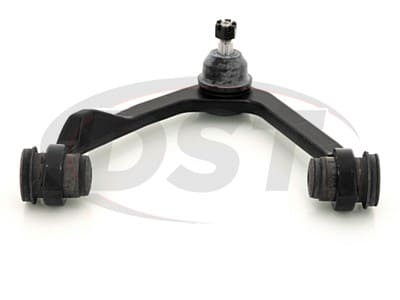
A forged arm shaped like an A that holds the top of the knuckle. Two bushings pivot on cam bolts at the frame, and the ball joint is at the outer end.
Signs of wear: Torn bushings, a worn ball joint, clunks, or an alignment that will not stay set.
Tip: An arm with the ball joint and bushings already fitted saves pressing them.
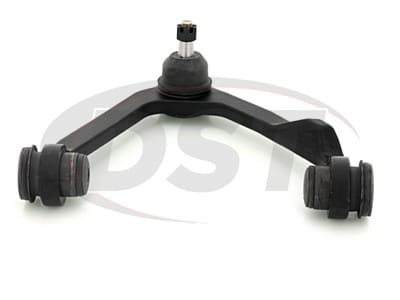
The wide lower arm pivots on two bushings in the front crossmember. The torsion bar's front end sits in its rear pivot, and the ball joint, shock and sway bar link mount near its outer end.
Signs of wear: Clunks, worn bushings, a worn ball joint, or a tire that wears on one edge.
Tip: Unload the torsion bar with the key adjuster before removing the arm.
Rubber or polyurethane bushings pressed into the two inner eyes of the upper arm, around the cam bolts.
Signs of wear: Clunks over bumps, a shifting alignment, or cracked rubber at the arm's inner end.
Tip: The cam bolts that pass through these bushings set caster and camber, so mark them before taking them out.

See all Front Control Arm Bushings parts for the 2000 Ford F-150 4WD
Bushings in the lower arm's front and rear eyes, where the arm pivots on the crossmember.
Signs of wear: Clunks, a pull under braking, or cracked rubber at the pivots.
Tip: The rear bushing sits around the torsion bar socket, so the bar has to be unloaded first.
See all Front Control Arm Bushings parts for the 2000 Ford F-150 4WD
Cam bolts and washers through the upper arm's inner bushings. Turning them moves the arm in or out to set caster and camber.
Signs of wear: Rusted, seized or worn cams, or a truck that cannot be aligned after a lift or new arms.
Tip: Adjustable kits give more range than the factory cams after a leveling kit.
See all Front End Alignment Kit parts for the 2000 Ford F-150 4WD
The knuckle carries the hub and brake caliper, turns on the two ball joints, and has the steering arm the outer tie rod end bolts to.
Signs of wear: Rarely fails, but check the ball joint tapers and the caliper mounts when replacing joints.
Tip: The front axle shaft passes through the knuckle into the hub.
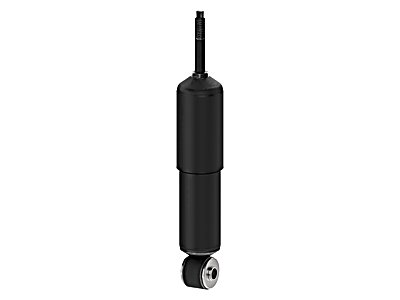
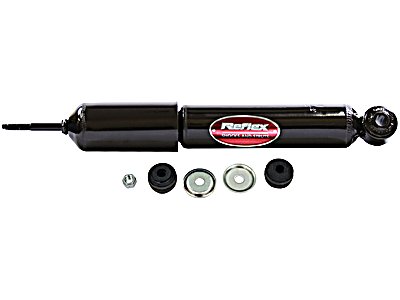
The front shock runs from a loop on the lower control arm up to a stem mount on the frame.
Signs of wear: Bouncing after bumps, nose dive under braking, leaks, or cupped tires.
Tip: Replace front shocks in pairs.
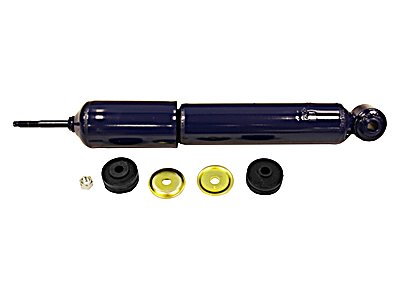
See all Front Shock Absorber parts for the 2000 Ford F-150 4WD
The front spring on the 4WD truck: a long steel bar from the lower arm's rear pivot back to a key in a crossmember behind the transmission. Twisting it holds the front up.
Signs of wear: A front end that sits low on one side or both.
Tip: Ride height is set at the key adjuster bolt, not by changing the bar.
The key is the lever on the rear end of each torsion bar. An adjuster bolt under it sets how much the bar is twisted, which sets the front height.
Signs of wear: A front end that cannot be raised to height, or a seized adjuster bolt.
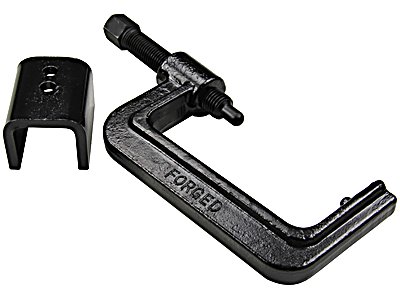
Tip: Leveling keys index the bar further to lift the front. Unload the bar with a puller before removing a key.
See all Torsion Bar Key Lift Kit parts for the 2000 Ford F-150 4WD
A steel bar across the front, bushed to the frame, with its ends linked down to the lower control arms. It reduces body roll.
Signs of wear: A cracked bar is rare; look for broken links and worn bushings first.
Tip: A thicker bar firms up roll. The factory bar size varies by option, so check the bushing size.
Rubber bushings that hold the sway bar to the frame in clamp brackets.
Signs of wear: Squeaks or clunks over bumps, or a bar that moves in its brackets.
Tip: Measure the bar first: these trucks came with 27, 30, 33 and 35 mm bars.
See all Front Sway Bar Bushings parts for the 2000 Ford F-150 4WD
A long bolt with a spacer sleeve and rubber bushings that joins each end of the sway bar to the lower control arm.
Signs of wear: Rattles over bumps, torn bushings, or a broken bolt.
Tip: Replace both sides together.
See all Front Sway Bar Endlinks parts for the 2000 Ford F-150 4WD
The center link runs across the front ahead of the axle. The pitman arm and idler arm hold it, and the inner tie rod ends bolt into its ends.
Signs of wear: Play in the steering, wander, or worn tapered holes.
Tip: This link is the 4WD part. The 2WD truck uses another one.

See all Tie Rod Center Link parts for the 2000 Ford F-150 4WD
The pitman arm is splined to the steering gear's output shaft and moves the center link when the wheel is turned.
Signs of wear: Play at its ball stud, or a loose arm on the gear shaft.
Tip: Use a puller to remove the arm from the splines.
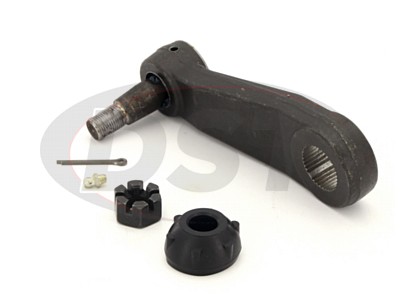

The idler arm holds the passenger end of the center link to the frame and pivots as the link moves.
Signs of wear: Up and down play at the passenger end of the link, wander, or uneven tire wear.
Tip: Two bracket hole spacings were used, 2.48 in and 3.43 in. Measure yours before ordering.
The inner tie rod end is a ball joint whose stud bolts into the end of the center link. Its threaded shank goes into the adjusting sleeve.
Signs of wear: Play in the steering, torn boots, or toe that keeps changing.
Tip: Count the turns when removing it from the sleeve, then get an alignment.


See all Front Inner Tie Rod End parts for the 2000 Ford F-150 4WD
A threaded steel tube with two clamps that joins the inner and outer tie rod ends. Turning it sets the toe.
Signs of wear: A sleeve rusted to the tie rod ends, or bent from an impact.
Tip: Replace a seized sleeve with the tie rod ends, and set the toe afterward.
See all Tie Rod Adjusting Sleeve parts for the 2000 Ford F-150 4WD
The outer tie rod end is a ball joint whose stud goes down through the steering arm of the knuckle.
Signs of wear: Play, a torn boot, clunks, or a feathered tire edge.
Tip: Replace in pairs and align afterward.

See all Front Outer Tie Rod End parts for the 2000 Ford F-150 4WD
The power steering gear bolts to the driver side frame rail ahead of the front axle. Its output shaft turns the pitman arm.
Signs of wear: Leaks, a dead spot in the wheel, or play at the gear's output shaft.
Tip: Check the linkage before the gear: worn joints feel the same.
The front axle shaft runs from the frame mounted front differential to the hub, with a CV joint in a boot at each end.
Signs of wear: Clicking in turns, grease thrown from a torn boot, or vibration.
Tip: Replace a torn boot quickly; dirt wears out the joint.
See all CV Joint Parts - Front parts for the 2000 Ford F-150 4WD
The U-joint where the front driveshaft meets the front differential.
Signs of wear: Clunks when shifting into gear, squeaks, or vibration in 4WD.
Tip: Check the size listed for your suspension option before ordering.
The U-joint where the front driveshaft leaves the transfer case.
Signs of wear: Clunks, squeaks, or vibration in 4WD.
Tip: Grease it when servicing the truck.
The U-joint at the front of the rear driveshaft, behind the transfer case.
Signs of wear: A clunk taking off, squeaks, or vibration at speed.
Tip: Mark the shaft before removal so it goes back in phase. Most of these trucks use the larger 1350 series joint drawn here; some regular cab trucks with the 4.2L V6 or 4.6L V8 use the smaller 1330 joint, and some regular cab short box trucks have a double cardan joint at this end. Check your old joint before ordering.
The U-joint at the rear axle's pinion yoke.
Signs of wear: A clunk taking off, squeaks, or vibration at speed.
Tip: Replace both rear joints together. Most of these trucks use the larger 1350 series joint; some regular cab trucks with the 4.2L V6 or 4.6L V8 use the smaller 1330 joint, so check your old joint before ordering.
The U-joint at the center support bearing on trucks with a two piece rear driveshaft.
Not on every vehicle: Only trucks with a two piece rear driveshaft (some SuperCab and SuperCrew trucks). The SuperCab with the 6.5 ft box drawn here has a one piece shaft.
Signs of wear: Vibration at speed or a clunk taking off.
Tip: Only trucks with a two piece rear driveshaft have this joint.
A pack of steel leaves on each side that carries the rear of the truck. It sits on top of the axle tube, held by two U-bolts, with an eye at each end.
Signs of wear: A rear end that sags, a broken leaf, or a spring that has shifted on the axle.
Tip: Replace springs in pairs.
The bushing pressed into the spring's front eye, where the spring pivots on the front hanger.
Signs of wear: Clunks taking off and stopping, or a rear axle that steers the truck over bumps.
Tip: Polyurethane kits replace the front and rear eye bushings together.
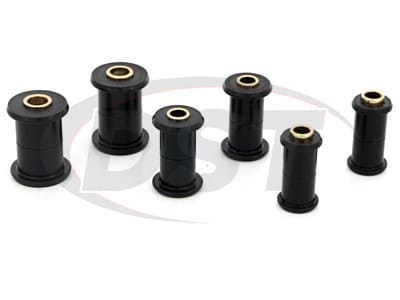
See all Rear Leaf Spring Bushings parts for the 2000 Ford F-150 4WD
The bushing in the spring's rear eye, where the spring joins the shackle.
Signs of wear: Squeaks or clunks over bumps.
Tip: Replace with the shackle bushings.
See all Rear Leaf Spring Bushings parts for the 2000 Ford F-150 4WD
Two plates that join the spring's rear eye to a bracket on the frame, so the spring can lengthen as it flexes.
Signs of wear: Clunks, a rusted or bent shackle, or worn bushings.
Tip: The listed shackle is for trucks under 7700 GVW.
See all Rear Leaf Spring Shackles parts for the 2000 Ford F-150 4WD
The bushing in the frame bracket where the shackle pivots.
Signs of wear: Squeaks or clunks over bumps.
Tip: Replace with the shackle.
See all Rear Leaf Spring Shackle Bushings parts for the 2000 Ford F-150 4WD
Two U-bolts on each side wrap under the axle tube and clamp the spring to the top of it with a plate on the spring.
Signs of wear: Loose U-bolts let the axle shift on the springs.
Tip: Use new U-bolts and nuts whenever they are removed.
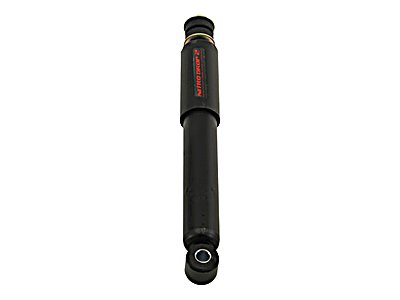
The rear shock runs from a bracket under the axle tube up and back to the frame, inboard of the spring.
Signs of wear: Bouncing, a floaty rear, leaks, or cupped tires.
Tip: Trucks with the 7700 GVW package use their own rear shocks.
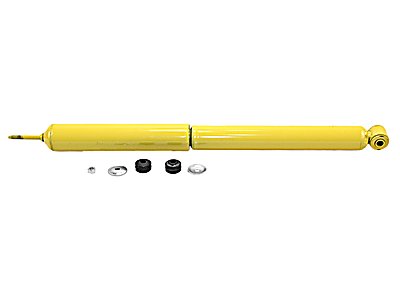
See all Rear Shock Absorber parts for the 2000 Ford F-150 4WD
A bar across the rear axle with its ends linked up to the frame.
Not on every vehicle: Some trucks only. The 2001 truck in our lift photos has no rear bar, so it is not drawn.
Signs of wear: Rattles from broken links or worn bushings.
Tip: Not every truck has a rear bar.
Bushings that hold the rear sway bar in its clamps.
Not on every vehicle: Trucks with a rear sway bar only.
Signs of wear: Squeaks or clunks over bumps.
Tip: Match the bar diameter.
See all Rear Sway Bar Bushings parts for the 2000 Ford F-150 4WD
Links from the ends of the rear sway bar up to the frame.
Not on every vehicle: Trucks with a rear sway bar only (listed for 1997-2001 XL, XLT and Lariat 4WD).
Signs of wear: Rattles over bumps.
Tip: Replace both sides.
See all Rear Sway Bar Endlinks parts for the 2000 Ford F-150 4WD
A sealed hub and bearing unit bolted to the knuckle. The front axle shaft's splines drive it, and the rotor and wheel bolt to its studs.
Signs of wear: Humming or growling that changes in turns, play at the wheel, or an ABS light.
Tip: Trucks with the 7700 GVW package use a 7 stud hub; the 5 stud hub is drawn.

See all Front Wheel Bearing and Hub Assembly parts for the 2000 Ford F-150 4WD
The vented front disc that bolts to the hub under the wheel.
Signs of wear: Pulsing in the pedal, grooves, or a lip at the edge.
Tip: Replace in pairs with new pads.
The caliper straddles the rotor behind the axle and squeezes the pads against it.
Signs of wear: A pull to one side, a sticking brake, or a leak.
Tip: Our parts suppliers list different front calipers for rear drum trucks (the type drawn here), rear disc trucks and the 7700 GVW package. Check your truck before ordering, and bleed the brakes afterward.
See all Front Brake Caliper parts for the 2000 Ford F-150 4WD
The pads sit in the caliper either side of the rotor.
Signs of wear: Squealing, grinding, or a long pedal.
Tip: Two pad shapes are listed: one for the 7700 GVW package and one for the other trucks, so match your old pads. Ceramic pads make less dust.
The cast iron drum on each end of the rear axle. The wheel bolts over it and the shoes inside press out against it.
Signs of wear: Pulsing when braking, scoring, or a drum worn past its limit.
Tip: Check the shoes and hardware whenever a drum is off. Some trucks have rear disc brakes instead, so check yours before ordering.
Two curved shoes inside each rear drum, pushed out against it by the wheel cylinder. On these trucks they also work as the parking brake.
Signs of wear: Grinding, a low pedal, or a parking brake that will not hold.
Tip: Adjust the shoes after fitting the drum.
The rear disc on trucks with rear disc brakes.
Not on every vehicle: Rear disc brakes. The 2001 F-150 4WD XL, XLT and Lariat drawn here have rear drums.
Signs of wear: Pulsing, grooves, or a weak parking brake.
Tip: Check the parking shoes when the rotor is off.
The rear caliper on trucks with rear disc brakes.
Not on every vehicle: Rear disc brakes only; the drawn truck has rear drums.
Signs of wear: A dragging brake or a leak.
Tip: Bleed the brakes afterward.
See all Rear Brake Caliper parts for the 2000 Ford F-150 4WD
The pads in the rear calipers on trucks with rear disc brakes.
Not on every vehicle: Rear disc brakes only; the drawn truck has rear drums.
Signs of wear: Squealing or grinding from the rear.
Tip: Replace both sides together.
Small shoes inside the rear rotor's hat on trucks with rear disc brakes.
Not on every vehicle: Rear disc brakes only; on the drum brake truck drawn here the rear shoes are the parking brake.
Signs of wear: A parking brake that will not hold.
Tip: Adjust them before fitting the rotor.
See all Parking Brake Shoes parts for the 2000 Ford F-150 4WD
Rubber cushions between the cab and the frame brackets. The kits differ by cab: regular cab, SuperCab and SuperCrew.
Signs of wear: Clunks, a cab that shifts on the frame, or cracked rubber.
Tip: Replace the whole set at once and match the kit to your cab.
See all Body Mount Bushings parts for the 2000 Ford F-150 4WD
The rubber mount between the transmission and its crossmember.
Signs of wear: Clunks shifting into gear or a vibration at idle.
Tip: Support the transmission before unbolting it.

See all Transmission Mount parts for the 2000 Ford F-150 4WD
Torsion bars. The front of the 4x4 uses a torsion bar on each side, adjusted by a bolt under each torsion bar key. The two wheel drive truck uses coil springs instead, so its front parts are different.
Turning the torsion bar adjuster bolts raises the front a little, and leveling keys index the bars further for more. Get an alignment afterward, because the camber and toe change with height.
Lower ball joints, the idler arm, tie rod ends and the upper control arm bushings. Check them with the front wheels off the ground, where play shows up when the wheel is rocked by hand.
The truck drawn here has rear drum brakes. Our parts suppliers also list rear disc brake parts for other trucks in this year, and each rear brake type has its own front caliper, so check your truck before ordering brake parts.
Body mount kits are made for the regular cab and the SuperCab. Some long SuperCab trucks have a two piece rear driveshaft with a support bearing; the SuperCab with the 6.5 ft box drawn here has a one piece shaft.
It depends on the build date, the ABS type and the stud count. Five stud trucks with four wheel ABS built through 8/1/99 use Moog 515010 (12 mm wheel bolts), and those built from 8/2/99 use Moog 515029 (14 mm wheel bolts). Five stud trucks with two wheel ABS use Moog 515017 (12 mm wheel bolts), and seven stud trucks use Moog 515030. Check the build date on your door label and your ABS type before ordering.
Numbered diagrams to print or save for the shop. The numbers match the numbered parts on the interactive diagram.