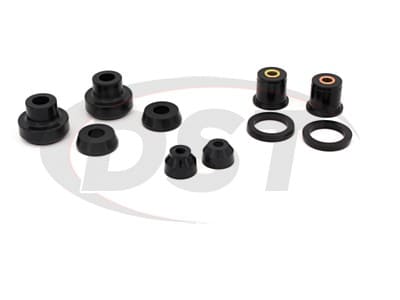
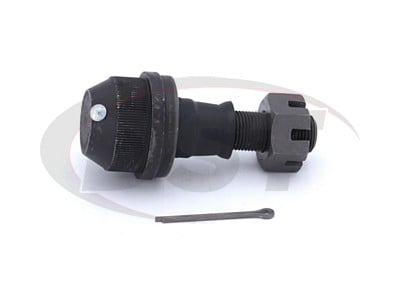
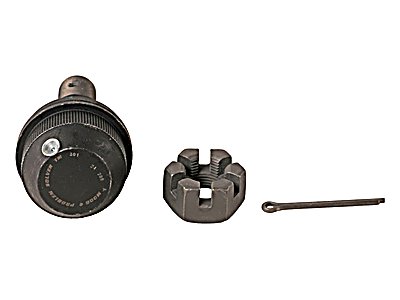
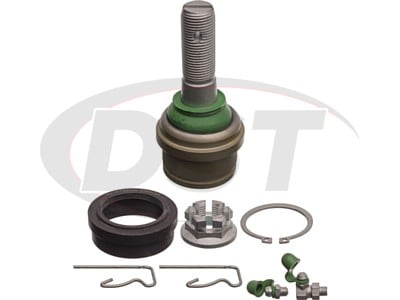
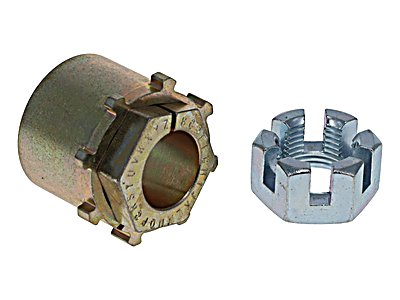
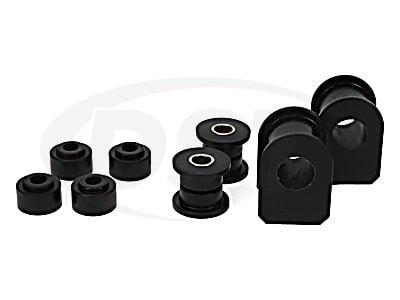
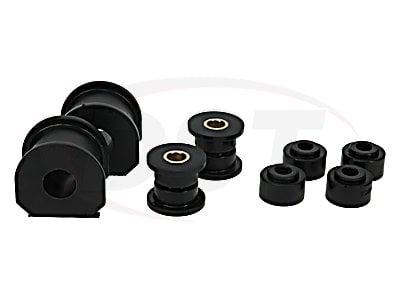
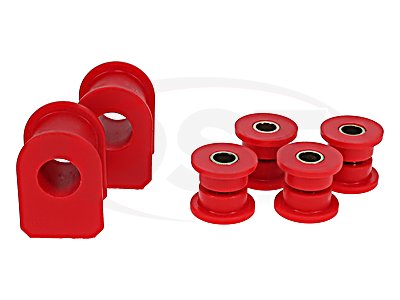
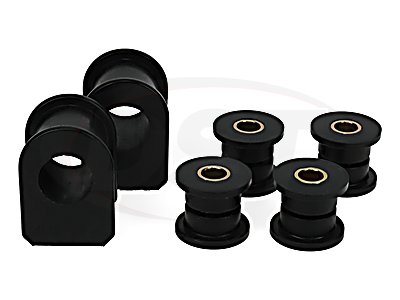
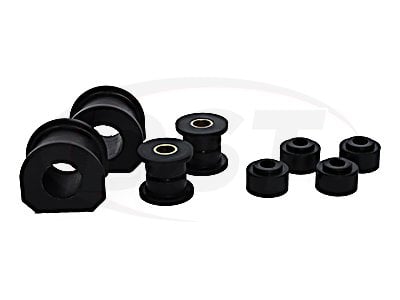
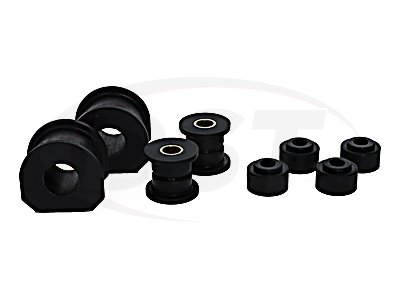
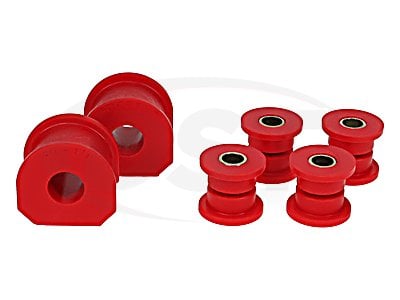
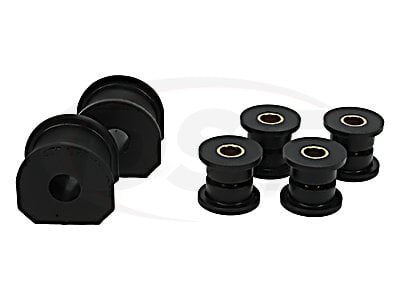
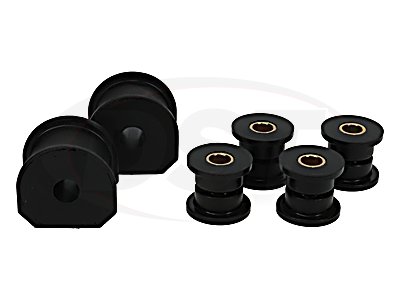
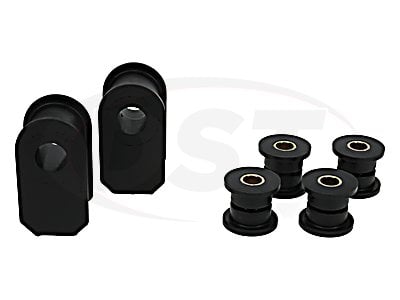
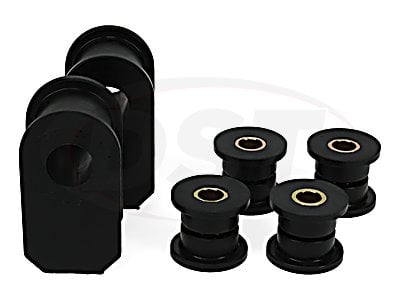
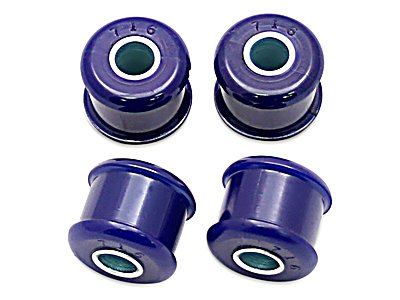
Front End Steering Rebuild Kits
Package kits bundle the wearing steering parts and ball joints.
This interactive diagram shows the front suspension, steering linkage, driveline and rear suspension of the 1995 Ford F-150 4WD. Hover over or tap any part to see what it does, the signs that it is worn, and the replacement parts we carry that fit your truck, down to the side and position.
We carry parts for it Not stocked yet Hover or tap any part.
The 1980 to 1996 F-150 4WD uses Ford's Twin Traction Beam front: a Dana 44 axle split into two beams that cross under the engine, each pivoting on the far side of the frame. The driver beam carries the front differential, coil springs sit over the radius arms, and the knuckles turn on upper and lower ball joints with a camber sleeve at the top. The steering is a drag link from the pitman arm to the passenger knuckle with the driver tie rod plugged into it. The rear is a Ford 8.8 axle on 3 inch leaf springs with drum brakes.
We carry replacement parts for 37 of the 53 components on this diagram, 203 parts in all. See every part for the 1995 Ford F-150 4WD.
Package kits bundle the wearing steering parts and ball joints.
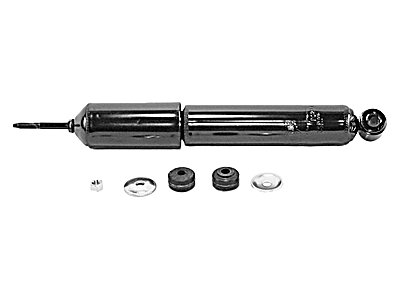
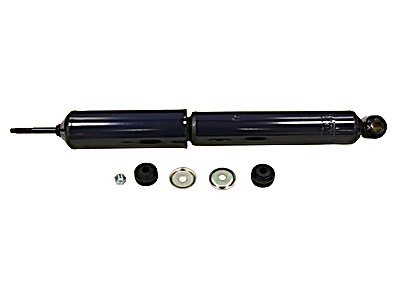
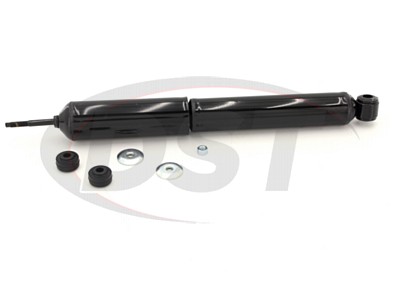
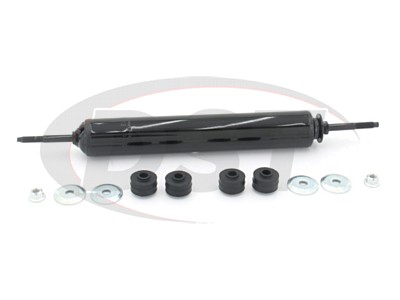
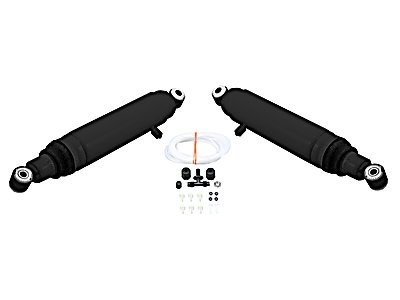
Front and rear shock sets for the whole truck.
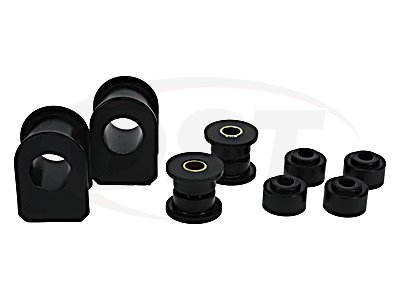
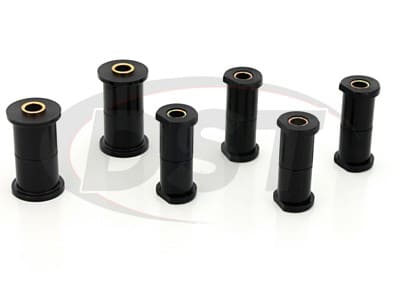
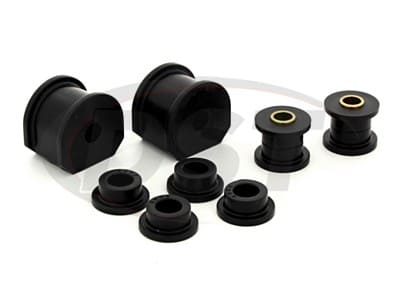
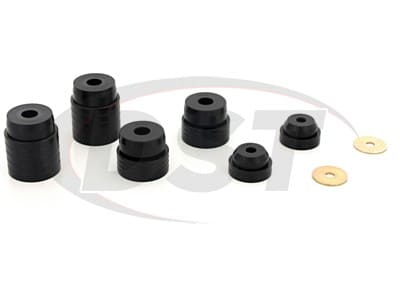
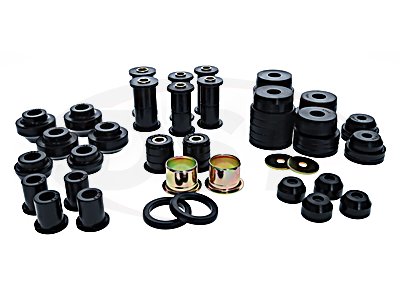
Kits with the suspension bushings for the whole truck.
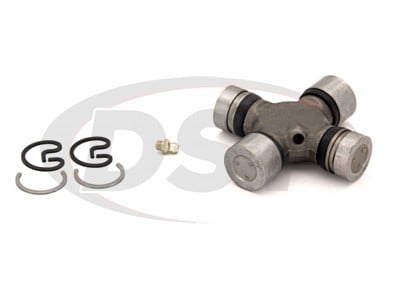
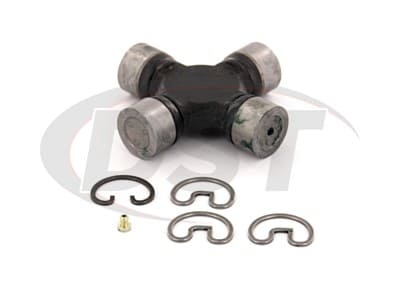
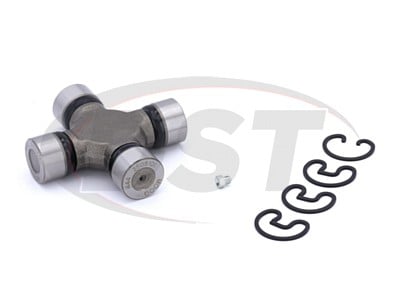
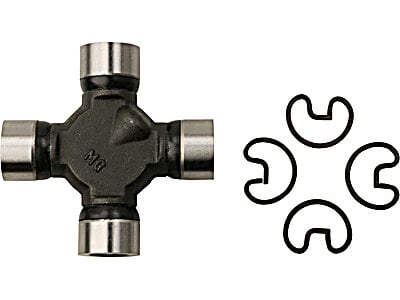
Sets of the U-joints for this truck.

Each front wheel rides on its own axle beam. The driver beam carries the front differential and pivots on a bracket on the passenger side of the crossmember; the passenger beam pivots on the driver side, so the two beams cross under the engine. The axle shafts run inside the beams.
Signs of wear: Uneven tire wear or camber that will not stay in spec after the bushings and ball joints are good can mean a bent beam.
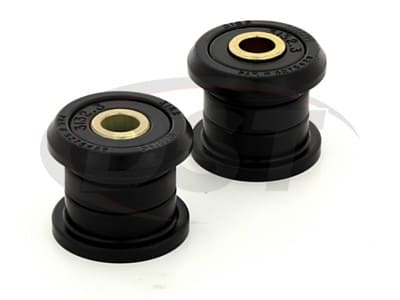
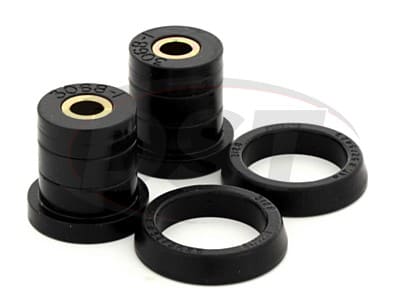
A pivot bushing sits in the inner end of each axle beam where it bolts to its bracket on the front crossmember. It lets the beam swing up and down.
Signs of wear: Clunks over bumps, the front end wandering, or camber changing with load.
Tip: Do the radius arm bushings at the same time; the front end comes apart the same way.
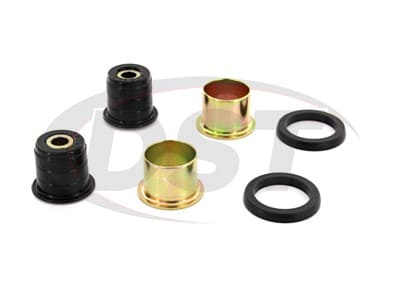
See all Axle Pivot Bushings parts for the 1995 Ford F-150 4WD
The knuckle turns on an upper and a lower ball joint in the end of the axle beam. The spindle bolts to its outer face, and the axle shaft passes through it to the locking hub.
The upper ball joint is pressed into the top of the knuckle. Its stud goes up into the axle beam through the camber sleeve.
Signs of wear: Play at the top of the tire when it is rocked, clunks, or uneven wear on the tire edges.
Tip: The knuckle has to come off to press the joints, so replace upper and lower together.
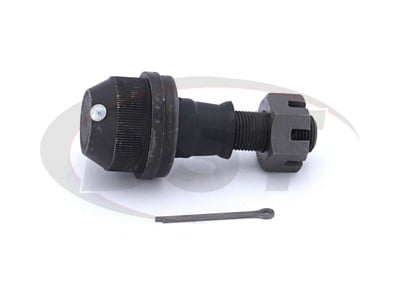
See all Front Upper Ball Joint parts for the 1995 Ford F-150 4WD
The lower ball joint is pressed into the bottom of the knuckle and held by a snap ring. Its stud points up into the lower ear of the axle beam.
Signs of wear: Play at the bottom of the tire, clunks when turning, or a torn boot.

See all Front Lower Ball Joint parts for the 1995 Ford F-150 4WD
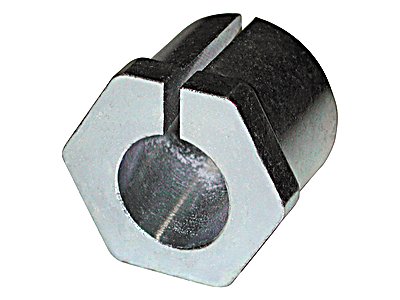
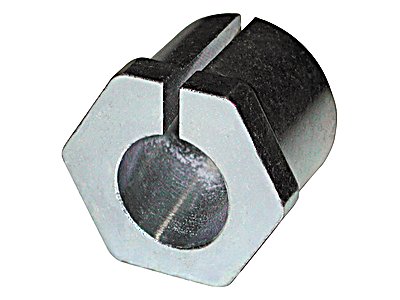
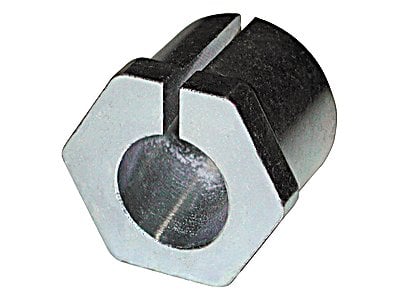
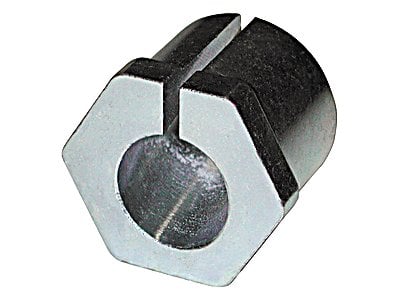
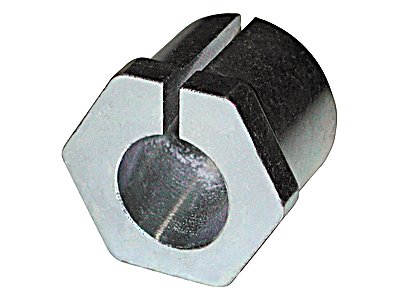
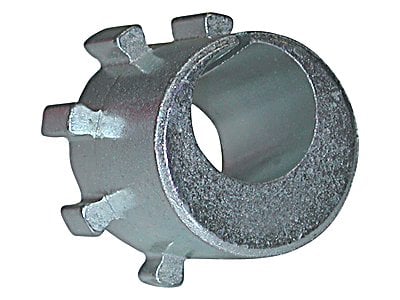
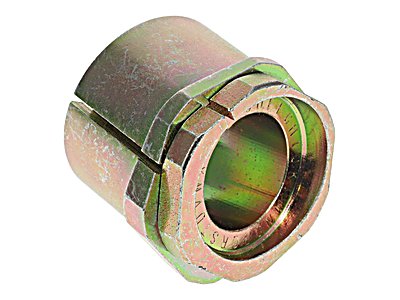
An offset sleeve around the upper ball joint stud in the axle beam sets camber and caster. Sleeves come in fixed steps or as an adjustable kit.
Signs of wear: Tires wearing on the inside or outside edge after the bushings and ball joints are known good.

See all Front End Alignment Kit parts for the 1995 Ford F-150 4WD
A U-joint in each knuckle lets the axle shaft drive the wheel while it steers.
Signs of wear: Clicking or binding in tight turns with four wheel drive engaged, or rust dust at the knuckle.

On the passenger side a second U-joint sits beside the differential, so the axle shaft can follow the beam as it swings.
Tip: Sold with the other axle shaft joints above.
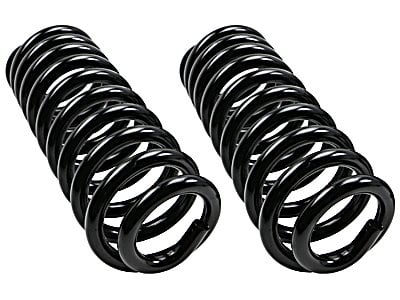
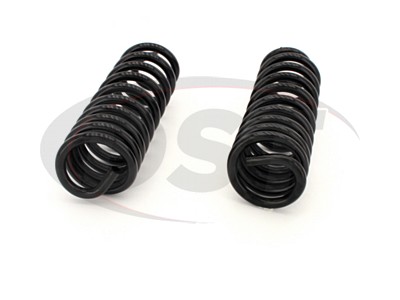
A coil spring sits on a seat over the radius arm and axle beam, inboard of the knuckle, and pushes up into a tower on the frame.
Signs of wear: The front sitting low on one side, a clunk from a broken coil end, or the truck bottoming out.
Tip: Springs differ by weight rating and options, so match the rating on the listing.
See all Front Coil Springs parts for the 1995 Ford F-150 4WD
The isolator is the pad under the coil on its lower seat.
Signs of wear: Squeaks or a metal on metal noise from the spring.

See all Front Coil Spring Isolator Pads parts for the 1995 Ford F-150 4WD
Each radius arm clamps to its axle beam under the coil spring and runs back to a bracket on the frame. It holds the beam in place front to back and sets the caster.
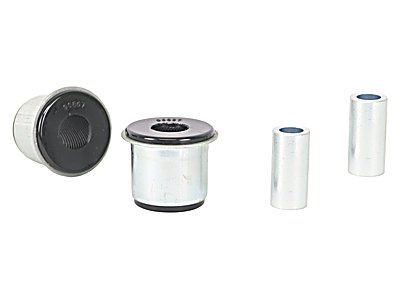
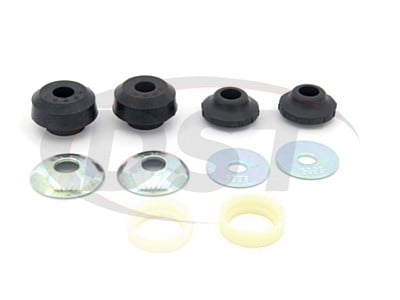
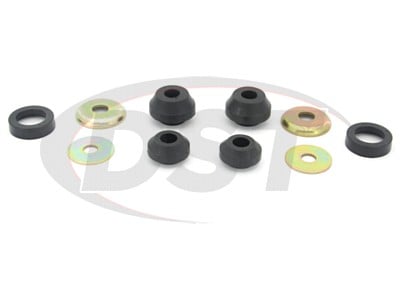
The threaded rear end of the radius arm passes through the frame bracket with a bushing each side, a plastic spacer and cupped washers under the nut. The passenger side has a heat shield next to the exhaust.
Signs of wear: A clunk when braking or taking off, the steering pulling under braking, or cracked rubber at the bracket.
Tip: The front bushing can only come out with the bracket off the frame.

See all Radius Arm Bushings parts for the 1995 Ford F-150 4WD
The bracket is riveted or bolted under the frame rail behind the front axle and holds the rear end of the radius arm.
Signs of wear: A worn or grooved bushing seat lets the radius arm move, which shows up as wander and a clunk.
Tip: Replacement brackets come with bolts for the rivet holes.

See all Radius Arm Hardware parts for the 1995 Ford F-150 4WD
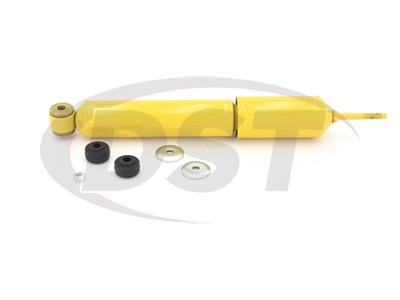
Each front shock runs from a tab on the radius arm behind the coil up to the coil tower on the frame. Trucks with the quad shock option have a second shock ahead of it.
Signs of wear: Bouncing after bumps, leaks, or cupped tire wear.
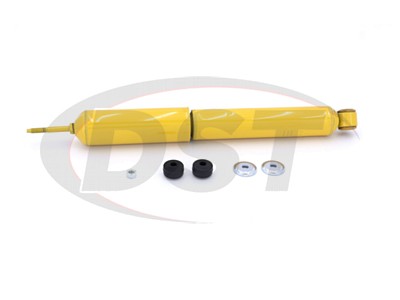
See all Front Shock Absorber parts for the 1995 Ford F-150 4WD
The front sway bar crosses the front of the truck in two bushings on the frame. Its arms run back to links on the coil spring seats.
Not on every vehicle: Only on trucks built with the front sway bar, which came with the Handling and 4x4 Off-Road packages; some 1994 to 1996 4WD trucks have none.
Two bushings hold the front sway bar to the frame in steel brackets.
Not on every vehicle: Only on trucks built with the front sway bar, which came with the Handling and 4x4 Off-Road packages; some 1994 to 1996 4WD trucks have none.
Signs of wear: Clunks or squeaks over bumps and in turns.
Tip: Bars differ in size, so measure the bar and match the bushing diameter.
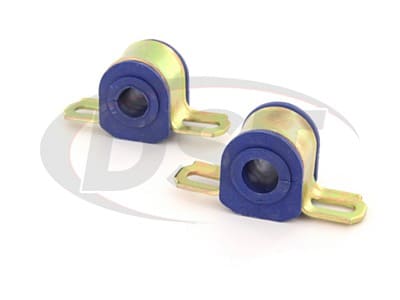
See all Front Sway Bar Bushings parts for the 1995 Ford F-150 4WD
A short link connects each end of the sway bar to an ear on the coil spring seat.
Not on every vehicle: Only on trucks built with the front sway bar, which came with the Handling and 4x4 Off-Road packages; some 1994 to 1996 4WD trucks have none.
Signs of wear: A knock over small bumps, or a loose link you can move by hand.

See all Front Sway Bar Endlinks parts for the 1995 Ford F-150 4WD
The long rod runs from the pitman arm on the driver side across to the passenger knuckle. The driver tie rod plugs into a tapered boss on it near the pitman end.
Signs of wear: Loose steering, wander, or play at the pitman end when the wheel is rocked side to side.
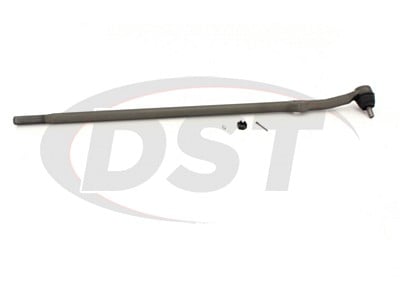
See all Front Inner Tie Rod End parts for the 1995 Ford F-150 4WD
The driver side tie rod runs from the boss on the drag link to the driver knuckle arm.
Signs of wear: Play at the joint on the drag link or uneven toe wear.
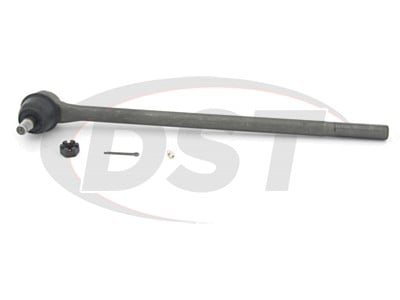
See all Front Inner Tie Rod End parts for the 1995 Ford F-150 4WD
The outer end on the passenger side joins the drag link to the passenger knuckle arm.
Signs of wear: Play at the stud, a torn boot, or feathered tire wear.
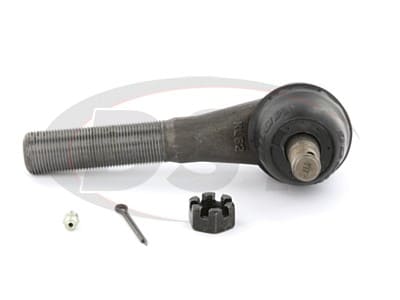
See all Front Outer Tie Rod End parts for the 1995 Ford F-150 4WD
The outer end on the driver side joins the tie rod to the driver knuckle arm.
Signs of wear: Play at the stud, a torn boot, or feathered tire wear.

See all Front Outer Tie Rod End parts for the 1995 Ford F-150 4WD
The threaded sleeve between the drag link and the right outer end sets toe on the passenger side and centers the steering wheel.
Signs of wear: Seized threads or a split sleeve.
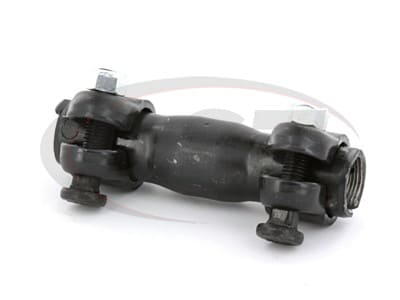
See all Tie Rod Adjusting Sleeve parts for the 1995 Ford F-150 4WD
The sleeve between the left tie rod and its outer end sets toe on the driver side.
Signs of wear: Seized threads or a split sleeve.
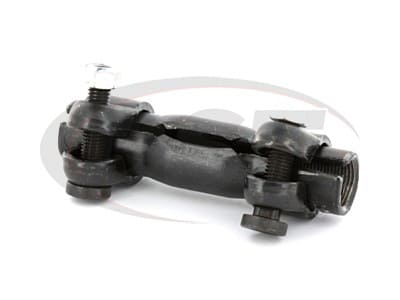
See all Tie Rod Adjusting Sleeve parts for the 1995 Ford F-150 4WD
The pitman arm hangs from the steering gear on the driver frame rail and moves the drag link.
Signs of wear: Play between the pitman arm and the drag link stud.
A stabilizer shock runs from a bracket on the frame to a clamp on the drag link and damps kickback from the front wheels.
Not on every vehicle: Fitted to trucks with a steering stabilizer kit; the cylinder is sold as a replacement for those kits.
Signs of wear: Shimmy after bumps, a leaking or bent stabilizer.
The front driveshaft runs from the transfer case forward to the front differential on the driver beam.
The U-joint where the front driveshaft meets the differential yoke.
Signs of wear: A clunk when four wheel drive engages, or a vibration in four wheel drive.
The U-joint where the front driveshaft leaves the transfer case.
Signs of wear: A clunk when four wheel drive engages.
The rear driveshaft runs from the transfer case back to the rear axle.
The front U-joint of the rear driveshaft, at the transfer case output.
Signs of wear: A clunk when shifting into gear, a squeak at low speed, or a vibration that grows with speed.
The rear U-joint, at the pinion yoke on the axle.
Signs of wear: A clunk on take off or a vibration from the rear.
The middle U-joint on a two piece rear driveshaft, just behind the support bearing.
Not on every vehicle: Only on trucks with the two piece rear driveshaft, which long wheelbase SuperCab trucks use.
Signs of wear: A vibration under the cab.
The support bearing holds the middle of a two piece rear driveshaft to a crossmember.
Not on every vehicle: Only on trucks with the two piece rear driveshaft, which long wheelbase SuperCab trucks use.
Signs of wear: A rumble or vibration under the cab, or torn rubber.
The rear axle is a solid Ford 8.8 housing with the differential in the middle. It sits under the leaf springs.
Each 3 inch wide leaf spring sits on top of the axle and locates it. The front eye bolts into a hanger on the frame, and the rear eye hangs from a shackle.
Signs of wear: Sagging, a broken leaf, or the axle shifting under load.
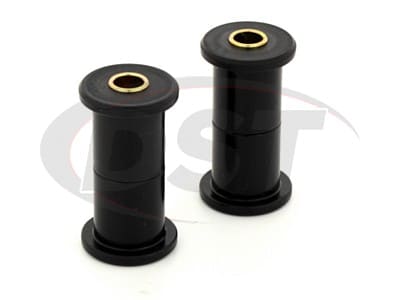
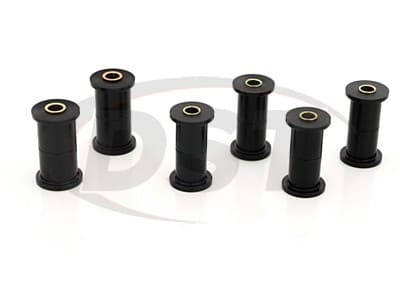
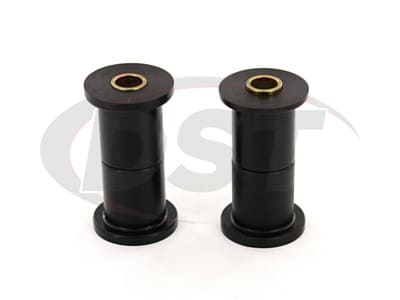
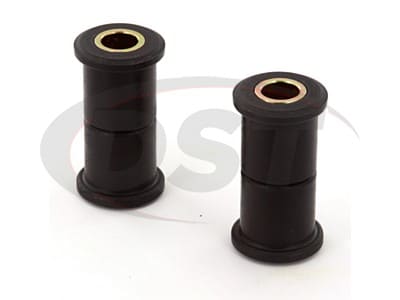
Bushings in the front and rear spring eyes and in the shackle let the spring flex while holding the axle steady.
Signs of wear: Squeaks, clunks, or the axle steering the truck over bumps.

See all Rear Leaf Spring Bushings parts for the 1995 Ford F-150 4WD
The front hanger on the frame rail holds the front eye of the leaf spring.
The rear bracket on the frame holds the top of the shackle.
Signs of wear: Rust or cracks around the bolt hole.
Tip: Original brackets are riveted; replacements bolt on.
See all Rear Leaf Spring Shackles parts for the 1995 Ford F-150 4WD
The shackle hangs from the rear bracket and lets the spring grow longer as it flattens.
Signs of wear: Worn shackle bolts or a clunk from the back of the spring.

See all Rear Leaf Spring Shackles parts for the 1995 Ford F-150 4WD
Two U-bolts wrap under the axle tube and clamp the spring to the axle pad, with a plate and nuts on top of the spring.
Each rear shock runs from a bracket on the front of the axle tube, just inboard of the spring, forward and up to a bracket under the crossmember ahead of the axle. Both shocks sit ahead of the axle and lean forward and inboard.
Signs of wear: Bouncing, leaks, or the rear hopping on rough roads.
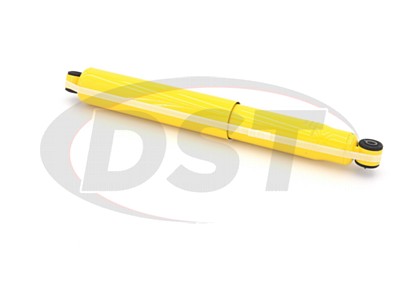
See all Rear Shock Absorber parts for the 1995 Ford F-150 4WD
The optional rear sway bar is held to the axle and its ends link up to brackets under the frame.
Not on every vehicle: Fitted to some trucks only; many trucks have no rear sway bar.
Each straight link runs from the end of the rear sway bar up to a bracket under the frame rail.
Not on every vehicle: Fitted to some trucks only; many trucks have no rear sway bar.
Signs of wear: A knock from the rear over bumps.
See all Rear Sway Bar Endlinks parts for the 1995 Ford F-150 4WD
The bar bushings hold the rear sway bar in its brackets.
Not on every vehicle: Fitted to some trucks only; many trucks have no rear sway bar.
Signs of wear: Squeaks or clunks from the rear.

See all Rear Sway Bar Bushings parts for the 1995 Ford F-150 4WD
The locking hub in the center of each front wheel connects the axle shaft to the hub for four wheel drive.
Two tapered roller bearings in each hub carry it on the spindle.
Signs of wear: A hum that changes with road speed, or play when the tire is rocked top to bottom.
See all Front Wheel Bearing Assembly parts for the 1995 Ford F-150 4WD
The rotor is a separate part held behind the hub flange by the pressed-in wheel studs. The hub and rotor come off the spindle together on their bearings, and the studs are driven out to part them.
Signs of wear: Pulsing in the pedal, grooves or a lip on the rotor face.
Tip: 1993 and earlier trucks use a different rotor, caliper and pads, so order by year.
A single piston caliper on guide pins straddles the rear of each front rotor.
Signs of wear: Pulling to one side, a stuck piston, or a leak.
See all Front Brake Caliper parts for the 1995 Ford F-150 4WD
The pads sit in the caliper on each side of the rotor.
Signs of wear: Squealing, grinding, or a long pedal.
The rear brakes are drums over the shoes.
Two shoes inside each rear drum press out against it.
Signs of wear: A low parking brake, grinding, or a pull when braking.
The transmission mount sits on the crossmember under the transmission.
Signs of wear: A clunk on take off or when shifting.


See all Transmission Mount parts for the 1995 Ford F-150 4WD
Rubber body mounts sit between the frame and the cab and bed.
Signs of wear: Clunks from the body over bumps, or the cab sitting crooked on the frame.

See all Body Mount Bushings Kit parts for the 1995 Ford F-150 4WD
Twin Traction Beam camber changes as the beams move, so worn axle pivot bushings, radius arm bushings or ball joints show up as edge wear. Check those parts first, then set camber with the sleeve at the upper ball joint.
The 1994 to 1996 4WD trucks use a rotor held behind the hub flange by the pressed-in wheel studs, so the hub comes off with it, and a single piston caliper on guide pins. 1993 and earlier trucks use a different rotor, caliper and pads, so order by year.
Yes. On the Dana 44 Twin Traction Beam the ball joints are pressed into the knuckle, so the hub, spindle and knuckle come off first. Replace the upper and lower joints on a side together.
Trucks with the factory quad shock option use a forward and a rearward shock on each side, and the listings say which position each one fits. Coil springs for single shock trucks are listed separately.
The 1987 to 1996 F-150 4WD shares the axle beams, ball joints, radius arm bushings, steering linkage and rear spring hardware. The front brakes changed for 1994, the front sway bar bushings for 1992, and 1986 and earlier trucks use other radius arm bushings, so the parts shown here are the ones listed for the 1995 4WD truck.
Numbered diagrams to print or save for the shop. The numbers match the numbered parts on the interactive diagram.