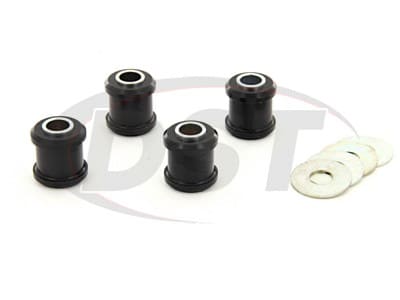
Front End Steering Rebuild Kits
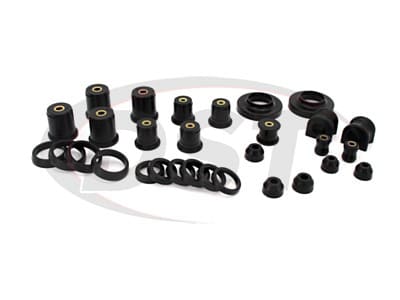
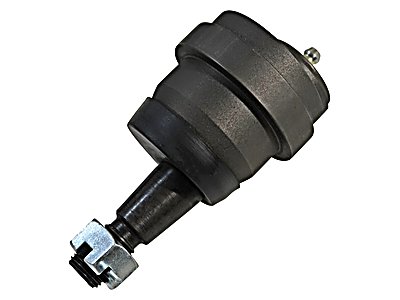
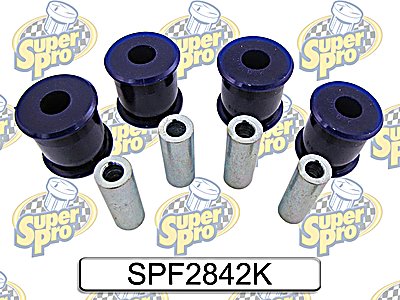
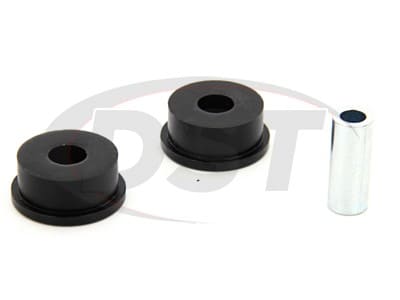
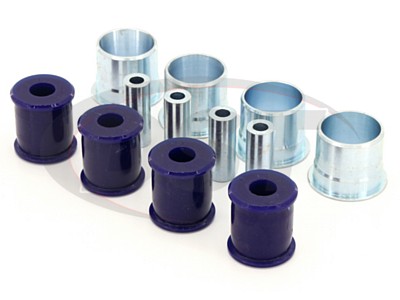
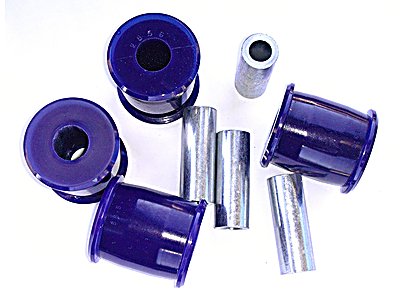
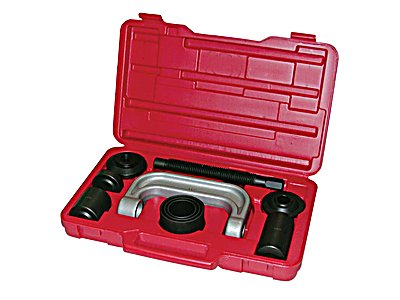
Package kits bundle the wearing steering parts for the Wrangler.
This interactive diagram shows the front axle, steering linkage and rear axle of the 2001 Jeep Wrangler TJ. Hover over or tap any part to see what it does, the signs that it is worn, and the replacement parts we carry that fit your Jeep, down to the side and position.
We carry parts for it Not stocked yet Hover or tap any part.
The 1997 to 2006 Wrangler rides on solid axles front and rear, each on coil springs, under a ladder frame. At the front, two upper and two lower control arms locate the axle and a track bar keeps it centered. The steering gear on the driver side swings a pitman arm and a drag link out to the passenger knuckle, and the tie rod runs from the driver knuckle to the drag link. At the rear, two lower arms, two upper arms and a track bar hold the axle, the sway bar rides on the axle, and the brakes are drums. The diagram is drawn from a four wheel drive Wrangler with the Dana 30 front and Dana 35 rear axles.
We carry replacement parts for 49 of the 61 components on this diagram, 196 parts in all. See every part for the 2001 Jeep Wrangler TJ.
Package kits bundle the wearing steering parts for the Wrangler.
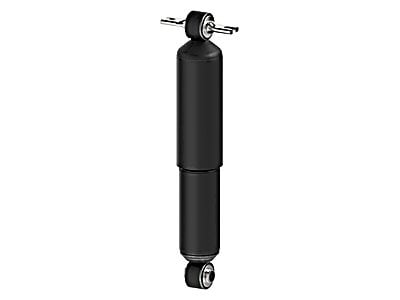
Front and rear shock sets for the whole Jeep.
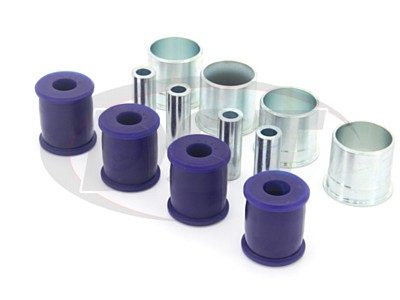
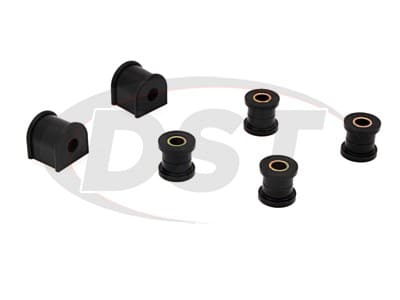
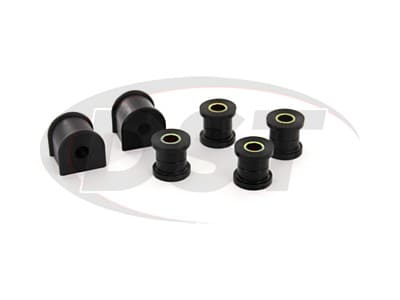
Bushing kits for the front, the rear, or the whole Jeep.
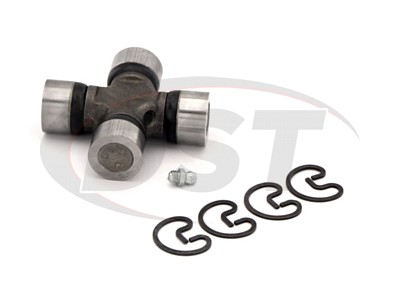
Sets of the U-joints for this Jeep.
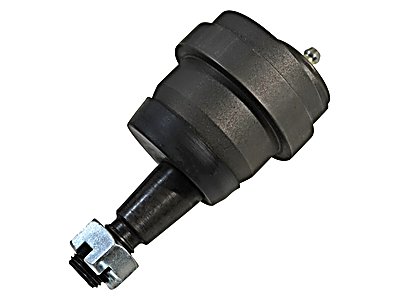
The upper ball joint is pressed into the upper ear of the axle's C and carries the top of the steering knuckle as it turns.
Signs of wear: Wandering, a clunk over bumps, uneven tire wear, or play when the tire is rocked top to bottom with the front lifted.
Tip: Offset upper joints are sold in degree steps to correct camber and caster on lifted Jeeps. Replace both sides and get an alignment.

See all Front Upper Ball Joint parts for the 2001 Jeep Wrangler TJ
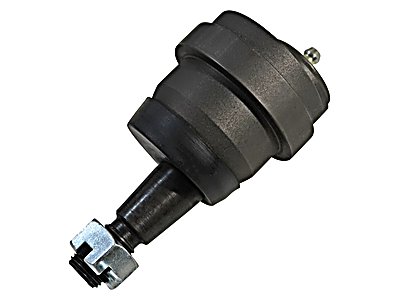
The lower ball joint is pressed into the lower ear of the axle's C and carries the bottom of the knuckle.
Signs of wear: Play at the bottom of the tire, clunks when turning, or a torn boot.
Tip: Lower joints usually wear first. Do both sides together.

See all Front Lower Ball Joint parts for the 2001 Jeep Wrangler TJ
The knuckle turns on the two ball joints and carries the hub, the brake caliper and the steering arm.
Signs of wear: Worn ball joint tapers, or a cracked steering arm after a hard hit.
Tip: Replace the ball joints while the knuckle is off.
The Wrangler uses a solid front axle with the differential on the driver side. Shafts with a U-joint at each knuckle drive the wheels. The Rubicon has a heavier Dana 44 front axle.
Signs of wear: Gear whine, a leak at the pinion, or clicking from the axle U-joints when turning.
Tip: Check the axle U-joints whenever the hubs are off.
Each upper control arm runs back from the top of the axle to a bracket on the frame. With the lower arms they set the axle's caster.
Signs of wear: Clunks on acceleration or braking, a steering wheel that wanders, or cracked rubber at the arm ends.
Tip: Worn upper arm bushings often cause the clunk blamed on the track bar. Check both ends with a pry bar.
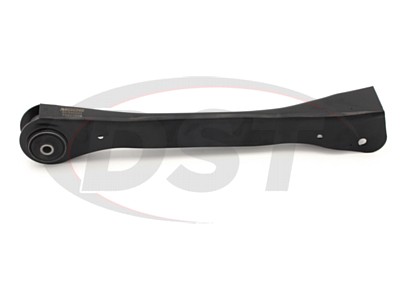
See all Front Control Arm parts for the 2001 Jeep Wrangler TJ
The lower control arms run back from brackets under the axle tube to brackets on the frame. They push and pull the axle and carry the braking load.
Signs of wear: Clunks over bumps or when braking, the Jeep pulling under braking, or torn bushings.
Tip: The axle end bolts on cam bolts that set caster. Mark them before you remove the arm.

See all Front Control Arm parts for the 2001 Jeep Wrangler TJ
Rubber or polyurethane bushings in both ends of each upper arm let it pivot while damping noise.
Signs of wear: Clunks, a vague feel on center, or cracked and shifted rubber.
Tip: Polyurethane bushings last longer but pass more vibration. Press them in with the arm off the Jeep.

See all Front Control Arm Bushings parts for the 2001 Jeep Wrangler TJ
Bushings in both ends of each lower arm let it pivot at the axle and at the frame bracket.
Signs of wear: Clunks over bumps, pulling when braking, or rubber pushed out of the arm.
Tip: Some kits sell the forward and rearward bushings separately. Check which end you need.

See all Front Control Arm Bushings parts for the 2001 Jeep Wrangler TJ
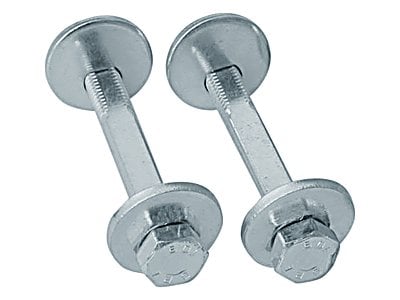
Shims, cam bolts and offset joints correct caster or camber when the axle sits at a new angle, for example after a lift.
Signs of wear: Steering that does not return to center, or uneven tire wear after a lift.
Tip: Have the alignment checked after fitting them.
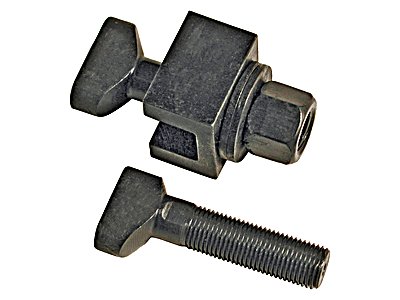
See all Front End Alignment Kit parts for the 2001 Jeep Wrangler TJ
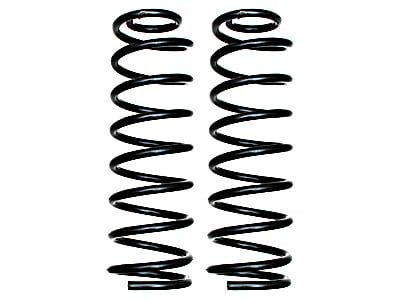
A coil spring sits on a perch on each end of the axle and carries the front of the Jeep up to the spring seat on the frame.
Signs of wear: A sagging front, a cracked coil, or bottoming over bumps.
Tip: Replace springs in pairs and fit new isolators.
See all Front Coil Springs parts for the 2001 Jeep Wrangler TJ
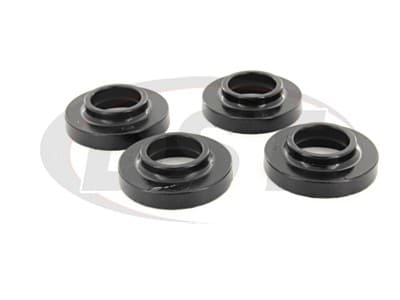
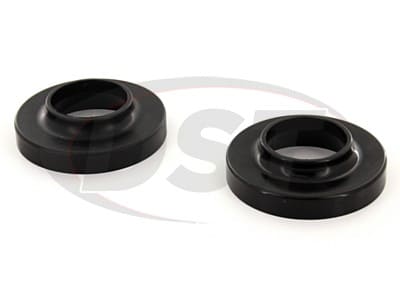
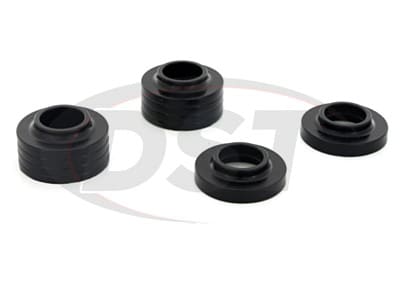
The isolator is a rubber pad between the top of the coil and the frame's spring seat. It stops squeaks and road noise.
Signs of wear: Squeaks or creaks over bumps, or a pad that is split or missing.
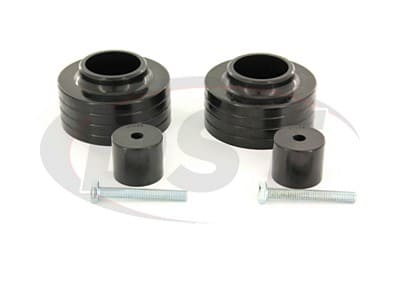
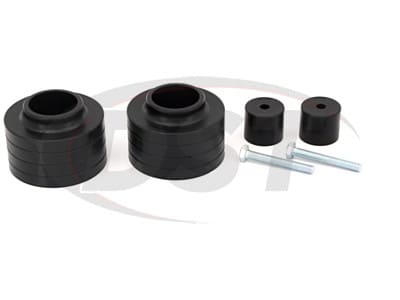
Tip: Thicker pads and spacers raise the Jeep slightly.
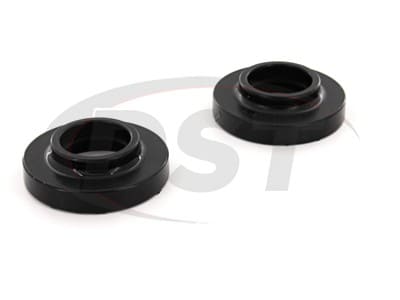
See all Front Coil Spring Isolator Pads parts for the 2001 Jeep Wrangler TJ
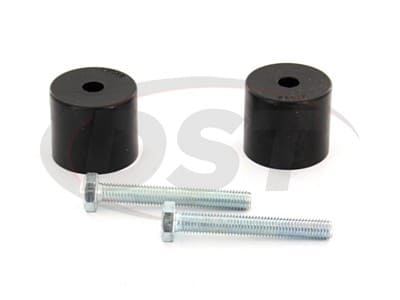
The bump stop is a rubber stop in a cup under the frame above the axle, inside the coil. It stops the axle hitting the frame at full compression.
Signs of wear: A hard bang over big bumps, or a stop that is cracked or missing.
Tip: Extended stops are needed after a lift so the tires clear the fenders.
See all Front Bump Stops parts for the 2001 Jeep Wrangler TJ
The front shock stands beside the coil spring, bolted to a bracket on the axle at the bottom and up into the frame tower at the top. It damps the axle's movement.
Signs of wear: Bouncing after bumps, nose dive under braking, or oil on the shock body.
Tip: Replace shocks in pairs.
See all Front Shock Absorber parts for the 2001 Jeep Wrangler TJ
The front sway bar runs across the Jeep in two bushings on the frame. Its ends link down to the axle and resist body roll.
Signs of wear: Body lean in turns or a knock from the bar ends.
Tip: The factory bar is 30 mm. Measure your bar before buying bushings; 26 and 34 mm bushings are sold for other bars.
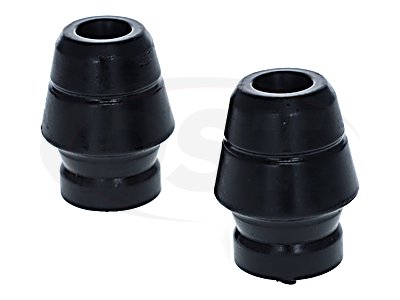
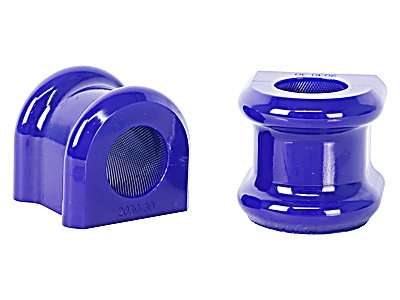
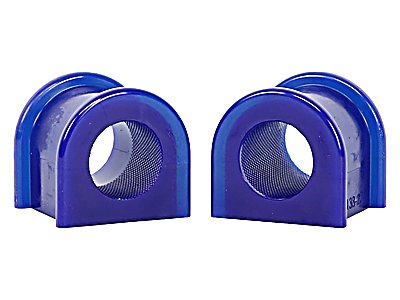
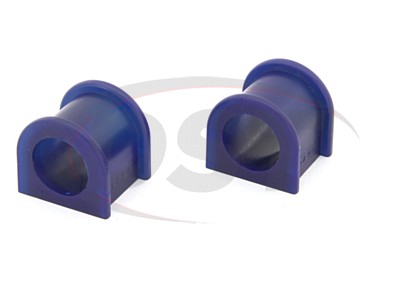
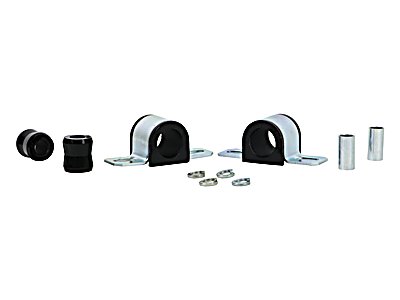
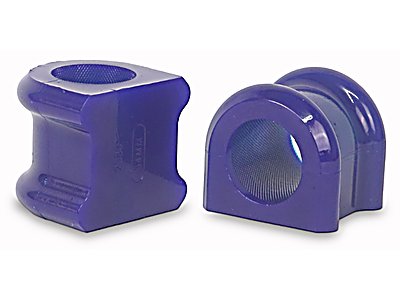
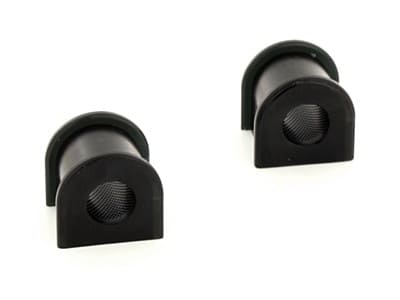
Two bushings in straps hold the sway bar to the frame.
Signs of wear: Clunks over uneven roads or a bar that moves in its strap.
Tip: Match the bushing size to your bar diameter.

See all Front Sway Bar Bushings parts for the 2001 Jeep Wrangler TJ
Each short link connects the end of the sway bar down to a bracket on the axle.
Signs of wear: A rattle or knock over small bumps, or worn rubber at the link ends.
Tip: Longer or quick disconnect links are common after a lift.

See all Front Sway Bar Endlinks parts for the 2001 Jeep Wrangler TJ
The track bar runs across the Jeep from a bracket under the driver side frame rail to a bracket at the passenger end of the axle. It keeps the axle centered.
Signs of wear: Steering wander, a clunk when turning the wheel at a standstill, or a violent shake after a bump.
Tip: Have a helper turn the wheel with the engine running and watch both ends of the bar for movement.


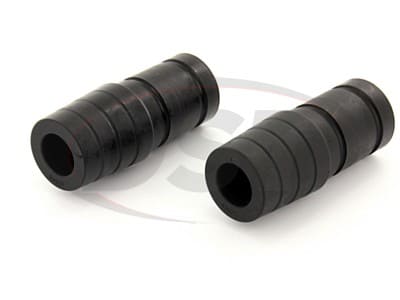
A bushing in the axle end of the track bar lets it pivot.
Signs of wear: Clunks and steering wander, or rubber pushed out of the eye.
Tip: Check the ball joint at the frame end and the bracket bolts at the same time.

See all Front Track Arm Bar Bushings parts for the 2001 Jeep Wrangler TJ
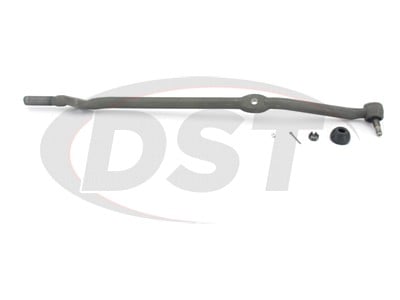
The drag link carries the steering from the pitman arm to the passenger steering arm. The tie rod joins it near the passenger side.
Signs of wear: Play in the steering, wandering, or a torn boot at the passenger end.
Tip: Center the steering wheel with the drag link sleeve after an alignment.
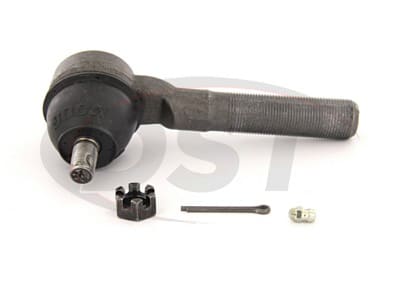
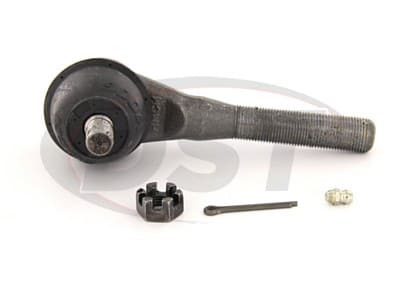
See all Front Outer Tie Rod End parts for the 2001 Jeep Wrangler TJ
This end connects the drag link to the pitman arm on the steering gear.
Signs of wear: Play felt at the steering wheel or a loose stud.
Tip: It has a left hand thread into the sleeve.
See all Front Outer Tie Rod End parts for the 2001 Jeep Wrangler TJ
A short threaded sleeve joins the drag link end to the drag link. Turning it centers the steering wheel.
Signs of wear: A seized or rusted sleeve, or loose clamps.
Tip: Soak the threads before trying to turn it.
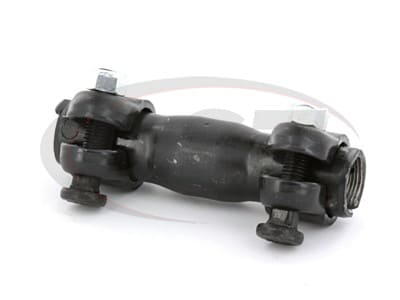
See all Tie Rod Adjusting Sleeve parts for the 2001 Jeep Wrangler TJ
The passenger end of the tie rod drops its stud into the drag link near the passenger steering arm.
Signs of wear: Play in the steering or uneven wear on both front tires.
Tip: Replace it with the other tie rod end and set the toe.
See all Front Inner Tie Rod End parts for the 2001 Jeep Wrangler TJ
The driver end of the tie rod connects to the driver steering arm.
Signs of wear: Play in the steering, toe wear, or a torn boot.
Tip: It has a left hand thread into the tie rod tube.
See all Front Outer Tie Rod End parts for the 2001 Jeep Wrangler TJ
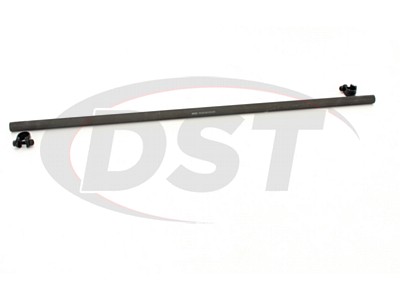
The long tube between the tie rod ends sets the toe. It runs from the driver steering arm to the drag link.
Signs of wear: A bent tube after an off road hit, or seized threads.
Tip: A bent tube changes the toe. Replace it rather than straighten it.
See all Tie Rod Adjusting Sleeve parts for the 2001 Jeep Wrangler TJ
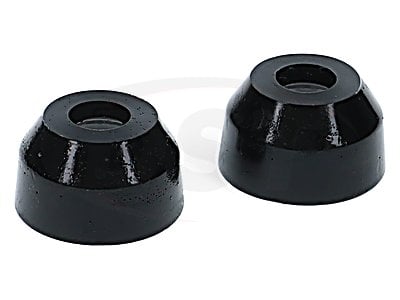
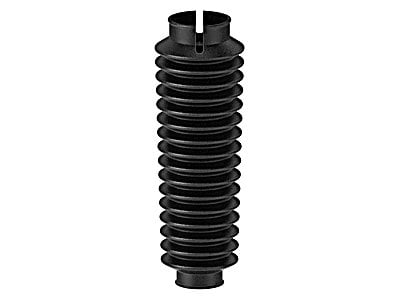
Rubber boots keep dirt and water out of the tie rod end ball joints.
Signs of wear: A torn boot or grease thrown around the joint.
Tip: Replace a torn boot before the joint wears.
See all Outer Tie Rod Dust Boots parts for the 2001 Jeep Wrangler TJ
The pitman arm hangs from the steering gear on the driver side rail and swings the drag link.
Signs of wear: Play between the gear and the arm, or a worn stud hole.
Tip: Use a puller to remove it. Do not hammer on the gear shaft.


The steering stabilizer is a damper between the steering linkage and a bracket on the axle. It soaks up kickback from bumps.
Signs of wear: Steering kickback or a leaking damper.
Tip: A new stabilizer can hide a worn track bar or ball joints. Check those first.
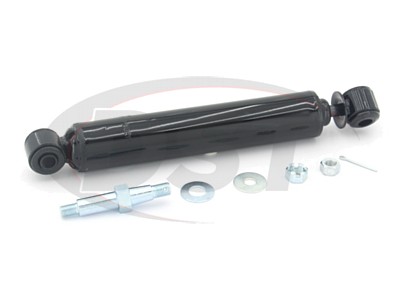
The steering gear bolts to the driver side frame rail ahead of the axle and turns the pitman arm.
Signs of wear: Play at the wheel that is not in the linkage, or a leak at the gear.
Tip: Check the gear mounting bolts for tightness.
A U-joint at each knuckle lets the axle shaft drive the wheel while it steers.
Signs of wear: Clicking or binding when turning in four wheel drive.
Tip: Replace both sides while the shafts are out.
The front driveshaft runs from the transfer case to the front differential on the driver side. Its transfer case end is listed as a CV joint.
Signs of wear: Vibration in four wheel drive or a worn joint.
Tip: Check the joints at both ends.
The U-joint at the front differential end of the front driveshaft.
Signs of wear: Clunks or a squeak from the front, or vibration.
Tip: Grease it if it has a fitting.
A double cardan joint at the transfer case end of the front driveshaft lets it run at a steep angle smoothly.
Signs of wear: Vibration or a clunk.
Tip: The centering ball kit wears too. Check it when you replace the crosses.
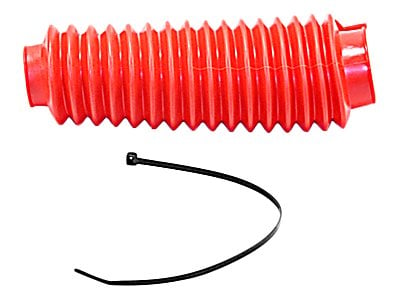
The rear driveshaft runs from the transfer case to the rear differential. A rubber boot covers the slip joint at the transfer case end.
Signs of wear: Vibration at speed or a clunk when shifting.
Tip: Mark the shaft before removing it so the balance is kept.
The U-joint at the front end of the rear driveshaft.
Signs of wear: A squeak or clunk when shifting.
Tip: The Rubicon uses different rear shaft joints. Check the trim.
The U-joint at the rear differential end of the rear driveshaft.
Signs of wear: Vibration or a clunk when starting off.
Tip: Replace both joints together.
The rear axle rides on two coil springs and is held by two lower arms, two upper arms and a track bar.
Signs of wear: Gear whine or a leak at a wheel.
Tip: Most Wranglers have the Dana 35 rear axle; the Rubicon and some others have the Dana 44. Check the tag on the cover before ordering axle parts.
The lower arms run forward from brackets under the axle to brackets on the frame and push the Jeep along. Front and rear lower arms are the same part.
Signs of wear: Clunks when starting off or braking, or a rear end that steers over bumps.
Tip: Rust at the frame brackets is common. Check them with the arms.
See all Rear Control Arm parts for the 2001 Jeep Wrangler TJ
The upper arms run forward from brackets on top of the axle to the frame and hold the axle's angle.
Signs of wear: Clunks over bumps or a vibration from a changed pinion angle.
Tip: Replace both sides together.

See all Rear Control Arm parts for the 2001 Jeep Wrangler TJ
Bushings in both ends of each rear lower arm let it pivot.
Signs of wear: Clunks or a rear end that feels loose.
Tip: Kits often cover both ends of both arms.

See all Rear Control Arm Bushings parts for the 2001 Jeep Wrangler TJ
Bushings in both ends of each rear upper arm.
Signs of wear: Clunks over bumps.
Tip: Press them in with the arm off the Jeep.
See all Rear Control Arm Bushings parts for the 2001 Jeep Wrangler TJ
The rear track bar runs across behind the axle from a bracket on the driver end of the axle to a bracket on the passenger side of the frame and keeps the axle centered.
Signs of wear: A rear end that shifts sideways or a clunk over bumps.
Tip: Check both bushings when you replace the bar.


Bushings in both eyes of the rear track bar.
Signs of wear: Clunks or side to side play at the rear.
Tip: Polyurethane bushings firm up the rear.
See all Rear Track Arm Bar Bushings parts for the 2001 Jeep Wrangler TJ
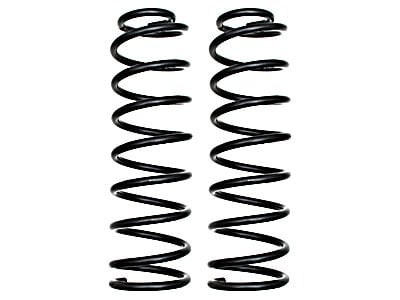
A coil spring on a seat on each end of the axle carries the rear of the Jeep.
Signs of wear: A sagging rear or a cracked coil.
Tip: Replace springs in pairs.
See all Rear Coil Springs parts for the 2001 Jeep Wrangler TJ
A rubber pad sits between the top of each rear coil and the spring seat on the frame. It stops squeaks and road noise.
Signs of wear: Squeaks over bumps, or a pad that is split or missing.
Tip: Spacers and thicker pads raise the rear slightly.

See all Rear Coil Spring Isolator Pads parts for the 2001 Jeep Wrangler TJ
The rear shock runs from a bracket behind the axle up to the frame.
Signs of wear: Bouncing after bumps or oil on the shock.
Tip: Replace shocks in pairs.
See all Rear Shock Absorber parts for the 2001 Jeep Wrangler TJ
A rubber stop on the frame above the axle limits how far the axle can rise.
Signs of wear: A bang over big bumps or a missing stop.
Tip: Extended stops suit lifted Jeeps.
The rear sway bar is clamped to the front of the axle. Short links run from its ends up to the frame to resist body roll.
Signs of wear: Body roll or a rattle from the rear.
Tip: Check the links and bushings at the same time.
Each short link ties the bar end up to a bracket on the frame.
Signs of wear: A rattle over bumps.
Tip: Replace both sides together.

See all Rear Sway Bar Endlinks parts for the 2001 Jeep Wrangler TJ
Two bushings hold the rear bar in clamps on the axle.
Signs of wear: Clunks from the rear over uneven roads.
Tip: The factory bar is 16 mm. Match the bushing size.

See all Rear Sway Bar Bushings parts for the 2001 Jeep Wrangler TJ
A bearing in each end of the rear axle tube carries the axle shaft.
Signs of wear: A growl from the rear that changes with speed.
Tip: The Dana 44 rear axle uses a different bearing from the Dana 35. Check the axle tag.
See all Rear Wheel Bearing Assembly parts for the 2001 Jeep Wrangler TJ
The hub bolts to the knuckle and carries the wheel on a sealed bearing. The axle shaft drives it through splines.
Signs of wear: A growl that changes when turning, or play in the wheel.
Tip: Replace the hub if the ABS light comes on with a damaged sensor ring.

See all Front Wheel Bearing and Hub Assembly parts for the 2001 Jeep Wrangler TJ
The vented rotor sits over the hub and turns with the wheel.
Signs of wear: Pulsing when braking, or scoring.
Tip: Replace the pads with the rotors.
See all Front Brake Rotor parts for the 2001 Jeep Wrangler TJ
The single piston caliper sits behind the axle on the knuckle and squeezes the pads.
Signs of wear: Pulling under braking or a sticking caliper.
Tip: Bleed the brakes after a caliper change.
See all Front Brake Caliper parts for the 2001 Jeep Wrangler TJ
Two pads in each caliper press on the rotor.
Signs of wear: Squealing, grinding or a low pedal.
Tip: Replace both sides together.
See all Front Brake Pads parts for the 2001 Jeep Wrangler TJ
The 9 inch drum covers the rear brake shoes and turns with the wheel.
Signs of wear: A pulsing pedal, a scored drum, or a weak parking brake.
Tip: Measure the drum before reusing it with new shoes.
Two shoes inside each drum press out against it. They also work the parking brake.
Signs of wear: Grinding at the rear or a parking brake that will not hold.
Tip: The 2001 to 2006 shoes differ from the 1997 to 2000 ones. Adjust them after fitting.
See all Rear Brake Shoes parts for the 2001 Jeep Wrangler TJ
The Rubicon's rear disc brakes use a solid rotor on the axle flange.
Not on every vehicle: Only the Rubicon (2003 to 2006) has rear disc brakes; the Wrangler drawn here has rear drums.
Signs of wear: Pulsing when braking or a scored rotor.
Tip: Replace the pads with the rotors.
The Rubicon's single piston rear caliper squeezes the rear pads.
Not on every vehicle: Only the Rubicon (2003 to 2006) has rear disc brakes; the Wrangler drawn here has rear drums.
Signs of wear: A sticking caliper, a pull, or uneven pad wear.
Tip: Bleed the brakes after a caliper change.
Two pads in each Rubicon rear caliper press on the rotor.
Not on every vehicle: Only the Rubicon (2003 to 2006) has rear disc brakes; the Wrangler drawn here has rear drums.
Signs of wear: Squealing or grinding at the rear.
Tip: Some pads fit only Rubicons built to 10/18/2005. Check the build date on the door label.
Small shoes inside the Rubicon's rear rotor hat work the parking brake.
Not on every vehicle: Only the Rubicon (2003 to 2006) has rear disc brakes; the Wrangler drawn here has rear drums.
Signs of wear: A parking brake that will not hold.
Tip: Adjust the shoes after fitting new rotors.
Engine mounts hold the engine to the frame and damp vibration.
Signs of wear: A clunk when shifting or extra vibration at idle.
Tip: Support the engine before removing a mount.
A violent shake after a bump usually starts with play in the front end: a worn track bar or loose track bar bolts, worn ball joints, loose tie rod or drag link ends, or worn control arm bushings. A new steering stabilizer can hide it but does not fix it. Check every joint for play with a helper turning the wheel.
Yes. The 1997 to 2006 Wrangler uses the same lower control arm at the front and the rear, so one part number covers all four lower arms. The upper arms differ front to rear.
The Wrangler drawn here has 9 inch rear drum brakes.
Most TJ Wranglers have a Dana 30 front and a Dana 35 rear axle. The Rubicon has Dana 44 axles front and rear, and some others have a Dana 44 rear. The tag on the differential cover tells you which; axle shafts, bearings and some U-joints differ.
Yes. Replacing ball joints, tie rod ends, the drag link or the control arms changes the alignment. Have caster and toe checked after the work, and center the steering wheel with the drag link sleeve.
Numbered diagrams to print or save for the shop. The numbers match the numbered parts on the interactive diagram.